
Prince Regent Luitpold of Bavaria (1821–1912)
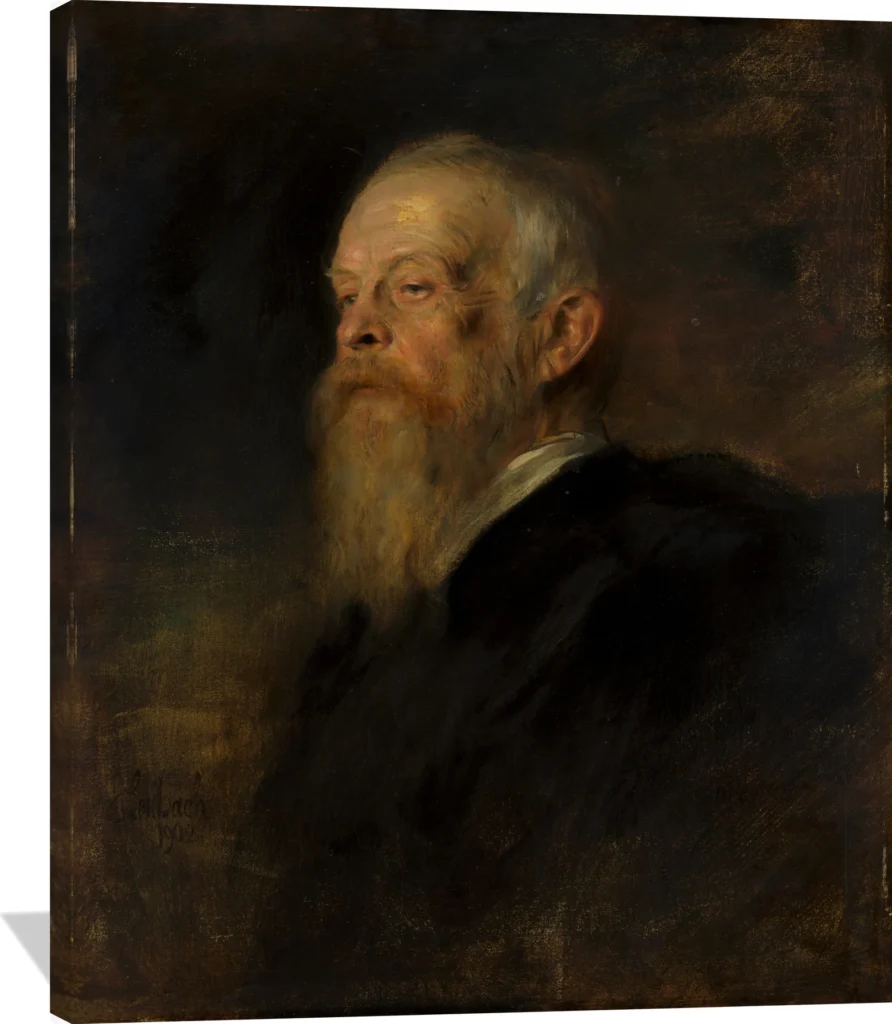
The Franz von Lenbach Prince Regent Luitpold of Bavaria (1821–1912) canvas captures the quiet dignity and authority of its subject through masterful use of light and shadow. Warm tones of umber, gold, and deep brown blend seamlessly to highlight the sitter’s thoughtful expression and refined presence, characteristic of Lenbach’s celebrated portrait style.
This timeless wall art brings a sense of history and sophistication to any interior. Ideal for a study, library, or formal living space, this premium canvas print evokes the grandeur of 19th-century portraiture while complementing modern and traditional décor alike.
Franz von Lenbach (1836–1904) was a German painter celebrated for his masterful portraits and his influential presence in late nineteenth‑century Munich’s cultural sphere. Trained in the traditions of academic realism, he became one of Europe’s most sought‑after portraitists, admired for his ability to convey both the outer likeness and inner character of his sitters.
Artistic Style
Lenbach’s work is defined by rich, painterly surfaces, nuanced chiaroscuro, and a restrained yet expressive palette. His portraits often feature subdued backgrounds that focus attention on the psychological presence of the subject, a hallmark that earned him a reputation as a consummate interpreter of personality. His technique balanced careful observation with a subtly idealizing touch, allowing his paintings to project both realism and dignified grandeur.
Typical Subjects
Specializing in depictions of political, cultural, and intellectual figures, Lenbach created lasting images of many of the era’s most prominent individuals. His portraits of statesmen, aristocrats, and thinkers helped shape the public image of Europe’s elite, making him a central figure in the visual culture of his time.
Cultural Significance
As a leading member of the Munich art world, Lenbach contributed to the city’s emergence as a key artistic center in the late nineteenth century. His works encapsulate the refined sensibilities of the period, offering insight into the social aspirations and aesthetic values of the German Empire. Revered for his ability to capture the gravitas and individuality of his sitters, he remains an important figure in the history of European portraiture, remembered for his role in defining the era’s aristocratic portrait tradition and for his enduring influence on modern understandings of artistic identity and representation.
Trust & policies
- 🚚 Free tracked shipping to 45+ countries. Local import duties or taxes may apply in some destinations.
- 🎨 Made-to-order, printed close to your delivery location
- 🛡️ If damaged, defective, or misprinted: free replacement or refund
- 🌍 Printed in US/CA/EU/UK/AU based on delivery location
- 💎 Acid-free, fade-resistant canvas with solid wood stretcher bars
- 🖼️ Optional pine floating frames in white, black, or brown
- 🪝 Ready to hang — hardware pre-installed