
The Annunciation of the Death of the Virgin
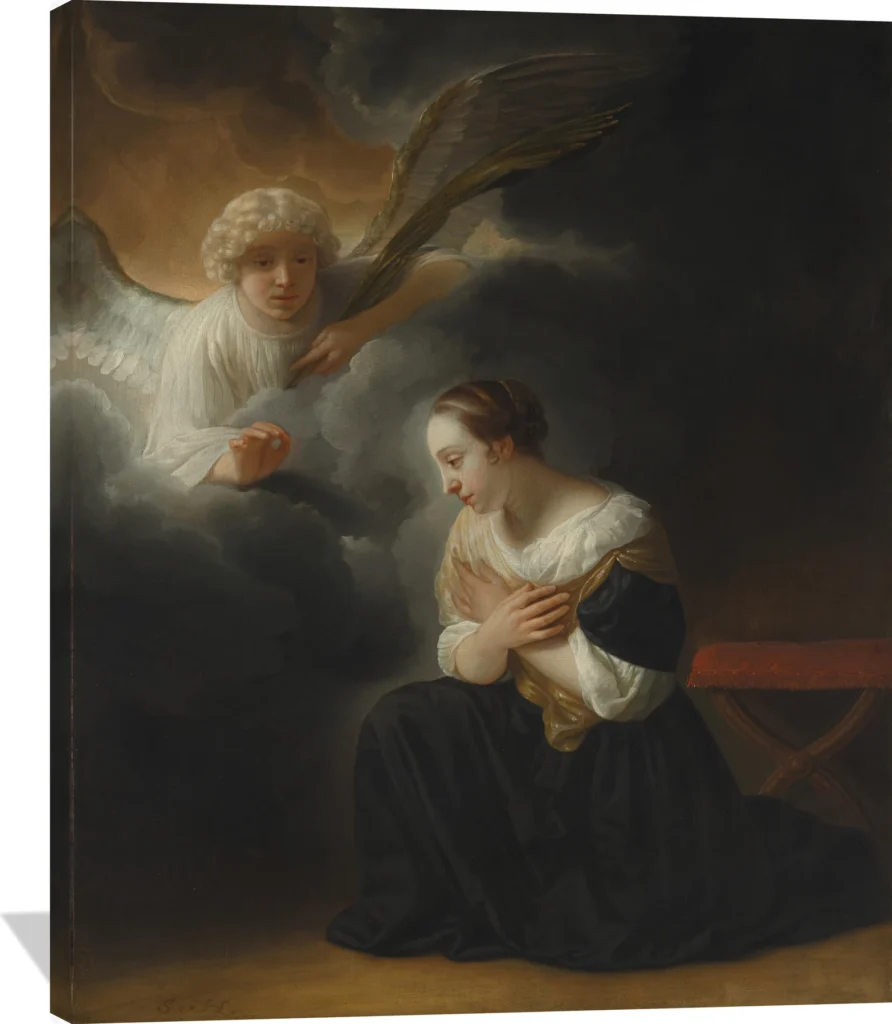
The Samuel van Hoogstraten The Annunciation of the Death of the Virgin canvas captures a moment of divine serenity and emotional depth. Bathed in soft golden light and enveloped by gentle shadows, an angelic figure emerges from the clouds to deliver a sacred message to the kneeling Virgin. The warm ochres, deep blacks, and silvery grays create a luminous contrast that enhances the painting’s spiritual atmosphere.
This exquisite wall art brings Baroque elegance and contemplative beauty to any space. Ideal for a living room, study, or entryway, this canvas print invites quiet reflection and timeless grace into your home decor.
Samuel van Hoogstraten (Dutch, Dordrecht 1627–1678 Dordrecht) was a multifaceted painter, writer, and theorist of the Dutch Golden Age whose work blended technical mastery with intellectual depth.
Artistic Style and Approach
Known for his refined command of perspective and illusionism, van Hoogstraten explored the boundaries between reality and representation. His celebrated trompe-l’oeil compositions demonstrate meticulous attention to surface, texture, and light, while his portraits and genre scenes reveal a nuanced understanding of atmosphere and character. A student of Rembrandt, he absorbed the master’s dramatic chiaroscuro but developed a more polished, courtly aesthetic that reflected his own artistic interests.
Notable Contributions
Van Hoogstraten’s contributions extend beyond painting. His influential theoretical treatise, Inleyding tot de Hooge Schoole der Schilderkonst, became a key text in early modern art theory, offering insights into visual perception, craftsmanship, and the philosophical foundations of painting. He played an important role in shaping the period’s understanding of pictorial space, and his experiments with optical devices and architectural perspectives helped advance Baroque visual innovation.
Subjects and Significance
His oeuvre spans still lifes, domestic interiors, architectural vistas, portraits, and illusionistic doorways designed to both deceive and delight the viewer. The quiet precision of his objects, combined with his interest in the psychology of looking, sets his work apart. Van Hoogstraten’s legacy rests not only in his finely crafted paintings but also in his role as a bridge between artistic practice and theory, making him a significant figure in the cultural and intellectual landscape of seventeenth-century Europe.
Trust & policies
- 🚚 Free tracked shipping to 45+ countries. Local import duties or taxes may apply in some destinations.
- 🎨 Made-to-order, printed close to your delivery location
- 🛡️ If damaged, defective, or misprinted: free replacement or refund
- 🌍 Printed in US/CA/EU/UK/AU based on delivery location
- 💎 Acid-free, fade-resistant canvas with solid wood stretcher bars
- 🖼️ Optional pine floating frames in white, black, or brown
- 🪝 Ready to hang — hardware pre-installed