
The Nativity
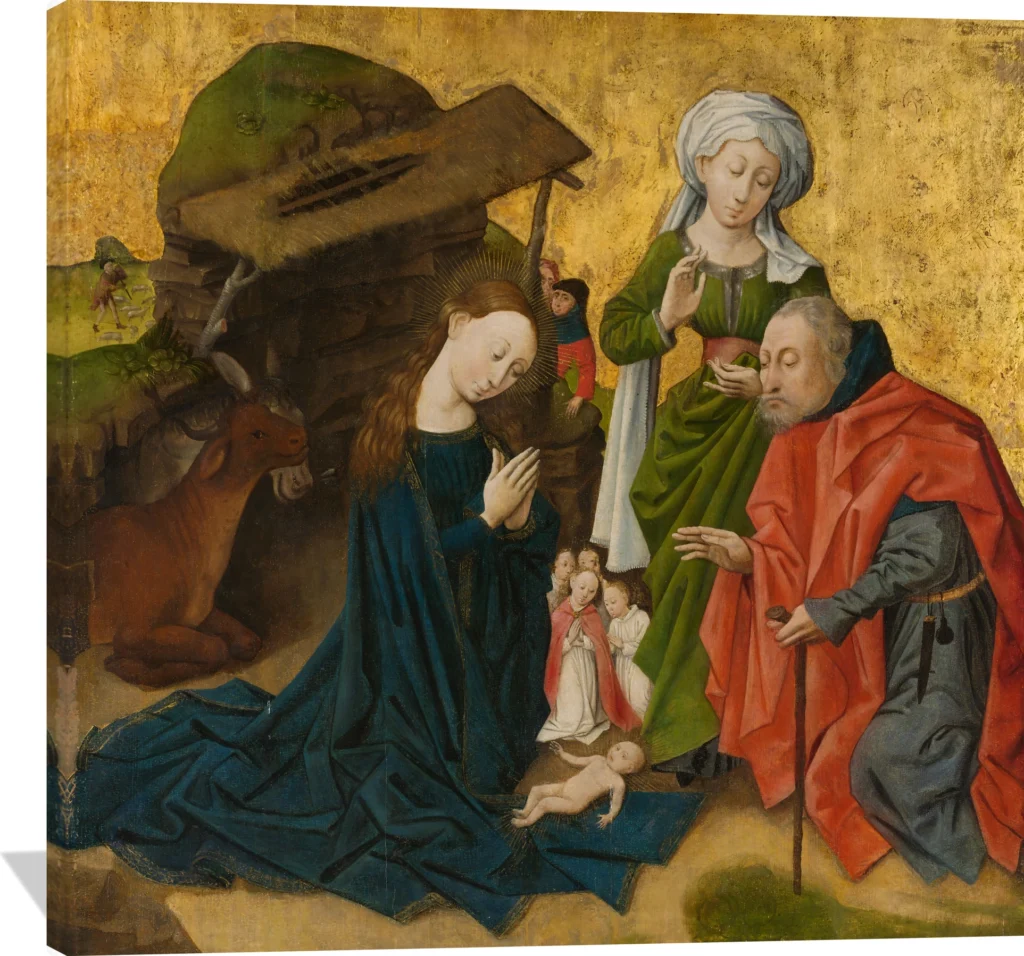
The South Netherlandish Painter The Nativity canvas captures a serene moment of devotion and divine light. Rendered in warm golds, deep blues, and rich reds, this early Renaissance masterpiece radiates quiet reverence and exquisite detail. The tender figures and luminous background evoke a timeless sense of peace, making it a stunning focal point for any art lover’s collection.
This premium The Nativity canvas print brings sacred beauty and historical depth to your home. Ideal for a living room, study, or entryway, it infuses your space with the grace and craftsmanship of 15th-century artistry while complementing both classic and contemporary interiors.
The South Netherlandish Painter active around 1460 represents the rich artistic tradition of the Burgundian Netherlands, a region renowned for its refinement in panel painting and devotional imagery. Though the artist’s identity remains uncertain, surviving works connected to this hand reflect the technical mastery and spiritual nuance that defined fifteenth-century Netherlandish art.
Artistic Style
This painter’s style is characterized by meticulous detail, luminous color, and a careful balance between naturalism and symbolism. Figures are rendered with subtle modeling, delicate textures, and a keen observation of human emotion. Architectural backdrops and landscape elements demonstrate the era’s increasing interest in depth and spatial coherence, often illuminated with a gentle, atmospheric light.
Subjects and Themes
Typical subjects include devotional scenes, Marian imagery, and episodes from the life of Christ, executed with a meditative calm meant to invite contemplation. The painter’s compositions frequently incorporate richly adorned textiles, refined gestures, and quietly expressive faces, all hallmarks of the South Netherlandish tradition. Religious panels, such as those depicting the Virgin and Child or the Adoration of the Magi, stand out for their intimate realism and the careful choreography of sacred narrative.
Historical Significance
Active during a pivotal period in Northern Renaissance art, the South Netherlandish Painter contributed to the transition from medieval stylization to a more naturalistic visual language. The artist’s work reflects the cultural prosperity of the Burgundian court and the region’s demand for devotional images that blended spiritual depth with material splendor. Today, panels attributed to this painter offer a compelling window into the evolution of technique, craftsmanship, and religious expression in the fifteenth century.
Trust & policies
- 🚚 Free tracked shipping to 45+ countries. Local import duties or taxes may apply in some destinations.
- 🎨 Made-to-order, printed close to your delivery location
- 🛡️ If damaged, defective, or misprinted: free replacement or refund
- 🌍 Printed in US/CA/EU/UK/AU based on delivery location
- 💎 Acid-free, fade-resistant canvas with solid wood stretcher bars
- 🖼️ Optional pine floating frames in white, black, or brown
- 🪝 Ready to hang — hardware pre-installed