
Maharaja Sidh Sen Receiving an Embassy
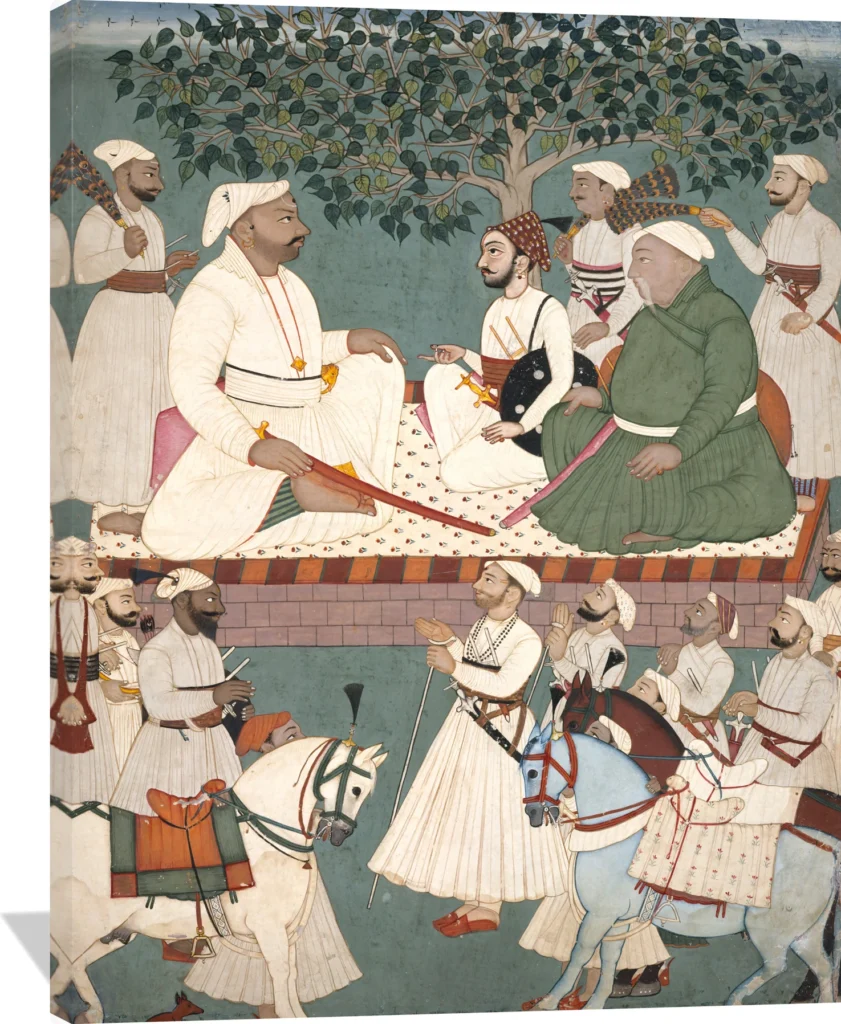
The A Master of the Mandi atelier Maharaja Sidh Sen Receiving an Embassy canvas captures a regal courtly encounter with exquisite precision and grace. Rendered in refined tones of ivory, sage green, terracotta, and muted gold, this artwork reflects the grandeur and diplomacy of royal India. The balanced composition and delicate detailing evoke a serene yet authoritative mood, ideal for spaces that celebrate heritage and sophistication.
This premium canvas print brings timeless elegance to a living room, study, or entryway. As a piece of fine Indian wall art, it invites conversation and admiration—an enduring tribute to artistry and cultural legacy.
A Master of the Mandi atelier stands as one of the refined voices of the Pahari painting tradition that flourished in the Himalayan foothills of northern India. Working within the vibrant artistic culture of the Mandi court, this artist contributed to a style celebrated for its lyrical elegance, sensitive detailing, and expressive devotional imagery.
Artistic Style and Technique
The Mandi school is known for its distinctive blend of local Himalayan aesthetics with broader North Indian and Mughal influences. This master painter displays the hallmark qualities of the atelier: jewel-like color palettes, rhythmic contours, and exquisitely rendered facial expressions that convey quiet intensity. Textures of textiles, foliage, and architectural motifs are handled with meticulous care, reflecting the workshop’s deep commitment to refinement. Occasional use of dramatic tonal contrasts reveals an affinity for atmospheric depth, distinguishing Mandi works from neighboring Pahari styles.
Subjects and Themes
The artist frequently depicted themes central to Pahari court culture, including devotional scenes related to Krishna, episodes from the Ramayana, and portraits of nobles immersed in poetic or musical pursuits. Evocative landscapes, often featuring rolling hills, elegant pavilions, or blossoming trees, frame these narratives with emotional nuance. The painter’s handling of mood serene, contemplative, or reverential exemplifies the atelier’s ability to elevate familiar stories into visually resonant experiences.
Cultural and Historical Significance
Mandi’s artistic tradition holds an important place in the development of North Indian painting, and this master’s work contributes to its enduring legacy. Created within a courtly environment that valued artistry as both spiritual expression and cultural identity, these paintings offer insight into the region’s aesthetic priorities and devotional life. The artist’s skillful synthesis of regional sensibilities with broader stylistic currents helped shape what is now recognized as the distinctive character of the Mandi school.
Today, works attributed to A Master of the Mandi atelier are appreciated for their combination of poetic subtlety and technical precision. They remain exemplars of the **Pahari miniature tradition**, offering viewers a window into a world where artistry, devotion, and courtly sophistication converged.
Trust & policies
- 🚚 Free tracked shipping to 45+ countries. Local import duties or taxes may apply in some destinations.
- 🎨 Made-to-order, printed close to your delivery location
- 🛡️ If damaged, defective, or misprinted: free replacement or refund
- 🌍 Printed in US/CA/EU/UK/AU based on delivery location
- 💎 Acid-free, fade-resistant canvas with solid wood stretcher bars
- 🖼️ Optional pine floating frames in white, black, or brown
- 🪝 Ready to hang — hardware pre-installed