
Eagle Head, Manchester, Massachusetts (High Tide)
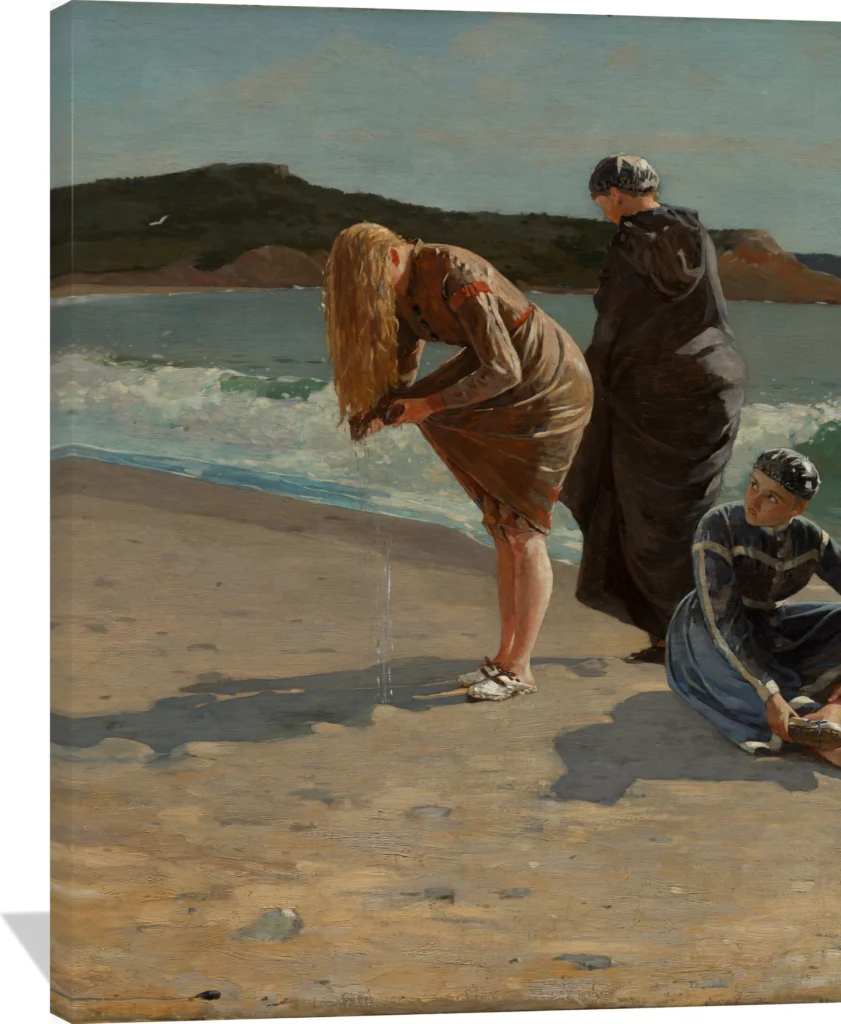
The Winslow Homer Eagle Head, Manchester, Massachusetts (High Tide) canvas captures a serene coastal moment bathed in soft sunlight and ocean breeze. Three figures and a playful dog gather along the shoreline, their gestures alive with natural grace against the rhythmic surf. Muted blues, sandy tans, and seafoam greens evoke the timeless calm of New England’s coast.
This museum-quality canvas print brings Homer’s masterful realism and coastal light into your home. Ideal for a living room, study, or entryway, this Winslow Homer wall art infuses any space with the quiet beauty and contemplative spirit of the sea.
Winslow Homer (1836–1910) was a pivotal American artist whose career bridged realism, naturalism, and the emerging modern sensibilities of the late nineteenth century. Born in Boston and later working from his studio in Prouts Neck, Maine, he developed a reputation for powerful, direct imagery that captured the character of American life and the drama of the natural world.
Artistic Style and Approach
Homer’s work is distinguished by its clarity, emotional restraint, and mastery of light. Early in his career, he emerged as a leading figure in American Realism, creating scenes of everyday life with a straightforward honesty that felt both immediate and timeless. His later turn toward watercolor expanded his expressive range, revealing a virtuoso command of the medium and helping to elevate watercolor to a respected fine-art form in the United States.
Signature Subjects
Homer painted with deep attentiveness to the world around him. His subjects included rural American scenes, women at work, children at play, and moments of quiet domesticity. In his mature period, he became renowned for his images of the rugged Maine coastline, turbulent seas, and solitary figures confronting nature’s power. The tension and vitality of these works, including iconic pieces such as The Gulf Stream, underscore his ability to render both the beauty and the indifference of the natural world.
Cultural and Historical Significance
Recognized as one of the most influential American artists of the nineteenth century, Homer contributed significantly to shaping a distinctly American artistic identity. His depictions of post–Civil War life, maritime labor, and the untamed landscape reflect the cultural currents of a nation in transition. His work’s immediacy and psychological depth continue to resonate, solidifying his status as a foundational figure in American art.
What Makes His Work Distinctive
Homer’s paintings and watercolors are marked by their bold compositions, disciplined simplicity, and evocative atmosphere. His ability to convey human resilience and the sublime force of nature gives his art a lasting emotional impact. Today, his work is admired for its technical excellence, narrative subtlety, and the sense of authenticity that remains central to his legacy as a master of American realism and a pioneer of modern watercolor.
Trust & policies
- 🚚 Free tracked shipping to 45+ countries. Local import duties or taxes may apply in some destinations.
- 🎨 Made-to-order, printed close to your delivery location
- 🛡️ If damaged, defective, or misprinted: free replacement or refund
- 🌍 Printed in US/CA/EU/UK/AU based on delivery location
- 💎 Acid-free, fade-resistant canvas with solid wood stretcher bars
- 🖼️ Optional pine floating frames in white, black, or brown
- 🪝 Ready to hang — hardware pre-installed