
The Adoration of the Shepherds
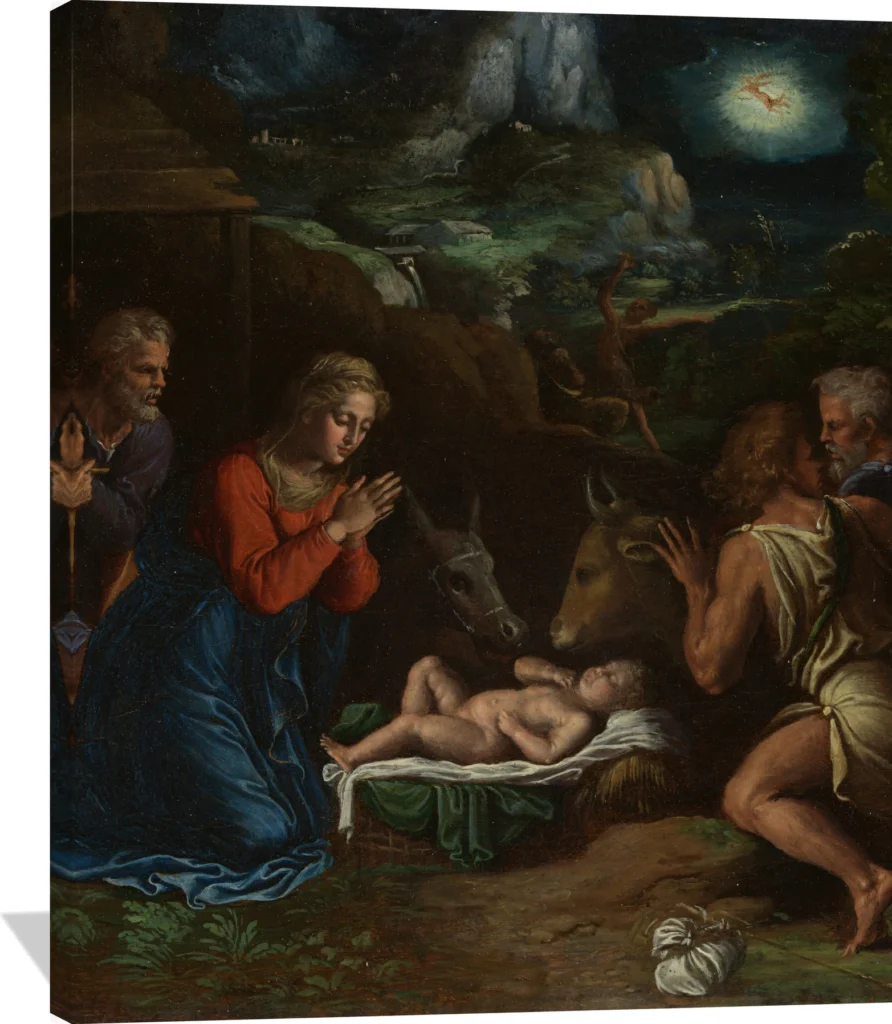
The Girolamo da Carpi The Adoration of the Shepherds canvas captures a serene moment of devotion, illuminated by soft moonlight and warm earthly tones. Deep blues, rich browns, and gentle golden hues draw the eye toward the tender scene of the Virgin and Child, surrounded by humble shepherds and rustic textures. The composition’s balanced light and shadow evoke quiet reverence and timeless beauty.
This museum-quality canvas print brings Renaissance grace and spiritual warmth to any space. Ideal for a living room, study, or entryway, it adds depth and elegance while celebrating the artistry of Girolamo da Carpi, the distinguished Italian painter from Ferrara.
Girolamo da Carpi, also known as Girolamo Sellari, was an Italian painter and architect born in Ferrara in 1501 and active until his death in 1556. A central figure of the Ferrarese school, he skillfully bridged the late Renaissance and emerging Mannerist aesthetics, creating works admired for their elegance, compositional clarity, and poetic restraint.
Artistic Style and Approach
Girolamo’s style blends the refined linearity of the Emilian tradition with the sophisticated elongation and expressive nuance characteristic of early Mannerism. His paintings often feature harmonious color palettes, serene atmospheres, and a subtle emotional depth that reveals his thoughtful study of classical models. These qualities made him a sought-after artist in Ferrara’s vibrant intellectual and artistic circles, where he contributed to the region’s distinctive visual identity.
Notable Contributions
Known for both religious and mythological imagery, Girolamo da Carpi frequently depicted saints, biblical episodes, and allegorical scenes with a gentle balance of idealization and humanity. His frescoes and panel paintings were admired for their clarity of form and their measured sense of drama. Beyond his achievements as a painter, he also served as an architect for the Este court, a role that expanded his impact on Ferrara’s cultural landscape and demonstrated his versatile command of Renaissance design.
Subjects and Themes
Girolamo favored contemplative narratives, refined figures, and carefully structured settings. Whether rendering sacred subjects or classical themes, he infused his compositions with a calm sophistication that distinguished his work from the more exuberant tendencies of his contemporaries. His attention to proportion, controlled gesture, and balanced space reflects a deep engagement with the ideals of harmony and beauty that defined the Renaissance.
Cultural Significance
As a leading artist of Ferrara during a formative cultural moment, Girolamo da Carpi contributed meaningfully to the region’s artistic heritage. His blend of local traditions with broader Renaissance currents helped shape the city’s visual language and left a lasting imprint on later artists. Today, his paintings are valued for their graceful synthesis of technical precision and expressive subtlety, qualities that underscore his role as a refined voice within Italy’s sixteenth‑century artistic landscape.
Trust & policies
- 🚚 Free tracked shipping to 45+ countries. Local import duties or taxes may apply in some destinations.
- 🎨 Made-to-order, printed close to your delivery location
- 🛡️ If damaged, defective, or misprinted: free replacement or refund
- 🌍 Printed in US/CA/EU/UK/AU based on delivery location
- 💎 Acid-free, fade-resistant canvas with solid wood stretcher bars
- 🖼️ Optional pine floating frames in white, black, or brown
- 🪝 Ready to hang — hardware pre-installed