
The Dream of Aeneas
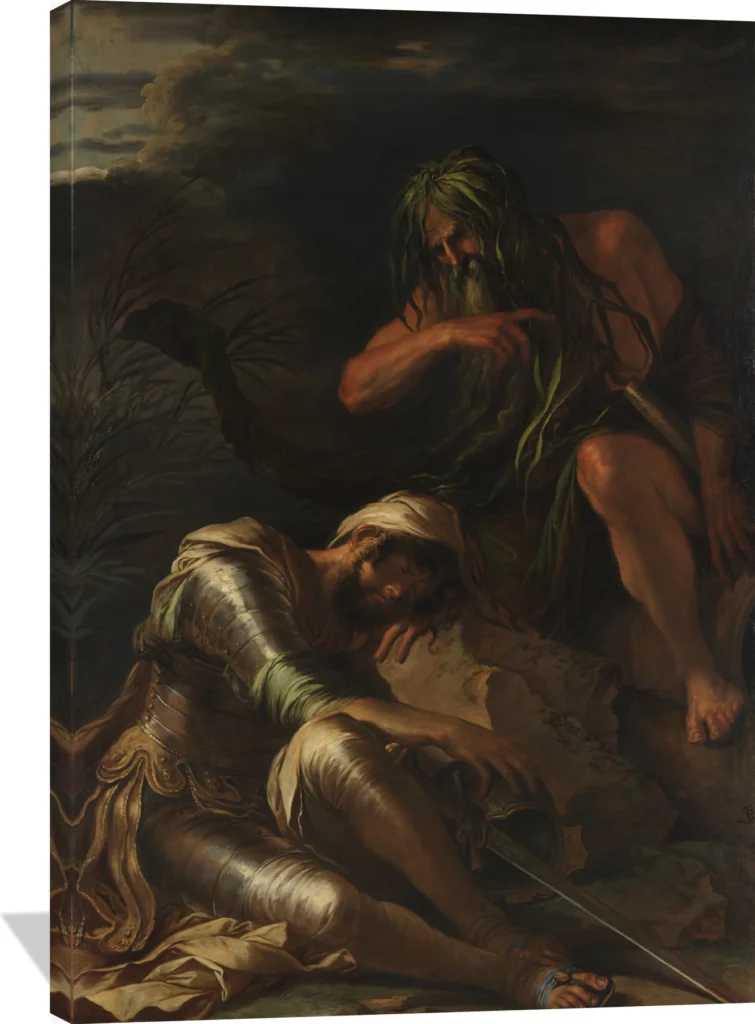
The Salvator Rosa The Dream of Aeneas canvas captures a haunting moment of mythic vision and divine encounter. Bathed in deep earth tones of bronze, olive, and shadowed gold, the composition contrasts the sleeping hero’s luminous armor with the spectral presence of a godlike figure emerging from darkness. Rosa’s dramatic chiaroscuro and expressive movement evoke both mystery and transcendence.
This museum-quality The Dream of Aeneas wall art brings timeless grandeur to any setting—ideal for a study, library, or refined living space. A masterwork of Baroque imagination, it invites contemplation of fate, courage, and the unseen forces that guide human destiny.
Salvator Rosa (1615–1673) was an Italian painter, draftsman, and printmaker born in Arenella near Naples and active primarily in Rome. Known for his rebellious spirit and fiercely independent artistic vision, he became one of the most distinctive figures of the Italian Baroque.
Artistic Style and Vision
Rosa’s work is defined by dramatic landscapes, bold chiaroscuro, and an expressive, sometimes tempestuous mood. Rather than idealized vistas, he preferred wild, untamed terrains populated by jagged rocks, stormy skies, and foreboding ruins. This atmospheric approach positioned him as a precursor to the Romantic movement and earned him a reputation for creating scenes charged with emotional intensity.
Subjects and Themes
In addition to landscape painting, Rosa produced allegorical scenes, philosophical compositions, and depictions of witches, soldiers, and hermits. His interest in the mysterious and the macabre set him apart from his contemporaries, while his satirical drawings and prints reveal a sharp, critical mind. Works such as Philosopher in Meditation and The Temptation of Saint Anthony capture his fascination with solitude, contemplation, and the supernatural.
Legacy and Significance
Rosa’s unconventional path challenged artistic norms of the seventeenth century, making him a compelling figure for later generations. His landscapes, often described as wildly poetic and strikingly original, offered an alternative to the classical serenity favored in his era. His influence extended beyond painting to literature and theatre, reflecting his broader intellectual ambitions.
Today, Salvator Rosa is celebrated for the rugged beauty of his compositions and for the fiercely individualistic spirit that shaped his work, securing his place in the cultural history of the Italian Baroque.
Trust & policies
- 🚚 Free tracked shipping to 45+ countries. Local import duties or taxes may apply in some destinations.
- 🎨 Made-to-order, printed close to your delivery location
- 🛡️ If damaged, defective, or misprinted: free replacement or refund
- 🌍 Printed in US/CA/EU/UK/AU based on delivery location
- 💎 Acid-free, fade-resistant canvas with solid wood stretcher bars
- 🖼️ Optional pine floating frames in white, black, or brown
- 🪝 Ready to hang — hardware pre-installed