
Porte de la Reine at Aigues-Mortes
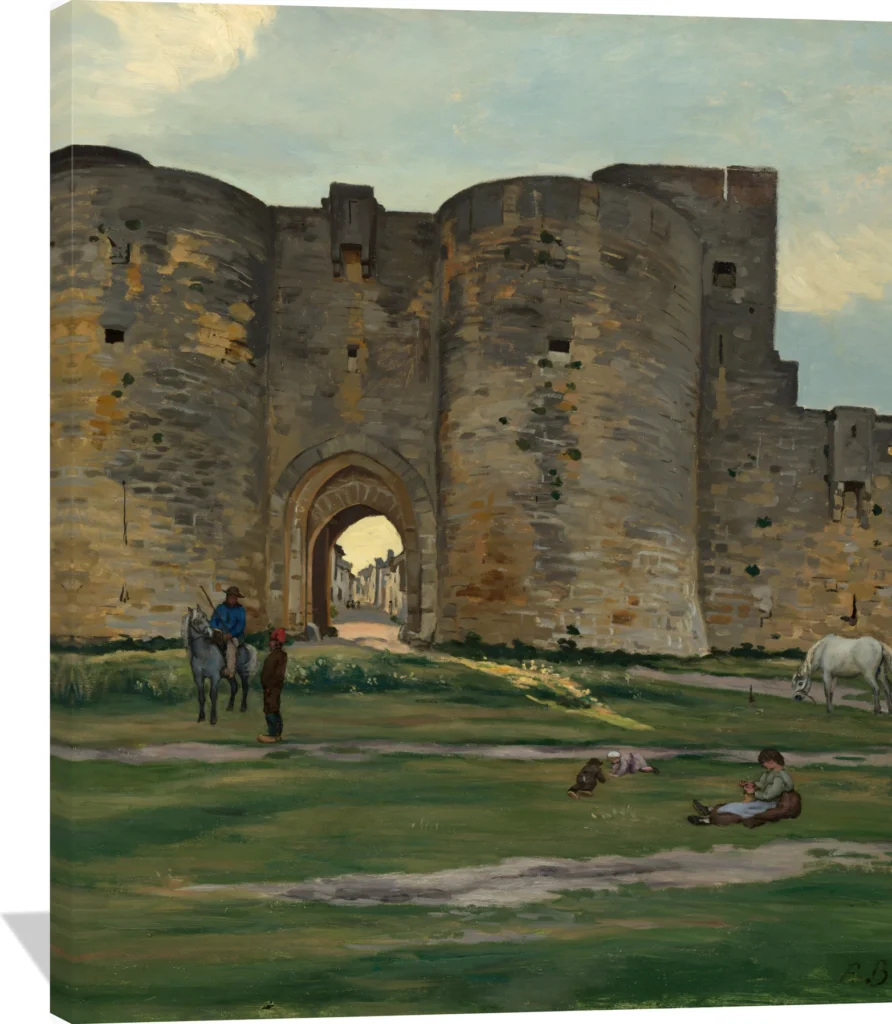
The Jean-Frédéric Bazille Porte de la Reine at Aigues-Mortes canvas captures the timeless strength of medieval architecture bathed in soft southern light. Warm stone tones of ochre and beige contrast beautifully with the fresh greens of the foreground and the tranquil blue sky, creating a balanced composition that feels both grounded and serene.
This elegant wall art brings a sense of history and calm to any space, from a refined living room to a quiet study or entryway. A masterful example of 19th-century French realism, this canvas print evokes the poetic stillness of a summer afternoon, inviting reflection and timeless charm into your home.
Jean-Frédéric Bazille (1841–1870), born in Montpellier and active in Paris before his untimely death in the Franco-Prussian War, was a pivotal early figure of French Impressionism. Though his career was brief, his influence endures through works that reveal a striking clarity of light, refined color sensibility, and an instinctive grasp of modern life.
Artistic Style and Vision
Bazille’s paintings are marked by luminous natural light, balanced compositions, and an elegance that bridges Realism and the emerging Impressionist movement. His brushwork often remained more defined than that of his contemporaries, giving his canvases a distinctive freshness and structural precision. He cultivated a style that captured the immediacy of the outdoors while retaining a composed, almost classical restraint.
Subjects and Themes
He is best known for vibrant outdoor scenes, portraits of friends and fellow artists, and intimate glimpses of everyday life. Works such as Family Reunion and Summer Scene exemplify his ability to portray sunlit atmospheres and natural settings with a sense of ease and authenticity. His subjects reflect a world observed with clarity and affection: cultivated gardens, social gatherings, and the artistic circles of Paris.
Historical Significance
As a close associate of Monet, Renoir, and Sisley, Bazille played an essential role in the formation of the Impressionist identity. His studio served as an early hub for these artists, and his support and collaboration helped shape the direction of the movement. Despite his short life, his contribution is regarded as a foundation for the visual language that would soon transform modern painting.
Legacy
Bazille’s oeuvre, though limited, captures the spirit of innovation that defined his generation. His refined sensitivity to light and nature, combined with his forward-looking approach to contemporary subjects, makes him a key precursor to Impressionism and a painter whose work remains admired for its clarity, warmth, and understated brilliance.
Trust & policies
- 🚚 Free tracked shipping to 45+ countries. Local import duties or taxes may apply in some destinations.
- 🎨 Made-to-order, printed close to your delivery location
- 🛡️ If damaged, defective, or misprinted: free replacement or refund
- 🌍 Printed in US/CA/EU/UK/AU based on delivery location
- 💎 Acid-free, fade-resistant canvas with solid wood stretcher bars
- 🖼️ Optional pine floating frames in white, black, or brown
- 🪝 Ready to hang — hardware pre-installed