
Charles Carroll of Carrollton
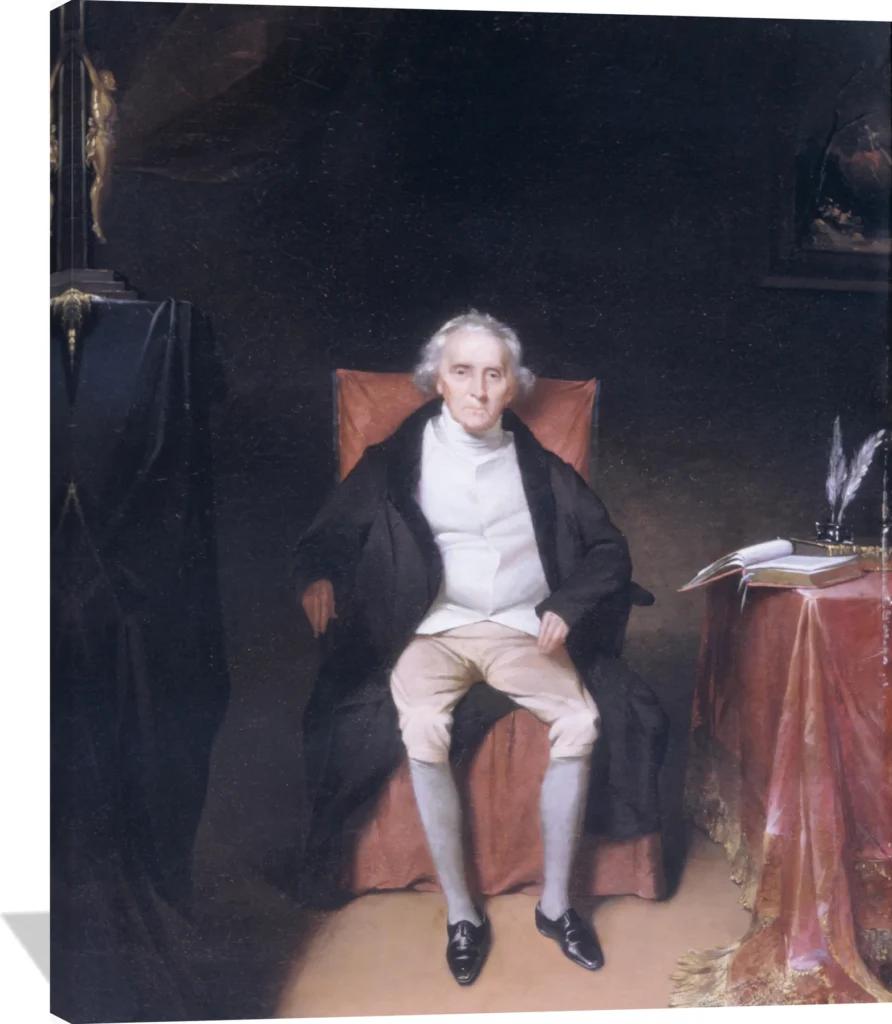
The William James Hubard Charles Carroll of Carrollton canvas captures a dignified presence with refined realism and quiet strength. Rendered in deep browns, soft creams, and muted golds, this portrait radiates timeless sophistication. The sitter’s poised expression and the painter’s delicate handling of light evoke a contemplative, historic mood that elevates any interior.
This premium wall art brings classical elegance to a living room, study, or entryway. A Charles Carroll of Carrollton canvas print offers a glimpse into 19th-century artistry, making it a striking focal point for those who appreciate heritage, craftsmanship, and enduring style.
William James Hubard (1809–1862) was a British-born artist celebrated for his refined portraiture and exceptional talent as a silhouette cutter, later expanding into oil painting after establishing himself in the United States. His work is admired for its clarity of character, elegant precision, and sensitivity to the individuality of his sitters.
Artistic Style and Approach
Hubard’s early mastery of silhouette cutting set the foundation for the clean contours and balanced compositions that would define his mature portrait style. As he transitioned into oil painting, he developed a polished, quietly expressive approach, emphasizing natural light, thoughtful detail, and subtle psychological depth. His portraits often reveal a disciplined draftsmanship combined with a gentle, atmospheric softness that distinguished him from many contemporaries.
Typical Subjects and Notable Contributions
Specializing in both profile likenesses and full painted portraits, Hubard captured a broad spectrum of prominent American figures, civic leaders, and distinguished families. His ability to render character with both economy and refinement made him a sought-after portraitist during a period when personal likeness was central to cultural identity. Hubard also produced historical compositions, demonstrating his interest in narrative and his capacity for more ambitious arrangements beyond individual portrait commissions.
Cultural and Historical Significance
Hubard’s career reflects a dynamic moment in nineteenth-century transatlantic artistic exchange. Moving from Britain to America while still young, he became part of the growing artistic landscape of the antebellum United States, contributing to the nation’s evolving visual culture. His silhouettes represent an important chapter in early American portrait traditions, while his later oil paintings illustrate the shift toward more sophisticated, European-influenced techniques.
Distinctive Qualities
Hubard’s work remains valued for its clarity, grace, and meticulous craftsmanship. His portraits blend restraint with warmth, offering viewers a sense of quiet intimacy. The precision of his early silhouette training continued to inform his mature practice, giving his painted works a distinctive structure that supports their subtle emotional resonance. Collectors appreciate his ability to evoke presence and dignity with understated elegance, a hallmark of his refined artistic sensibility.
Trust & policies
- 🚚 Free tracked shipping to 45+ countries. Local import duties or taxes may apply in some destinations.
- 🎨 Made-to-order, printed close to your delivery location
- 🛡️ If damaged, defective, or misprinted: free replacement or refund
- 🌍 Printed in US/CA/EU/UK/AU based on delivery location
- 💎 Acid-free, fade-resistant canvas with solid wood stretcher bars
- 🖼️ Optional pine floating frames in white, black, or brown
- 🪝 Ready to hang — hardware pre-installed