
A Cosey Corner
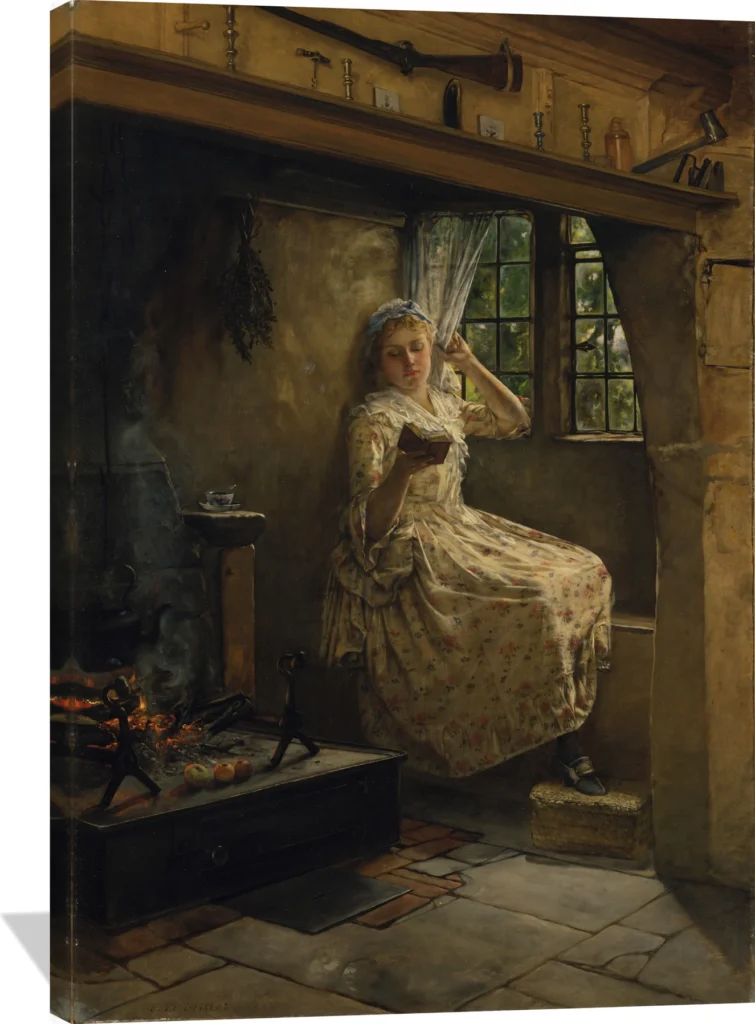
The Frank Millet A Cosey Corner canvas captures a quiet moment of warmth and contemplation. A young woman, bathed in soft light from a mullioned window, reads by the hearth in a rustic interior. Earthy browns, muted golds, and gentle creams blend with touches of green from the garden beyond, creating a timeless harmony of comfort and calm.
This elegant wall art brings the charm of 19th-century domestic life into any modern space. Ideal for a living room, study, or reading nook, this canvas print evokes serenity and nostalgia—an invitation to pause and savor the beauty of stillness.
Francis Davis Millet (1846–1912) was an American painter, designer, and influential arts administrator whose work captured refined narratives of historical, patriotic, and genre subjects. Educated at Harvard and deeply involved in artistic circles across the United States and Europe, Millet played a significant role in shaping American cultural institutions during the late nineteenth and early twentieth centuries.
Artistic Style and Approach
Millet’s paintings are celebrated for their luminous color harmonies, polished surfaces, and meticulous attention to detail. His style blended academic realism with a sensitive, humanistic touch, often emphasizing mood and atmosphere over spectacle. Through his brushwork and compositional clarity, he cultivated a visual elegance that continues to resonate with collectors of traditional fine art.
Subjects and Themes
Millet frequently depicted historical scenes, everyday domestic moments, and evocative cultural narratives inspired by his travels. Works such as A Coselette and The Danseuse illustrate his ability to render intimate human interaction with both tenderness and precision. He also produced significant murals and decorative commissions, contributing to major public architectural projects in the United States. His sensitivity to character and setting made his portrayals both accessible and emotionally compelling.
Legacy and Cultural Significance
Beyond painting, Millet served as a key organizer of world’s fairs, a respected art critic, and a co‑founder of institutions that helped formalize American arts administration. His international experience and commitment to artistic exchange positioned him as a bridge between European academic traditions and the evolving tastes of the American art public. Recognized for his dedication to craftsmanship and his influence within cultural circles, he remains a figure of enduring importance in American art history.
What Distinguishes His Work
Millet’s artistry stands out for its serene beauty, narrative clarity, and refined emotional tone. Whether portraying historical drama or quiet domesticity, he imbued each scene with a sense of dignity and timeless elegance. His works continue to attract admirers for their balance of technical mastery and human warmth, making them compelling additions to any curated art collection.
Trust & policies
- 🚚 Free tracked shipping to 45+ countries. Local import duties or taxes may apply in some destinations.
- 🎨 Made-to-order, printed close to your delivery location
- 🛡️ If damaged, defective, or misprinted: free replacement or refund
- 🌍 Printed in US/CA/EU/UK/AU based on delivery location
- 💎 Acid-free, fade-resistant canvas with solid wood stretcher bars
- 🖼️ Optional pine floating frames in white, black, or brown
- 🪝 Ready to hang — hardware pre-installed