Artistic Style
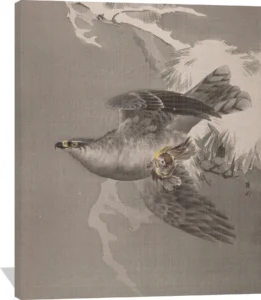
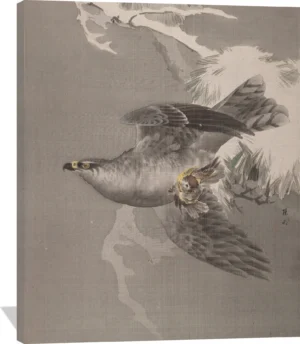
Baison is best known for his contributions to nihonga, a movement that upheld traditional Japanese painting techniques while engaging with contemporary influences. His style reflects meticulous attention to line, delicate modulation of ink, and a profound understanding of negative space. He often employed subtle color palettes that enhanced the lyrical qualities of his compositions without overwhelming their quiet elegance.
Subjects and Themes
Baison’s paintings frequently explore nature, particularly birds, flowers, seasonal landscapes, and atmospheric scenes rendered with both precision and poetic restraint. His kacho-ga, or bird-and-flower paintings, reveal an intimate study of the natural world, capturing fleeting moments such as the flutter of wings or the sway of foliage. These works convey harmony, serenity, and a deep cultural reverence for the rhythms of nature.
Notable Contributions
During a period when Japanese art was increasingly shaped by Western aesthetics, Baison’s work offered a renewed appreciation for traditional forms. His paintings upheld classical techniques while demonstrating their ongoing relevance, helping sustain the visual language and sensibilities of premodern Japan. Through his mastery of ink and mineral pigments, he contributed to the preservation and evolution of a uniquely Japanese artistic identity.
Cultural Significance
As an artist active in the Meiji era’s dynamic cultural landscape, Baison occupied an important place among painters who navigated the balance between heritage and innovation. His work embodies the period’s quiet determination to honor the past while embracing change. Today, his paintings are valued for their refined technique, atmospheric depth, and enduring expression of the natural world’s beauty.