Artistic Style and Approach
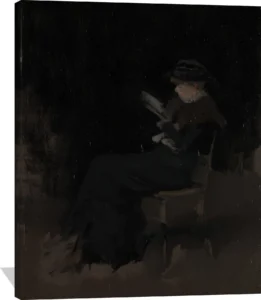
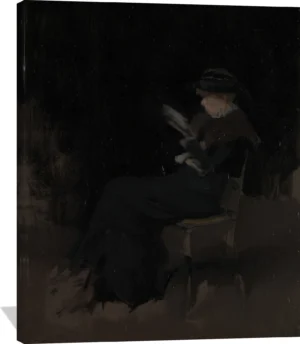
Whistler championed the idea that art should stand apart from moral or narrative purpose, emphasizing harmony, subtlety, and mood. His paintings are distinguished by their atmospheric tonal arrangements, delicate brushwork, and a focus on creating visual balance. This pursuit of beauty for its own sake became one of his most enduring contributions and a defining principle of the era’s evolving modernism.
Subjects and Notable Work
He is best known for serene portraits, intimate interiors, and evocative nocturnes cityscapes rendered in soft, misty light. Works such as Arrangement in Grey and Black No. 1 reflect his mastery of tonal harmony, while his celebrated series of Nocturnes transformed views of the Thames into poetic meditations. These paintings demonstrated his ability to distill atmosphere into a near-musical composition, an approach that set him apart from his contemporaries.
Cultural and Historical Significance
Whistler played an essential role in advancing a more modern, cosmopolitan vision of art. His insistence on artistic autonomy, combined with his elegant, economical style, influenced generations of painters across Europe and the United States. Today, he is remembered as a pivotal figure who bridged traditional techniques with emerging modernist ideals, leaving a legacy defined by subtle beauty, innovation, and a commitment to the principles of the Aesthetic Movement.