Artistic Style
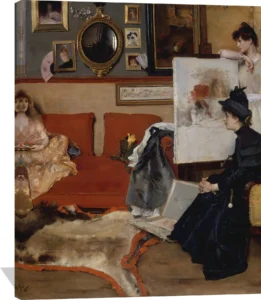
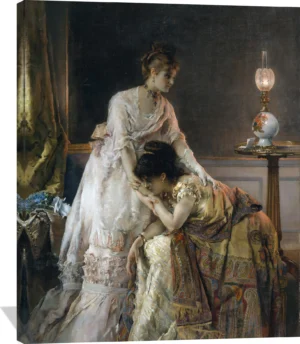
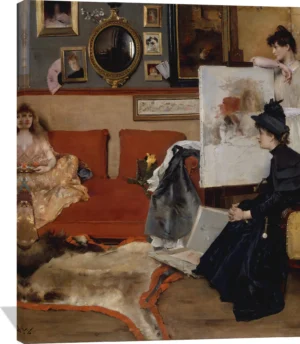
Stevens mastered a polished realist style influenced by both academic painting and emerging modern sensibilities. His surfaces are smooth and luminous, revealing meticulous attention to fabric, décor, and gesture. Subtle psychological depth and an elegant sense of color define his best work, placing him among the leading painters bridging Realism and early Impressionist tendencies.
Subjects and Themes
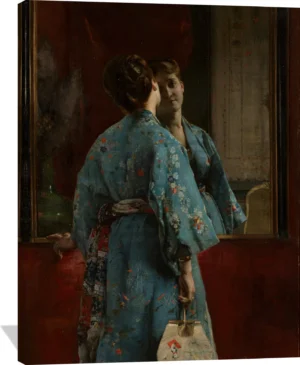
He is most closely associated with exquisitely rendered interior scenes featuring Parisian women. Through settings filled with silk drapery, ornate furniture, and imported objects, Stevens explored themes of beauty, introspection, and the private rituals of urban life. He also ventured into marine views and scenes shaped by Japonisme, reflecting his early role in introducing Japanese aesthetics to European painting.
Legacy and Significance
Stevens was highly sought after in his era, admired for his ability to capture the allure and complexity of contemporary femininity. His paintings offer a rich visual record of fashionable nineteenth‑century Paris, combining grace with an observant realism that continues to resonate today. His enduring significance lies in his masterful technique and in his contribution to shaping modern tastes, making him a distinctive and influential figure in European art.