Artistic Style
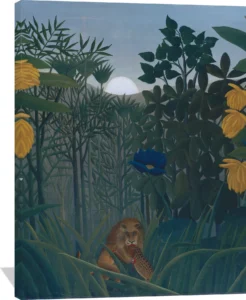
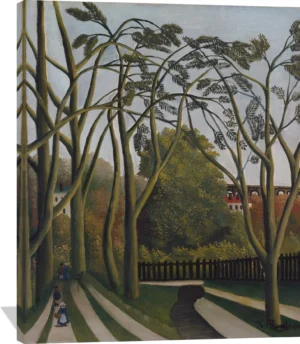
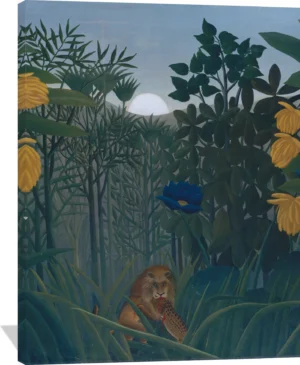
Rousseau is known for a distinctive approach often described as naïve or primitive, characterized by precise outlines, flat planes of color, and dreamlike clarity. His work embodies a poetic sense of wonder, combining meticulous detail with an intentional simplicity that set him apart from academic traditions.
Subjects and Themes
Although he never left France, Rousseau painted lush jungle scenes filled with exotic plants, wild animals, and mysterious figures. These compositions, including celebrated works such as The Dream and Surprised!, draw from botanical gardens, illustrated books, and his vivid imagination. He also produced portraits, cityscapes, and allegorical scenes that reveal his fascination with storytelling and symbolic imagery.
Notable Contributions
Rousseau’s originality earned admiration from avant‑garde artists, who recognized the bold inventiveness behind his seemingly simple technique. His pioneering vision helped shape the development of modern art, influencing movements aligned with fantasy, symbolism, and early surrealism. His work stands as a testament to the expressive power of intuition and personal vision.
Cultural Significance
Today, Rousseau is celebrated for his ability to transform the ordinary into the extraordinary. His paintings carry a timeless sense of curiosity and wonder, and his fearless embrace of individual expression has secured his place as a key figure in the evolution of modern art.