Artistic Style
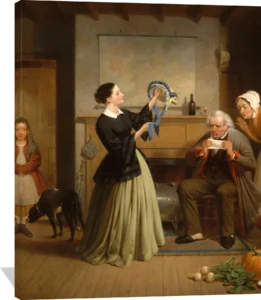
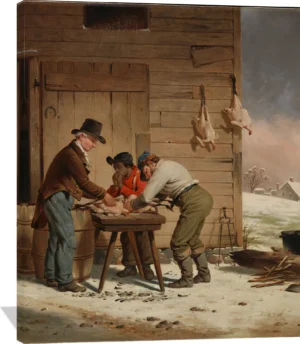
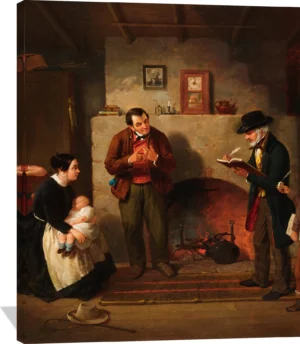
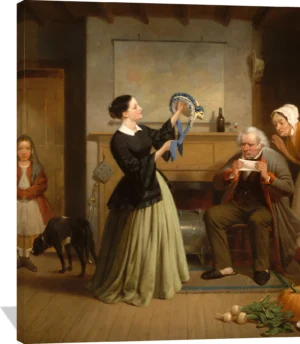
Edmonds became known for his refined genre scenes that combined narrative detail, gentle humor, and a quiet sense of empathy. His work reflects the transitional space between the early American folk tradition and the more polished realism associated with the Hudson River School’s contemporaries. Clear composition, warm tonalities, and carefully rendered interiors characterize his paintings, while subtle gestures and expressions reveal the emotional core of his subjects.
Subjects and Themes
His paintings frequently portray domestic interiors, courtship scenes, and everyday encounters, making him a chronicler of middle‑class American life in the mid‑1800s. Edmonds excelled at capturing small dramas and moments of social interaction, imbuing ordinary scenes with narrative richness. Works such as The Penny Paper and Courtship in the Parlor highlight his ability to transform familiar settings into engaging visual stories.
Legacy and Significance
As an early member of the National Academy of Design, Edmonds helped shape the development of American genre painting. His commitment to portraying recognizable, relatable experiences contributed to a growing national artistic identity. Today, his paintings remain valued for their authenticity, craftsmanship, and their distinctive narrative warmth, offering an intimate window into American social life before the Civil War.