Artistic Style
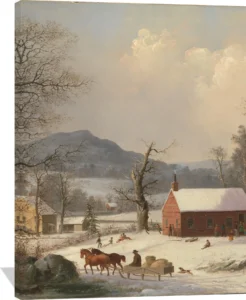
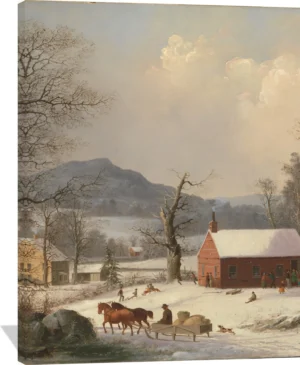
Durrie’s work is distinguished by its serene atmosphere, crisp light, and intimate sense of place. He favored balanced compositions and gentle tonal contrasts, creating images that feel both warmly familiar and meticulously observed. His ability to render snow with clarity and depth became a hallmark of his style, contributing to the enduring appeal of his winter imagery.
Subjects and Themes
Durrie is best known for his depictions of rural homesteads, farmyards, and small-town vistas, especially in winter. These scenes often feature barns, sleighs, country roads, and figures engaged in daily tasks, offering a nostalgic vision of American life before industrialization. Works such as Winter in the Country and Home to Thanksgiving exemplify his gift for transforming ordinary seasonal settings into emotionally resonant compositions.
Legacy and Cultural Significance
The partnership between Durrie and Currier & Ives played a major role in cementing his legacy, as their prints brought his imagery to a national audience. Through these widely collected lithographs, Durrie became a defining visual voice of 19th‑century New England, shaping popular memory of the American winter landscape. His paintings continue to be appreciated for their enduring charm and their role in documenting the character of early rural America with both authenticity and artistic sensitivity.