
In the Sun
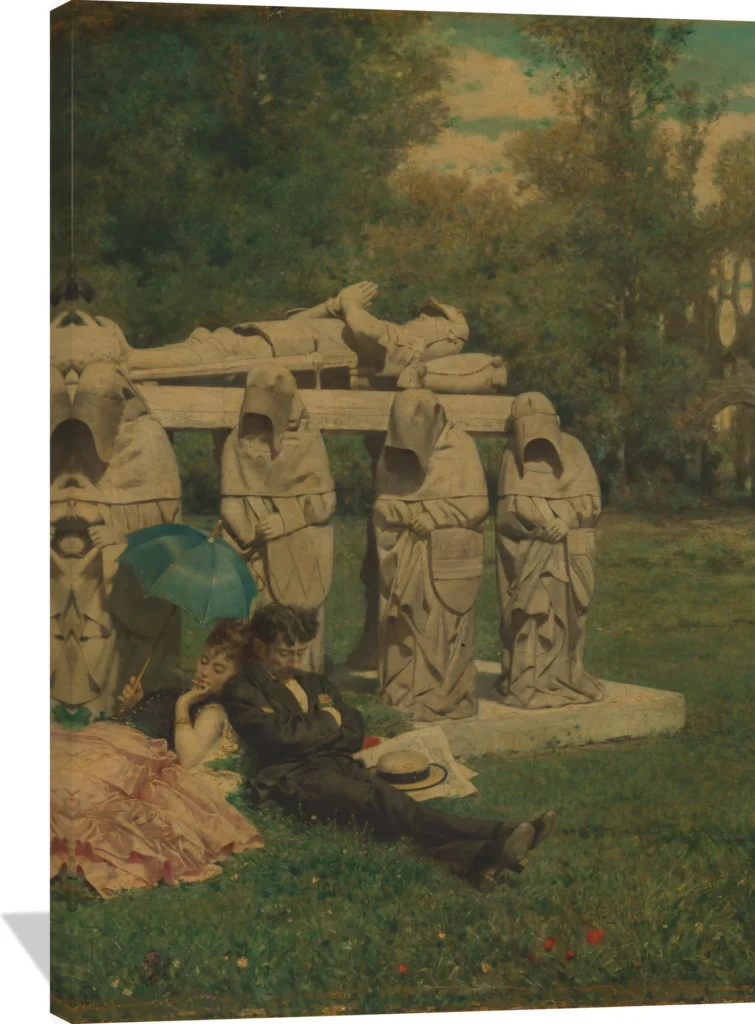
The Charles-Edouard de Beaumont In the Sun canvas captures a serene afternoon scene where romance and nature intertwine. A couple rests in soft sunlight beside ancient stone figures, surrounded by lush greenery and gentle hues of emerald, ochre, rose, and sky blue. The composition’s tranquil balance and warm tones evoke a timeless sense of leisure and reflection.
This elegant wall art brings a touch of poetic calm to any space. Ideal for a living room, study, or entryway, this canvas print invites viewers to pause and savor the quiet beauty of a moment suspended in light and history.
Charles-Edouard de Beaumont (1821–1888) was a French painter, illustrator, and lithographer whose refined genre scenes and elegant depictions of contemporary life made him a notable figure in 19th‑century Parisian art.
Artistic Style
Beaumont worked with a polished, expressive style that balanced realism with a gentle romantic sensibility. His technique revealed a keen eye for character, atmosphere, and delicate detail, often conveyed through fluid linework and subtle tonal transitions. As a skilled lithographer, he brought the same grace and precision to printed works, contributing to the growing popularity of illustrated publications in mid‑century France.
Subjects and Themes
Beaumont frequently captured scenes of daily life, intimate interior moments, and expressive figure studies. He was especially admired for his portrayals of women and children, rendered with warmth and psychological nuance. His compositions often conveyed a quiet narrative, focusing on elegance, gesture, and the emotional resonance of ordinary experiences.
Legacy and Significance
Active during a period of vibrant artistic exchange in Paris, Beaumont contributed to the cultural fabric that shaped modern illustration and genre painting. His work circulated widely through lithography, allowing his imagery to reach a broad audience and helping solidify his reputation as a gifted observer of human sentiment. Today he is remembered for his refined sensibility and the enduring charm of his carefully composed scenes, which continue to illustrate the richness of 19th‑century French visual culture.
Trust & policies
- 🚚 Free tracked shipping to 45+ countries. Local import duties or taxes may apply in some destinations.
- 🎨 Made-to-order, printed close to your delivery location
- 🛡️ If damaged, defective, or misprinted: free replacement or refund
- 🌍 Printed in US/CA/EU/UK/AU based on delivery location
- 💎 Acid-free, fade-resistant canvas with solid wood stretcher bars
- 🖼️ Optional pine floating frames in white, black, or brown
- 🪝 Ready to hang — hardware pre-installed