
Henry Clay
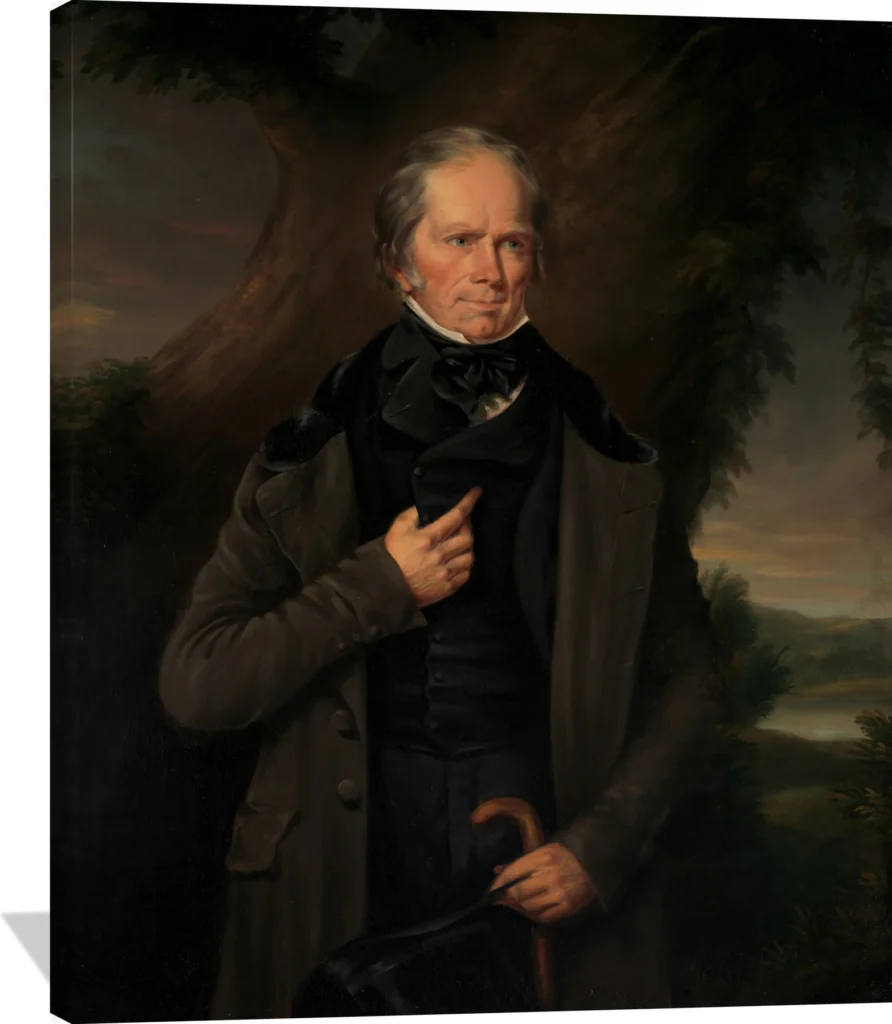
Theodore Sidney Moise’s Henry Clay captures a moment of poised dignity and quiet strength. Rendered in warm earth tones of deep brown, muted green, and soft gold, this classic portrait radiates depth and refinement. The subject stands against a serene landscape, evoking calm confidence and timeless grace.
This Theodore Sidney Moise Henry Clay canvas brings historical character and sophistication to any space. Ideal for a study, library, or formal living room, the artwork’s balanced composition and subtle lighting make it a compelling focal point. A premium canvas print that celebrates heritage, artistry, and enduring presence.
Theodore Sidney Moise (1808–1885) was an American portraitist known for his refined Southern sensibilities and meticulous draftsmanship. Working primarily in Charleston, New Orleans, and other cultural centers of the antebellum South, he built a reputation for capturing the presence and social stature of his sitters with clarity and restraint.
Artistic Style and Approach
Moise’s work is distinguished by its polished, neoclassical influence and carefully balanced compositions. His portraits often feature smooth modeling, precise linework, and a quiet emotional intensity. Favoring naturalistic color and controlled lighting, he conveyed a sense of poise that became a hallmark of his style. His attention to expressive detail, particularly in the rendering of hands and facial features, contributed to the enduring appeal of his paintings.
Notable Subjects and Themes
Best known for portraits of prominent political, military, and social figures, Moise created works that documented the cultural character of the nineteenth-century American South. He depicted judges, statesmen, and influential community leaders with a sense of dignity that reflected both personal identity and regional pride. In addition to formal portraits, he occasionally produced equestrian scenes, bringing similar precision to the depiction of horses and riders.
Legacy and Significance
Moise’s paintings serve as valuable historical records, offering insight into the visual culture and societal structures of his era. His ability to combine technical refinement with an understated emotional register has made his oeuvre a meaningful part of American art history. Collectors and historians continue to value his work for its craftsmanship and its role in shaping the visual legacy of the nineteenth-century South, highlighting his status as a notable portraitist of his time.
Trust & policies
- 🚚 Free tracked shipping to 45+ countries. Local import duties or taxes may apply in some destinations.
- 🎨 Made-to-order, printed close to your delivery location
- 🛡️ If damaged, defective, or misprinted: free replacement or refund
- 🌍 Printed in US/CA/EU/UK/AU based on delivery location
- 💎 Acid-free, fade-resistant canvas with solid wood stretcher bars
- 🖼️ Optional pine floating frames in white, black, or brown
- 🪝 Ready to hang — hardware pre-installed