
Bayside, New Rochelle, New York
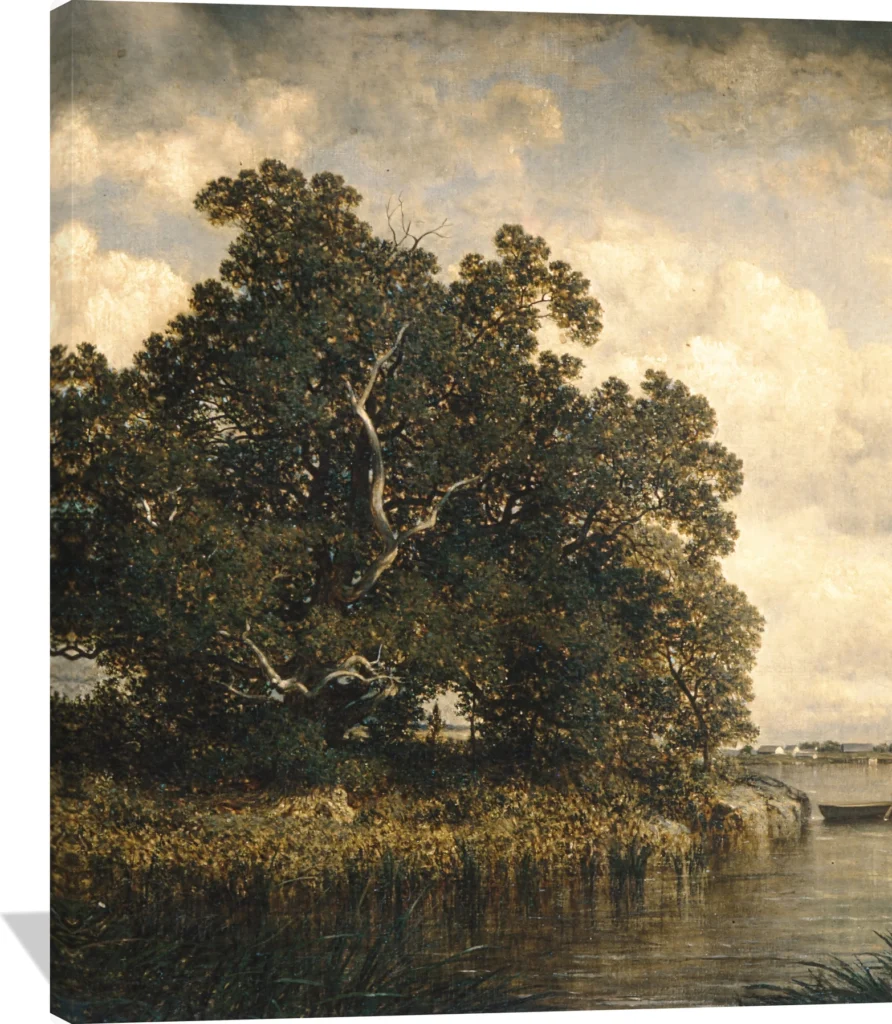
David Johnson’s Bayside, New Rochelle, New York canvas captures the tranquil harmony of land, water, and light along the Hudson River’s edge. Rendered in soft earth tones of moss green, golden brown, and silvery blue, the scene evokes a quiet afternoon beneath expansive skies, where nature and reflection meet in perfect balance.
This timeless wall art brings a sense of calm sophistication to any setting—ideal for a living room, study, or entryway. A masterwork of American landscape painting, this exquisite canvas print celebrates Johnson’s serene vision and the enduring beauty of New York’s bayside scenery.
David Johnson (1827–1908) was an American landscape painter whose career unfolded during the height of the Hudson River School. Born in New York City and later based in Walden, New York, he became known for his attentive, quietly lyrical portrayals of the northeastern American landscape.
Artistic Style
Johnson’s work is distinguished by its meticulous draftsmanship and refined naturalism. Favoring intimate woodland scenes over sweeping panoramas, he rendered forests, rocky clearings, and tranquil waterways with remarkable clarity. His early paintings reveal the influence of the Hudson River School’s idealism, while his later work moves toward a more direct, tonal observation of nature, offering a bridge between Romantic landscape traditions and emerging realist tendencies.
Subjects and Technique
Typical subjects include the wooded valleys, rural homesteads, and serene streams of the Hudson Valley and New England. Johnson excelled at capturing the textures of tree bark, moss, and foliage, creating immersive environments that invite close viewing. His precise handling of light and shadow, paired with a deliberate, almost meditative composition, contributed to a body of work recognized for its subtlety and reverence for the natural world.
Notable Contributions
A member of the National Academy of Design, Johnson played a meaningful role in the evolution of American landscape painting during the mid to late nineteenth century. His shift from idealized landscapes to more faithful, site-specific representations underscores a broader movement in American art toward realism. This transition, expressed through his own attentive style, helped shape a growing appreciation for the American environment as a subject worthy of both artistic and cultural preservation.
Cultural Significance
Johnson’s paintings serve as a visual record of a rapidly changing nineteenth-century countryside. At a time when industrial expansion was altering the nation’s landscape, his work embodied a quiet but enduring celebration of untouched natural spaces. Today, he is recognized as a significant figure in the later generation of the Hudson River School, contributing works that combine poetic sensibility with a grounded, observational approach. His legacy rests in the way he captured the profound stillness of forest interiors and the understated beauty of the American woodland, offering a perspective that remains both contemplative and timeless.
Trust & policies
- 🚚 Free tracked shipping to 45+ countries. Local import duties or taxes may apply in some destinations.
- 🎨 Made-to-order, printed close to your delivery location
- 🛡️ If damaged, defective, or misprinted: free replacement or refund
- 🌍 Printed in US/CA/EU/UK/AU based on delivery location
- 💎 Acid-free, fade-resistant canvas with solid wood stretcher bars
- 🖼️ Optional pine floating frames in white, black, or brown
- 🪝 Ready to hang — hardware pre-installed