
A Saint (Mark?) Reading
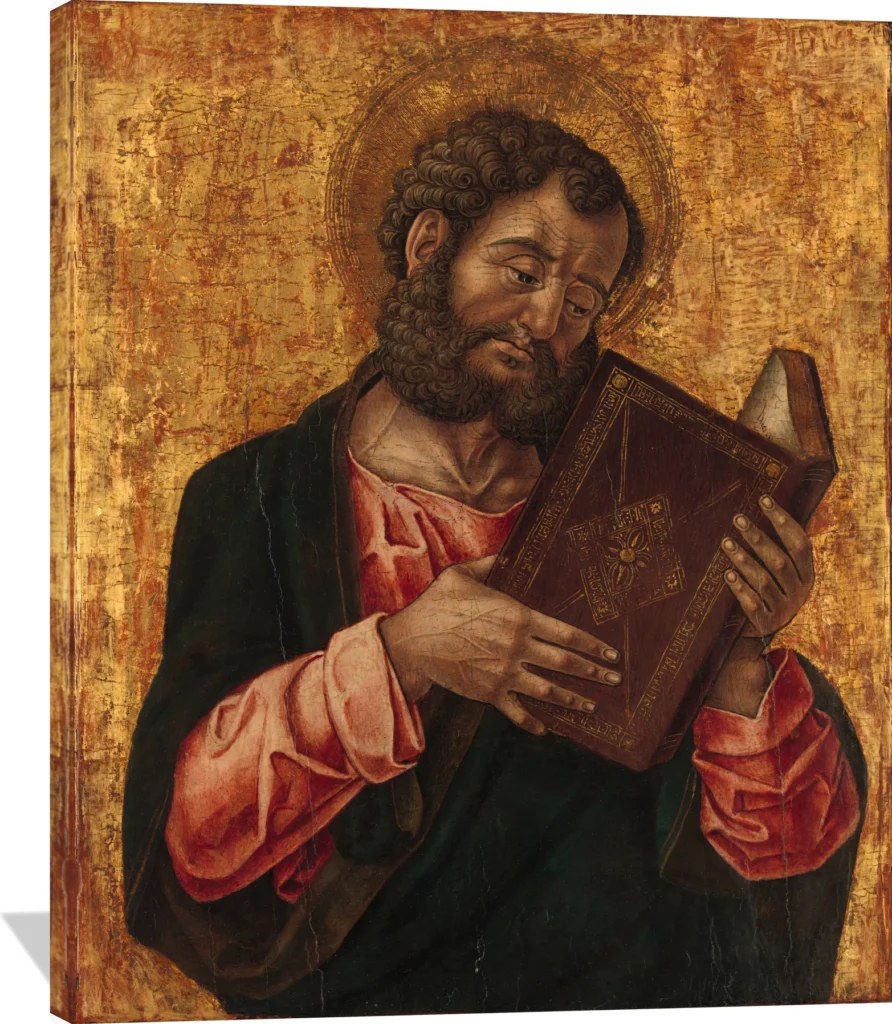
The Bartolomeo Vivarini A Saint (Mark?) Reading canvas captures the quiet devotion and luminous color typical of Venetian Renaissance art. A bearded saint, rendered in warm golds, deep greens, and rose tones, contemplates a richly decorated book against a glowing gilded background. The vertical composition and serene expression evoke timeless reflection and spiritual grace.
This museum-quality canvas print brings an aura of reverence and history to any space. Ideal for a study, living room, or entryway, this Vivarini wall art adds depth and sophistication through its blend of sacred imagery and masterful craftsmanship.
Bartolomeo Vivarini (Italian, active in Venice 1450–91) was a pivotal figure of the early Venetian Renaissance, celebrated for his luminous altarpieces and refined devotional imagery. Working within the influential Vivarini family workshop, he helped shape the visual language of 15th‑century Venetian painting through his precise draftsmanship, rich color harmonies, and compelling spiritual presence.
Artistic Style
Vivarini’s work is distinguished by a fusion of Gothic elegance and emerging Renaissance naturalism. His figures display a sculptural clarity, vivid contours, and expressive gazes that convey both serenity and intensity. Known for his mastery of tempera, he achieved radiant surfaces and jewel-like color, often accented by gold backgrounds that highlight the sacred nature of his subjects. His compositions reveal a careful balance between linear precision and atmospheric softness, a hallmark of early Venetian art.
Notable Contributions
As one of the earliest Venetian painters to adopt oil techniques, Vivarini played a crucial role in the city’s stylistic transition toward greater depth and realism. His altarpieces, polyptychs, and panel paintings demonstrate a sophisticated understanding of spatial organization and emotional resonance. Working alongside and sometimes in friendly rivalry with the Bellini family, he contributed to the flourishing artistic environment that established Venice as a major center of Renaissance innovation. His ability to unite devotional clarity with refined craftsmanship remains one of his most enduring achievements.
Typical Subjects
Vivarini specialized in sacred themes, most notably the Madonna and Child, saintly figures, and monumental altarpieces designed for churches and religious institutions. His saints often possess individualized features and richly patterned garments, enhancing their symbolic presence. Scenes of the Virgin, Christ, and the Holy Conversation allowed him to explore both formal harmony and emotional depth, making his works highly valued for liturgical settings and private devotion alike.
Cultural and Historical Significance
Bartolomeo Vivarini occupies an important place in the evolution of Venetian Renaissance painting. His commitment to clarity, structure, and color informed the visual sensibilities of later Venetian masters. Today, his paintings are recognized for their disciplined beauty and for embodying the transition from medieval spirituality to Renaissance humanism. Collectors and admirers continue to appreciate the enduring radiance and meticulous craftsmanship that define his legacy.
Trust & policies
- 🚚 Free tracked shipping to 45+ countries. Local import duties or taxes may apply in some destinations.
- 🎨 Made-to-order, printed close to your delivery location
- 🛡️ If damaged, defective, or misprinted: free replacement or refund
- 🌍 Printed in US/CA/EU/UK/AU based on delivery location
- 💎 Acid-free, fade-resistant canvas with solid wood stretcher bars
- 🖼️ Optional pine floating frames in white, black, or brown
- 🪝 Ready to hang — hardware pre-installed