
Saint Matthew and the Angel
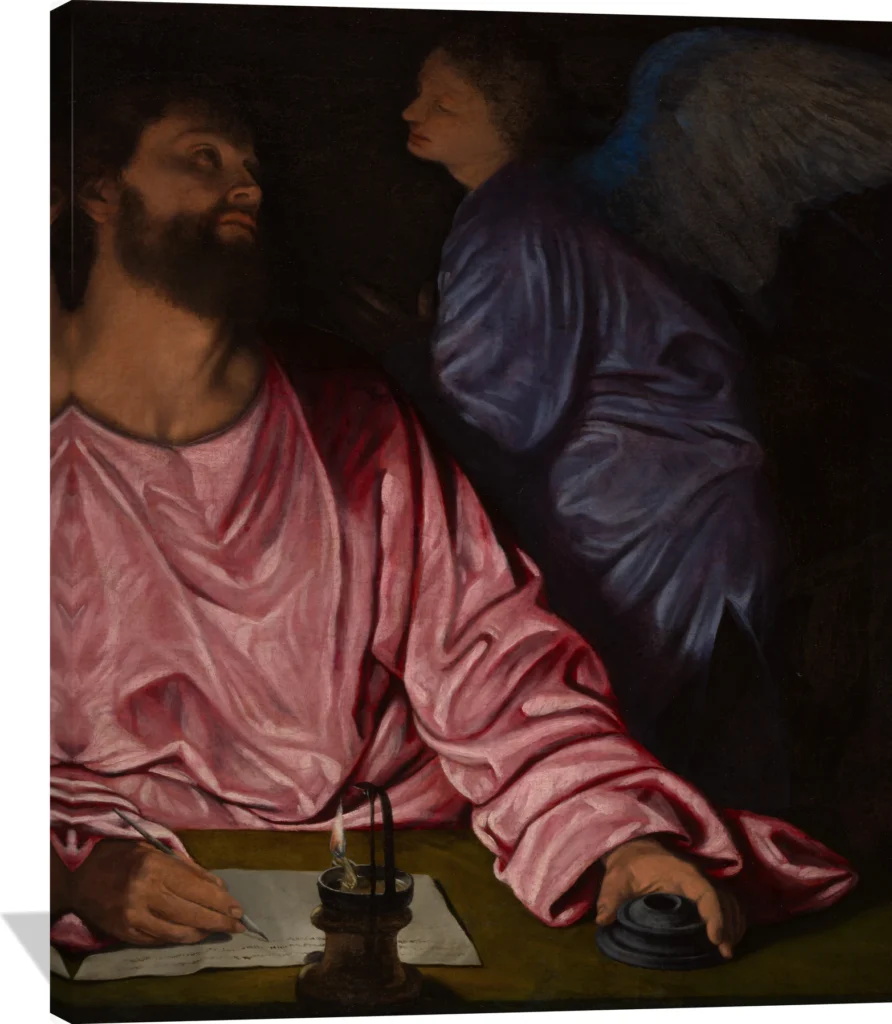
The Giovanni Gerolamo Savoldo Saint Matthew and the Angel canvas captures a moment of divine inspiration with luminous realism. Bathed in rich tones of rose, violet, and deep shadow, Saint Matthew gazes heavenward as an angel leans close, guiding his hand in writing. Savoldo’s mastery of light and texture infuses the scene with quiet reverence and introspection.
This premium canvas print brings Renaissance grace and contemplative depth to any setting. Ideal for a study, library, or sophisticated living space, the Saint Matthew and the Angel wall art invites reflection and timeless beauty into your home.
Giovanni Gerolamo Savoldo (Brescia, 1480/85–after 1548) was a distinguished figure of the Venetian High Renaissance, celebrated for his meticulous technique, atmospheric depth, and quietly dramatic approach to sacred and secular subjects.
Artistic Style
Savoldo’s paintings are characterized by finely rendered textures, radiant color harmonies, and masterful control of light. His work often balances stillness and intensity, creating scenes that feel both intimate and introspective. The refined naturalism and nuanced chiaroscuro found in his compositions mark him as a unique voice within the Venetian tradition, alongside contemporaries such as Titian and Lotto.
Subjects and Themes
He is best known for contemplative religious figures, richly detailed portraits, and scenes illuminated by dramatic nocturnal or dawn light. His depictions of saints, including the memorable Mary Magdalene and St. Matthew and the Angel, reveal a sensitivity to character and emotion rather than overt theatricality. Savoldo also brought a distinctive realism to everyday materials gleaming armor, luminous fabrics, and reflective surfaces imbuing even quiet moments with visual poetry.
Contributions and Significance
Savoldo’s work stands out for its fusion of northern European precision with the coloristic brilliance of Venice. His innovative use of light had a lasting influence on later painters, and his ability to evoke mood through subtle visual cues remains admired today. Though quieter in reputation than some of his contemporaries, he produced a body of work of remarkable refinement and lasting cultural value, earning him recognition as one of the Renaissance’s most distinctive interpreters of atmosphere and character.
Trust & policies
- 🚚 Free tracked shipping to 45+ countries. Local import duties or taxes may apply in some destinations.
- 🎨 Made-to-order, printed close to your delivery location
- 🛡️ If damaged, defective, or misprinted: free replacement or refund
- 🌍 Printed in US/CA/EU/UK/AU based on delivery location
- 💎 Acid-free, fade-resistant canvas with solid wood stretcher bars
- 🖼️ Optional pine floating frames in white, black, or brown
- 🪝 Ready to hang — hardware pre-installed