
Egyptian Scene (possibly Moses and Zipporah)
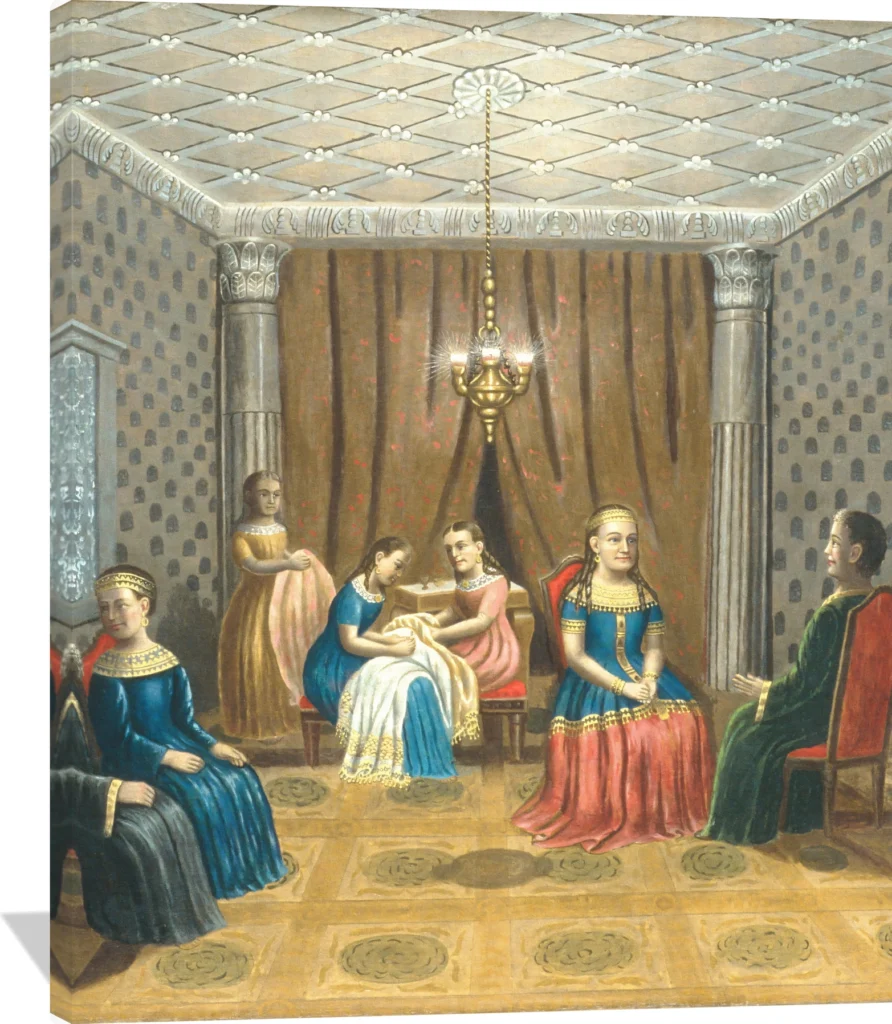
The Erastus Salisbury Field Egyptian Scene (possibly Moses and Zipporah) canvas captures a richly detailed interior filled with calm figures, warm light, and ornate textures. Muted golds, deep blues, and rose tones evoke a sense of quiet grandeur, while the symmetrical composition and luminous chandelier create a timeless, contemplative mood. Field’s distinctive folk-realism style lends the scene both intimacy and elegance.
This exquisite canvas print brings historical depth and refined artistry to any space. Ideal for a living room, study, or entryway, it offers a serene focal point that celebrates 19th-century imagination and biblical storytelling through masterful color and composition.
Erastus Salisbury Field (1805–1900) was a self‑taught American painter celebrated for his inventive blend of folk art charm and early 19th‑century realism. His long career spanned a period of dramatic cultural change in the United States, and his work captures both the intimate world of rural New England and the nation’s growing fascination with progress and possibility.
Artistic Style
Field’s style is distinguished by its clear outlines, smooth surfaces, and meticulous attention to detail. While rooted in folk traditions, his work reveals an emerging sophistication, especially in his later years, when he incorporated elements of photography and experimented with more ambitious compositions. His portraits frequently feature composed, dignified figures set against idealized backgrounds, creating a distinctive blend of simplicity and refinement.
Subjects and Themes
Best known for his portraits, Field captured families, children, and community figures with warmth and clarity. His sitters often appear poised and luminous, reflecting both personal identity and the cultural aspirations of 19th‑century America. He also produced imaginative historical and allegorical scenes, including panoramic works that reveal his fascination with scientific progress, national identity, and the expanding American landscape.
Legacy and Significance
Field’s paintings offer a vivid window into the social fabric of his era. His shift from traditional portraiture to more experimental compositions mirrors broader transformations in American art. Today, he is recognized as a significant figure in the nation’s folk art heritage, admired for the expressive clarity and quiet sophistication that define his work. His paintings remain treasured for their ability to merge personal history with the evolving cultural narrative of 19th‑century America.
Trust & policies
- 🚚 Free tracked shipping to 45+ countries. Local import duties or taxes may apply in some destinations.
- 🎨 Made-to-order, printed close to your delivery location
- 🛡️ If damaged, defective, or misprinted: free replacement or refund
- 🌍 Printed in US/CA/EU/UK/AU based on delivery location
- 💎 Acid-free, fade-resistant canvas with solid wood stretcher bars
- 🖼️ Optional pine floating frames in white, black, or brown
- 🪝 Ready to hang — hardware pre-installed