Artistic Style
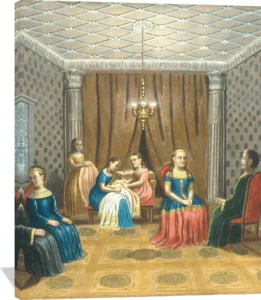
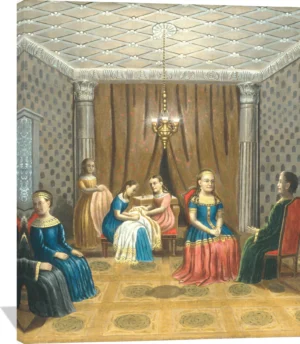
Field’s style is distinguished by its clear outlines, smooth surfaces, and meticulous attention to detail. While rooted in folk traditions, his work reveals an emerging sophistication, especially in his later years, when he incorporated elements of photography and experimented with more ambitious compositions. His portraits frequently feature composed, dignified figures set against idealized backgrounds, creating a distinctive blend of simplicity and refinement.
Subjects and Themes
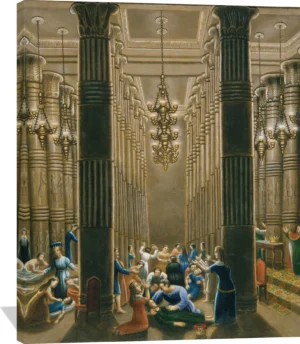
Best known for his portraits, Field captured families, children, and community figures with warmth and clarity. His sitters often appear poised and luminous, reflecting both personal identity and the cultural aspirations of 19th‑century America. He also produced imaginative historical and allegorical scenes, including panoramic works that reveal his fascination with scientific progress, national identity, and the expanding American landscape.
Legacy and Significance
Field’s paintings offer a vivid window into the social fabric of his era. His shift from traditional portraiture to more experimental compositions mirrors broader transformations in American art. Today, he is recognized as a significant figure in the nation’s folk art heritage, admired for the expressive clarity and quiet sophistication that define his work. His paintings remain treasured for their ability to merge personal history with the evolving cultural narrative of 19th‑century America.