
The Holy Family with Saint Mary Magdalen
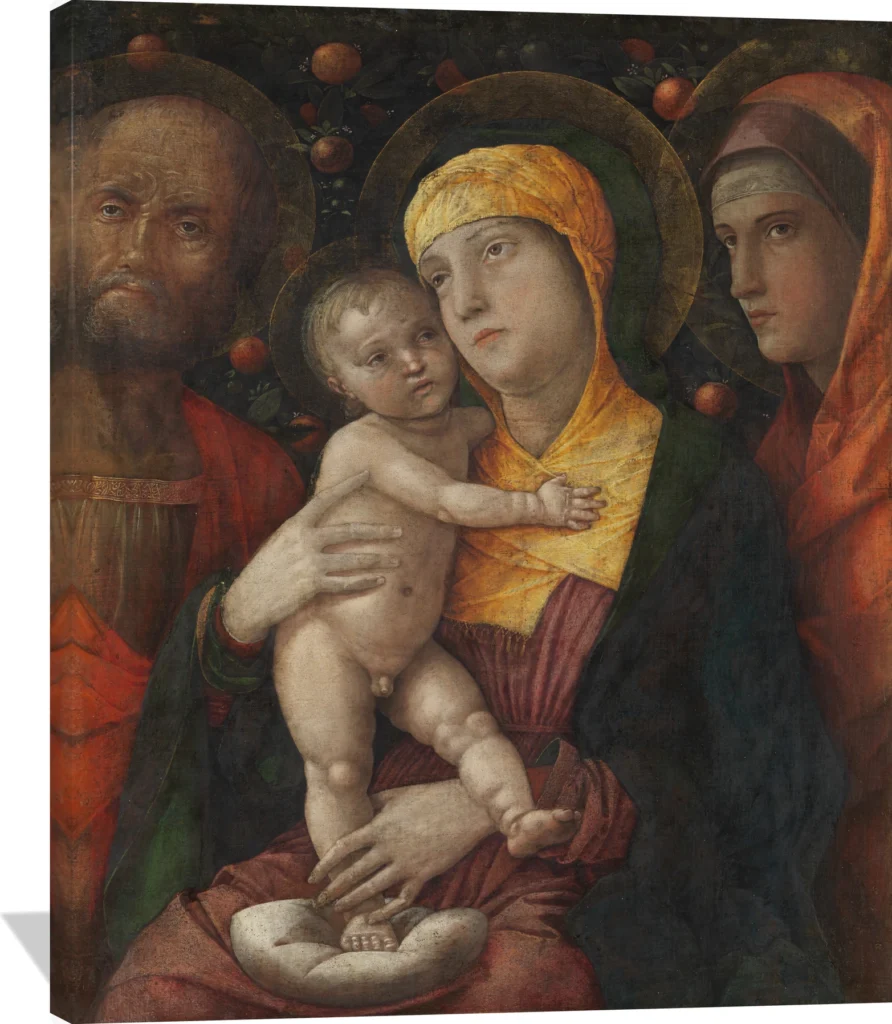
The Andrea Mantegna The Holy Family with Saint Mary Magdalen canvas captures a serene moment of devotion and tenderness, rendered in Mantegna’s signature Renaissance precision. Warm earth tones of gold, crimson, and olive green illuminate the sacred figures, while soft light and intricate detail evoke timeless reverence. This vertical composition draws the viewer into a quiet spiritual intimacy that feels both human and divine.
Perfect as a statement piece in a living room, study, or entryway, this museum-quality canvas print brings the grace of Italian artistry into your home. A masterful blend of faith and form, it embodies the enduring beauty of Renaissance wall art.
Andrea Mantegna (Italian, Isola di Carturo 1430/31–1506 Mantua) was a pioneering figure of the early Italian Renaissance, celebrated for his sculptural approach to painting and his groundbreaking command of perspective. His work reflects a profound engagement with classical antiquity, creating compositions that feel both archaeological and emotionally charged.
Artistic Style and Techniques
Mantegna’s style is defined by his meticulous linear precision, marble‑like figures, and dramatic use of foreshortening. His mastery of perspective allowed him to construct convincingly architectural spaces, giving his paintings a sense of grand, sculptural solidity. This distinctive clarity and rigor helped shape Northern Italian Renaissance aesthetics and influenced generations of artists.
Subjects and Themes
Drawing deeply from classical Roman art, Mantegna incorporated ancient motifs, inscriptions, and relief-like arrangements into his compositions. Religious narratives dominated his work, yet he portrayed them with a rare combination of archaeological detail and psychological gravity. Works such as the Ovetari Chapel frescoes and the innovative Camera degli Sposi exemplify his ability to merge sacred storytelling with courtly sophistication.
Historical and Cultural Significance
Mantegna served as court painter to the Gonzaga family in Mantua, where he developed a body of work that shaped the cultural identity of the Renaissance court. His contributions to illusionistic ceiling painting and his bold experimentation with viewpoint were transformative, leaving a lasting imprint on European art. Distinguished by a commitment to classical rigor and emotional intensity, Mantegna’s legacy endures as a cornerstone of the early Renaissance and a hallmark of perspectival innovation.
Trust & policies
- 🚚 Free tracked shipping to 45+ countries. Local import duties or taxes may apply in some destinations.
- 🎨 Made-to-order, printed close to your delivery location
- 🛡️ If damaged, defective, or misprinted: free replacement or refund
- 🌍 Printed in US/CA/EU/UK/AU based on delivery location
- 💎 Acid-free, fade-resistant canvas with solid wood stretcher bars
- 🖼️ Optional pine floating frames in white, black, or brown
- 🪝 Ready to hang — hardware pre-installed