
Pompton Plains, New Jersey
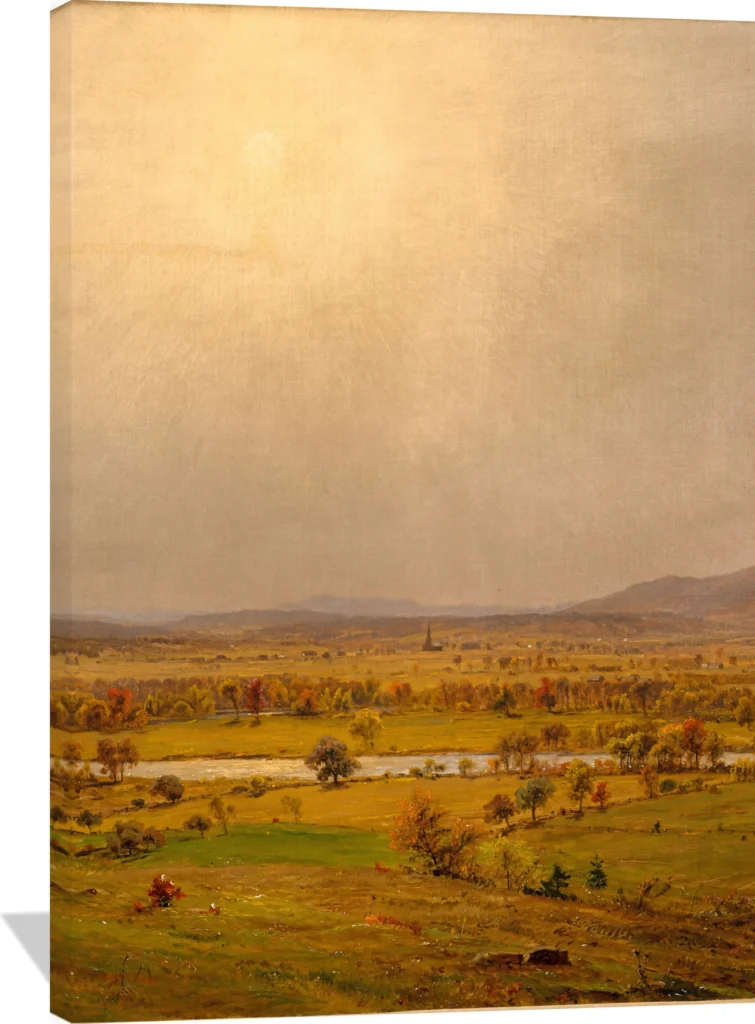
Jasper Francis Cropsey’s Pompton Plains, New Jersey canvas captures the serene expanse of the American landscape bathed in golden autumn light. Soft amber skies meet rolling green fields and distant blue hills, evoking a sense of calm and timeless beauty. The artist’s luminous brushwork and delicate balance of color reflect his mastery of natural light and atmosphere.
This fine art canvas print brings warmth and sophistication to any space—ideal for a living room, study, or entryway. A tribute to 19th-century American landscape painting, Pompton Plains, New Jersey adds an enduring touch of elegance to your wall art collection.
Jasper Francis Cropsey (1823–1900) was an American painter associated with the Hudson River School, celebrated for his luminous landscapes that captured the grandeur of the American wilderness.
Artistic Style
Cropsey’s work is distinguished by its radiant light, meticulous detail, and vivid color harmonies. Trained originally as an architect, he brought a refined structural sensibility to his compositions, balancing natural expansiveness with precise draftsmanship. His paintings often evoke a sense of poetic idealism, emphasizing the sublime beauty of the American landscape.
Subjects and Themes
He is best known for sweeping views of the Hudson River Valley, the Adirondacks, and the White Mountains. Autumn scenes became his signature, rendered with brilliant foliage that set his work apart within the movement. Many of his landscapes such as the richly colored Autumn on the Hudson River reflect a deep reverence for nature as a uniquely American source of identity and inspiration.
Legacy and Significance
As a key figure of the Hudson River School, Cropsey helped shape a visual language that celebrated the nation’s vast and unspoiled terrain. His work offered viewers a vision of America defined by both natural splendor and spiritual promise. Today he is recognized for his masterful use of color and his role in elevating landscape painting as a defining artistic expression of the 19th century. His paintings remain valued for their clarity, elegance, and enduring sense of place, embodying the ideals of a transformative moment in American art.
Trust & policies
- 🚚 Free tracked shipping to 45+ countries. Local import duties or taxes may apply in some destinations.
- 🎨 Made-to-order, printed close to your delivery location
- 🛡️ If damaged, defective, or misprinted: free replacement or refund
- 🌍 Printed in US/CA/EU/UK/AU based on delivery location
- 💎 Acid-free, fade-resistant canvas with solid wood stretcher bars
- 🖼️ Optional pine floating frames in white, black, or brown
- 🪝 Ready to hang — hardware pre-installed