Artwork by Patrick Nasmyth

Patrick Nasmyth (1787–1831) was a British painter from Edinburgh whose finely observed landscapes earned him recognition as one of the early nineteenth century’s most sensitive interpreters of the natural world. Often called the “Scottish Hobbema,” he brought a distinctive clarity and poetic stillness to rural scenes, capturing the atmosphere of Britain’s countryside with remarkable precision.

More about Patrick Nasmyth

Products

Showing the single result

  • Near Penshurst, Kent by Patrick Nasmyth, canvas print

    Near Penshurst, Kent

    Patrick Nasmyth

    Canvas from

    $44.00

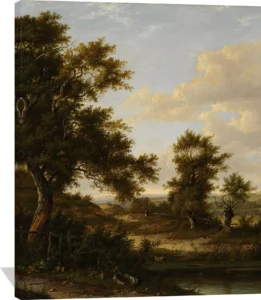
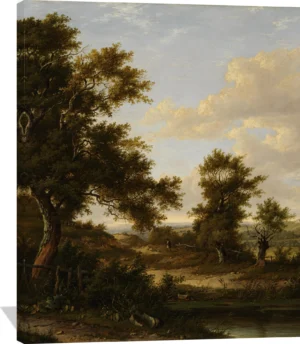
    The Patrick Nasmyth Near Penshurst, Kent canvas captures the serene beauty of the English countryside with masterful realism. Soft golden light filters through towering oaks, illuminating a tranquil path and distant rolling hills beneath a vast, cloud-streaked sky. Dominated by earthy greens, warm browns, and gentle blues, this landscape evokes a timeless calm and quiet…

    Select optionsLoading Done This product has multiple variants. The options may be chosen on the product page

Showing 1 of 1 products

About Patrick Nasmyth

Artistic Style

Nasmyth’s work is defined by meticulous detail, balanced compositions, and a calm luminosity that reflects his deep study of Dutch Golden Age landscape painting. His surfaces reveal a careful rendering of foliage, sky, and terrain, yet always maintain an understated elegance. This blend of naturalism and refinement gives his paintings a quiet but enduring resonance.

Subjects and Techniques

He favored woodland paths, rustic cottages, rivers, and open fields, frequently painting en plein air to achieve faithful color and atmosphere. Even modest scenes feel elevated by his attentive brushwork and subtle tonal shifts. Whether depicting a windswept tree or a soft evening horizon, Nasmyth conveyed the enduring character of the land with authenticity and emotional depth.

Legacy

Though his career was brief, Nasmyth left an influential body of work that shaped the development of British landscape painting. His dedication to nature’s quiet intricacies ensures his place as a significant figure in the transition between eighteenth‑century tradition and the emerging Romantic sensibility.