Artistic Style
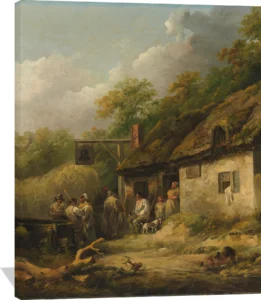
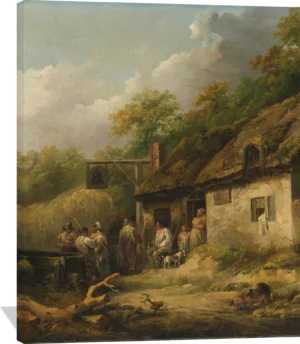
Morland’s work is marked by a naturalistic style that blends gentle realism with warm, expressive storytelling. His brushwork is fluid yet attentive, capturing texture, light, and movement with effortless clarity. He favored earthy palettes and balanced compositions, allowing scenes to unfold with a sense of authenticity rather than formality.
Subjects and Themes
Renowned for scenes of rural labor, rustic interiors, and pastoral settings, Morland often depicted farmers, travelers, animals, and the textures of countryside life. Works such as The Visit to the Farm and The Inside of a Stable exemplify his fascination with ordinary subjects imbued with quiet dignity. His portrayals of horses, in particular, became some of the most admired in British eighteenth-century art.
Contributions and Influence
Morland played a significant role in elevating genre painting in Britain, bringing emotional depth and immediacy to scenes previously regarded as simple or decorative. His ability to translate daily life into compelling imagery made him one of the most widely circulated artists of his time, especially through engravings that spread his work across Europe. This accessibility cemented his status as a leading figure in British genre art and influenced a generation of painters drawn to the beauty of the commonplace.
Legacy
Despite a brief and turbulent life, Morland left a substantial body of work that continues to resonate for its honesty, charm, and atmospheric richness. His paintings remain valued for their intimate connection to eighteenth-century English rural culture and their timeless celebration of the rhythms of ordinary life.