Artistic Style
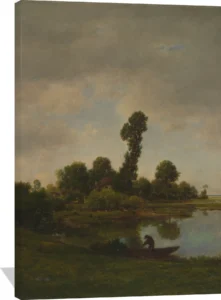
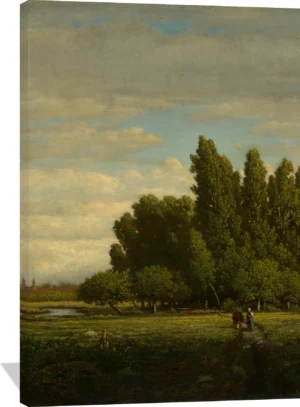
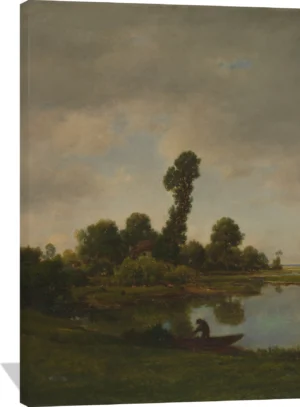
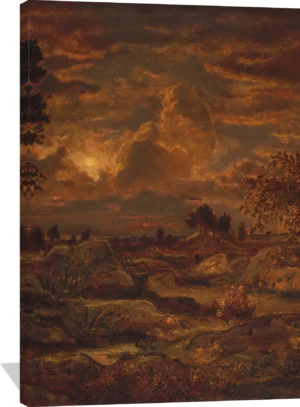
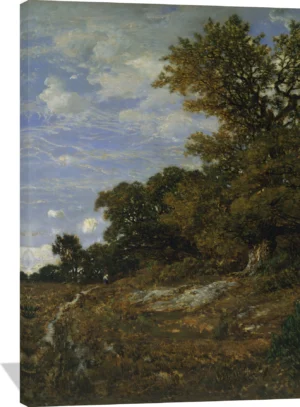
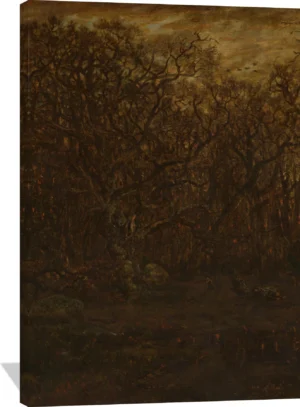
Rousseau’s style is characterized by richly textured brushwork, atmospheric tonalities, and a deep reverence for nature. He often painted en plein air, allowing changing light and weather to shape his compositions. His canvases balance careful observation with a poetic mood, creating landscapes that feel both grounded and contemplative.
Typical Subjects
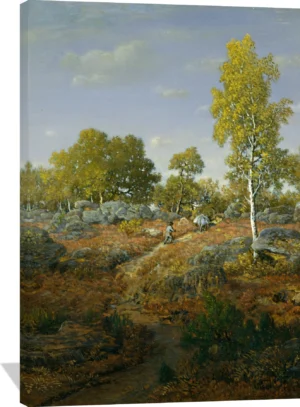
Forests, ancient oaks, rural clearings, and the expansive woodlands surrounding Barbizon were Rousseau’s favored motifs. Rather than idealizing the countryside, he portrayed it with honesty and emotional resonance, capturing the drama of stormy skies, the tranquility of twilight, and the monumental presence of trees.
Notable Contributions
A leading force in the development of Naturalism, Rousseau helped redefine landscape painting as a serious, expressive genre. His commitment to painting directly from nature profoundly influenced contemporaries and later generations. His works, including pieces such as The Forest of Fontainebleau and Edge of the Woods, demonstrate a mastery of light and atmosphere that shaped the trajectory of modern landscape art.
Cultural Significance
Rousseau’s legacy lies in his ability to convey the spiritual and emotional power of the natural world. As a founder of the Barbizon movement, he played a crucial role in transforming how landscapes were perceived, elevating them into vehicles for personal expression. His paintings remain celebrated for their quiet grandeur, meticulous detail, and enduring connection to the French countryside.