Artistic Style and Approach
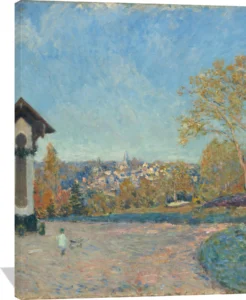
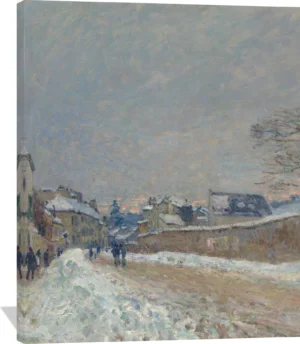
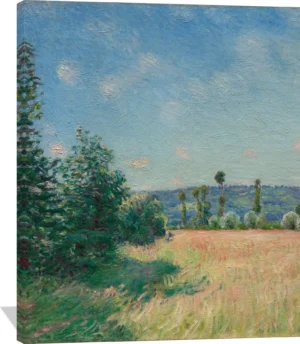
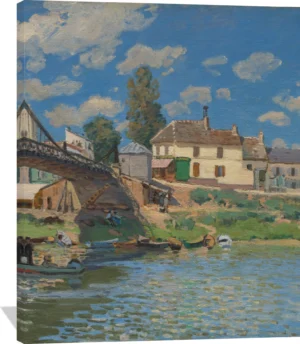
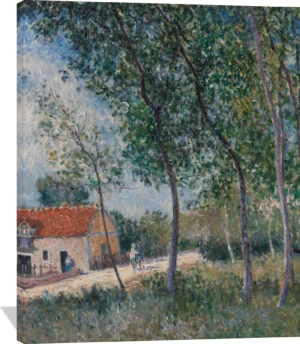
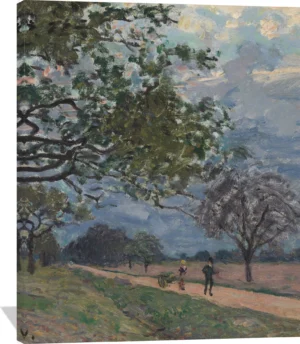
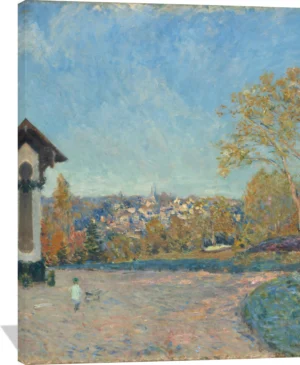
Sisley’s work is distinguished by a gentle luminosity and an unwavering commitment to painting outdoors. His brushwork is fluid yet restrained, capturing subtle shifts of atmosphere, season, and time of day. Rather than dramatic vistas, he favored quiet riverbanks, village streets, and expansive skies rendered with a clarity and calm that define his signature style. His refined sense of color allowed him to create scenes that feel both naturalistic and quietly lyrical, making him one of Impressionism’s most consistent interpreters of light.
Subjects and Contributions
Sisley devoted much of his career to the landscapes around Paris and the countryside near Moret‑sur‑Loing, where he produced some of his most recognizable compositions. Works such as Flood at Port‑Marly and Snow at Louveciennes showcase his ability to convey atmosphere with remarkable sensitivity. Unlike some of his contemporaries who explored urban bustle or modern life, Sisley remained focused on pure landscape, helping to elevate the genre within the modern artistic canon.
Cultural Significance
Though less commercially successful during his lifetime, Sisley’s contributions to Impressionism are now regarded as essential. His steadfast dedication to capturing nature’s fleeting qualities shaped the movement’s visual language and influenced generations of landscape painters. Today, his paintings are admired for their serenity, balance, and the quiet mastery of light that defines his most enduring works.