
Imaginary Landscape
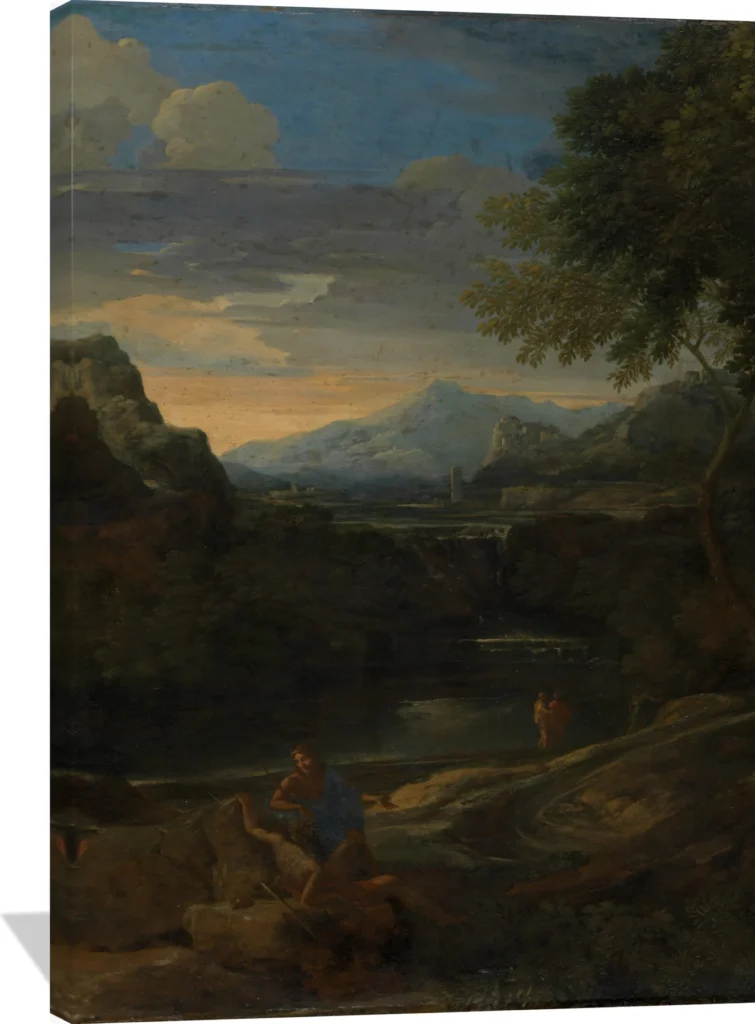
The Gaspard Dughet Imaginary Landscape canvas captures the serene grandeur of nature through masterful composition and light. Lush greens, warm earth tones, and soft golden skies draw the eye toward distant mountains and tranquil waters, evoking a timeless sense of peace and contemplation. Dughet’s classical style transforms the natural world into a poetic vision of harmony and depth.
This elegant wall art brings a refined touch to any interior—perfect for a living room, study, or entryway. A canvas print of this work invites calm reflection and enduring beauty into your space, celebrating the artistry of one of the French Baroque’s most evocative landscape painters.
Gaspard Dughet (1615–1675), a French-born painter active in Rome, is celebrated for shaping the course of 17th‑century landscape painting. Closely associated with the artistic circle of his brother‑in‑law Nicolas Poussin, Dughet developed a distinctive vision that blended Classical ideals with the poetic mood of the Roman countryside.
Artistic Style
Dughet is best known for expansive landscapes defined by rhythmic compositions, atmospheric depth, and a finely tuned balance between nature’s grandeur and serenity. His paintings feature sweeping terrains, rugged hills, and turbulent skies, often infused with a subtle dramatic tension. These qualities established him as a leading figure in the evolution of the Classical landscape tradition.
Subjects and Themes
Although he occasionally incorporated narrative elements, Dughet’s primary focus remained nature itself. His works frequently depict wooded valleys, storm‑laden vistas, and pastoral horizons rendered with a keen sensitivity to light and weather. Through these scenes, he captured the emotional resonance of the natural world and set a precedent for later landscape painters.
Legacy
Dughet’s influence extended across Europe, where his mastery of composition and expressive atmospherics shaped generations of artists. His ability to convey both tranquility and drama in landscape made him a defining voice of the Roman Baroque and a pivotal contributor to the development of the Classical landscape genre. Today, his works are admired for their harmony, clarity, and evocative sense of place.
Trust & policies
- 🚚 Free tracked shipping to 45+ countries. Local import duties or taxes may apply in some destinations.
- 🎨 Made-to-order, printed close to your delivery location
- 🛡️ If damaged, defective, or misprinted: free replacement or refund
- 🌍 Printed in US/CA/EU/UK/AU based on delivery location
- 💎 Acid-free, fade-resistant canvas with solid wood stretcher bars
- 🖼️ Optional pine floating frames in white, black, or brown
- 🪝 Ready to hang — hardware pre-installed