Artistic Style
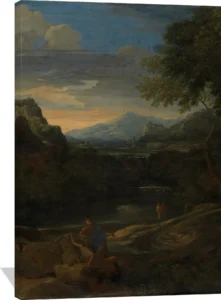
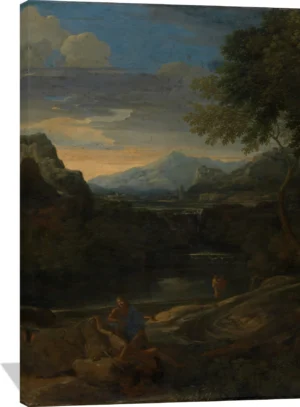
Dughet is best known for expansive landscapes defined by rhythmic compositions, atmospheric depth, and a finely tuned balance between nature’s grandeur and serenity. His paintings feature sweeping terrains, rugged hills, and turbulent skies, often infused with a subtle dramatic tension. These qualities established him as a leading figure in the evolution of the Classical landscape tradition.
Subjects and Themes
Although he occasionally incorporated narrative elements, Dughet’s primary focus remained nature itself. His works frequently depict wooded valleys, storm‑laden vistas, and pastoral horizons rendered with a keen sensitivity to light and weather. Through these scenes, he captured the emotional resonance of the natural world and set a precedent for later landscape painters.
Legacy
Dughet’s influence extended across Europe, where his mastery of composition and expressive atmospherics shaped generations of artists. His ability to convey both tranquility and drama in landscape made him a defining voice of the Roman Baroque and a pivotal contributor to the development of the Classical landscape genre. Today, his works are admired for their harmony, clarity, and evocative sense of place.