
Rip Van Winkle
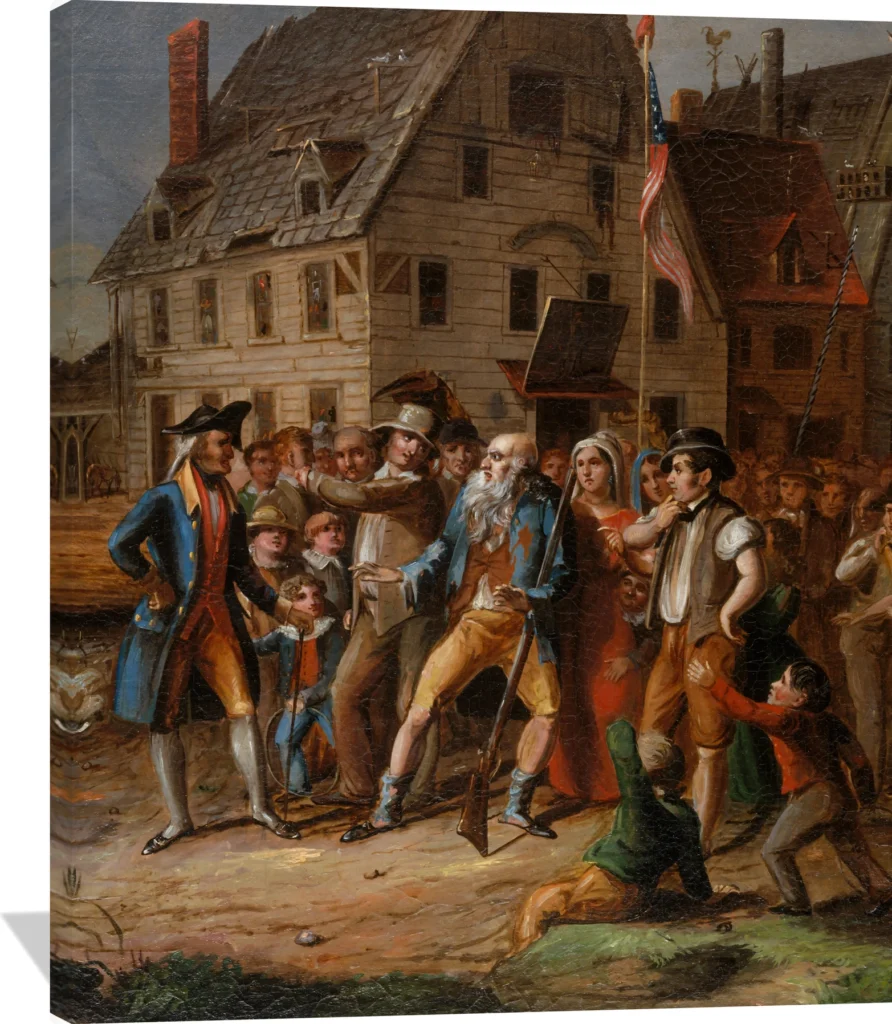
The Albertis del Orient Browere Rip Van Winkle canvas captures a timeless American legend with vivid storytelling and painterly warmth. In this richly detailed scene, townsfolk gather around the bewildered Rip, set against rustic architecture and a soft mountain backdrop. Earthy browns, muted blues, and golden tones evoke nostalgia and discovery, bringing 19th-century charm to your space.
This fine art canvas print adds historical character and conversation-starting appeal to any living room, study, or entryway. Browere’s masterful composition and expressive figures make the Rip Van Winkle wall art a refined tribute to classic American narrative painting.
Albertis del Orient Browere (1814–1887) was an American artist known for his sensitive portrayals of everyday life and his refined command of mid‑19th‑century genre painting. Active during a period of rapid cultural transformation in the United States, he contributed to the visual record of the era through works that balanced realism with a quietly expressive charm.
Artistic Style
Browere’s style is rooted in the traditions of American realism, characterized by careful draftsmanship, measured composition, and a gentle attention to human expression. His paintings often reveal a subtle interplay of light and shadow, emphasizing atmosphere without sacrificing clarity. This blend of precision and warmth made his work recognizable among his contemporaries and continues to draw interest today.
Subjects and Themes
Best known for his portraits and genre scenes, Browere depicted the people and domestic environments of 19th‑century America with an observant eye. His subjects families, artisans, rural figures, and intimate interior moments offer insight into the values and rhythms of daily life. Even in simple settings, he conveyed a sense of dignity and narrative depth, allowing viewers to connect with his subjects across time.
Legacy and Significance
Browere’s work holds cultural value for its contribution to the visual history of the United States during a formative period. Though not as widely publicized as some of his peers, his paintings remain appreciated for their craftsmanship and their ability to illuminate the social character of the era. His commitment to authentic representation and the quiet emotional resonance of his scenes position him as a meaningful figure within 19th‑century American art.
Trust & policies
- 🚚 Free tracked shipping to 45+ countries. Local import duties or taxes may apply in some destinations.
- 🎨 Made-to-order, printed close to your delivery location
- 🛡️ If damaged, defective, or misprinted: free replacement or refund
- 🌍 Printed in US/CA/EU/UK/AU based on delivery location
- 💎 Acid-free, fade-resistant canvas with solid wood stretcher bars
- 🖼️ Optional pine floating frames in white, black, or brown
- 🪝 Ready to hang — hardware pre-installed