
The Falls of Niagara
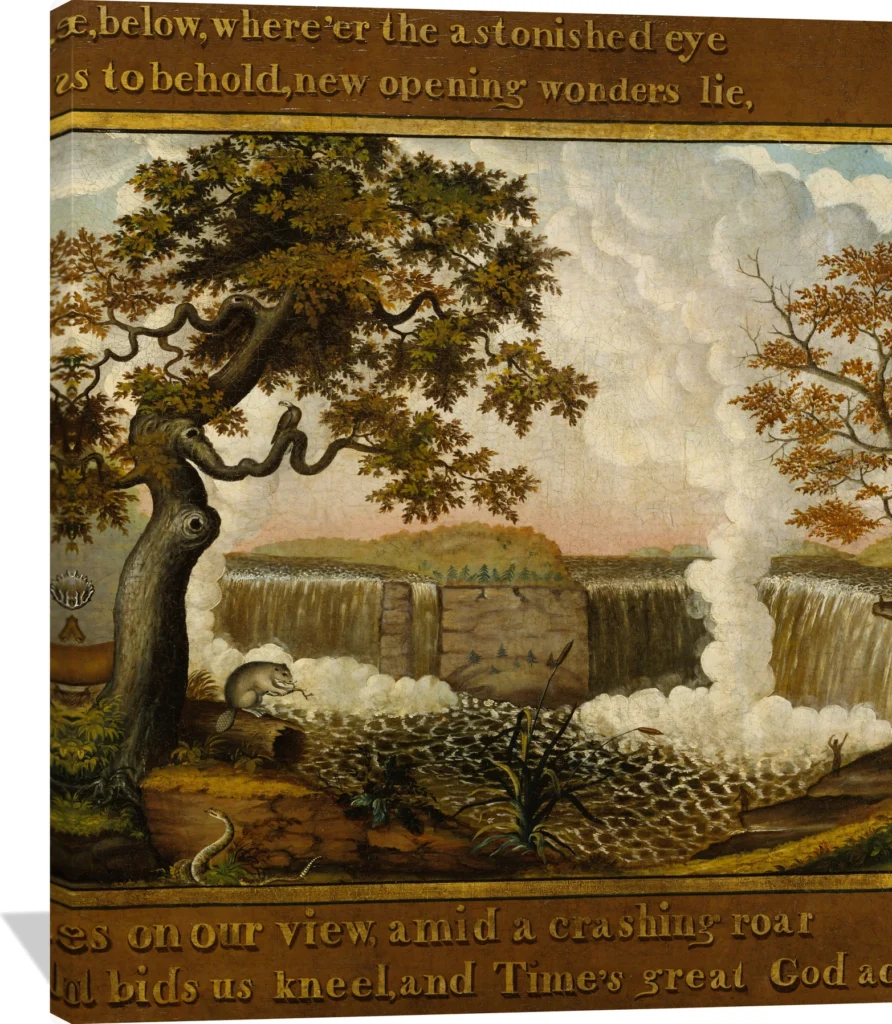
The Edward Hicks The Falls of Niagara canvas captures the timeless grandeur of one of nature’s most breathtaking wonders. Rendered in warm earth tones, misty whites, and soft blues, Hicks’s composition balances the raw power of cascading water with the serenity of surrounding wildlife and autumn foliage. His distinctive folk-art style infuses the scene with both reverence and harmony.
This museum-quality wall art brings a sense of awe and natural majesty to any space. Perfect for a living room, study, or entryway, this canvas print invites reflection and calm while celebrating the enduring beauty of the American landscape.
Edward Hicks (1780–1849) was an American painter from Pennsylvania whose work embodies the spiritual ideals and visual language of early nineteenth‑century America. A devout Quaker and self‑taught artist, Hicks balanced his vocation as a minister with a lifelong dedication to painting, creating imagery that remains deeply intertwined with his religious convictions and cultural environment.
Artistic Style and Vision
Hicks is best known for his distinctive folk‑art style, characterized by simplified forms, clear contours, and a serene, deliberate sense of composition. His paintings present a harmonious blend of narrative symbolism and pastoral charm, reflecting both his craftsmanship and his spiritual worldview. While his technique appears modest compared to academic contemporaries, his work holds a unique expressive power rooted in sincerity and clarity.
Notable Subjects
The artist’s most iconic contribution is his series of paintings titled The Peaceable Kingdom, inspired by biblical prophecy and Quaker ideals of universal harmony. These compositions, showing animals and children gathered in tranquil unity, illustrate Hicks’s belief in the possibility of moral and social peace. He also painted views of rural Pennsylvania, historical scenes, and memorial imagery, often incorporating elements of everyday life with a contemplative tone.
Cultural Significance
Hicks occupies a prominent place in American folk art, valued for his ability to visually express the spiritual concerns of his time. His paintings serve as cultural documents of early American Quaker life and demonstrate how art can function as a vehicle for moral instruction. Through his sincere approach and unwavering devotion to his themes, he became a key figure in shaping the visual heritage of early America, leaving a body of work recognized today for its authenticity, depth, and enduring symbolic resonance.
Trust & policies
- 🚚 Free tracked shipping to 45+ countries. Local import duties or taxes may apply in some destinations.
- 🎨 Made-to-order, printed close to your delivery location
- 🛡️ If damaged, defective, or misprinted: free replacement or refund
- 🌍 Printed in US/CA/EU/UK/AU based on delivery location
- 💎 Acid-free, fade-resistant canvas with solid wood stretcher bars
- 🖼️ Optional pine floating frames in white, black, or brown
- 🪝 Ready to hang — hardware pre-installed