Artistic Style
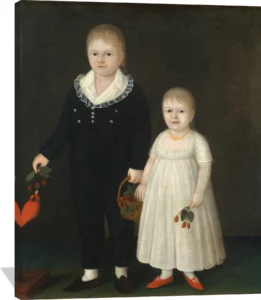
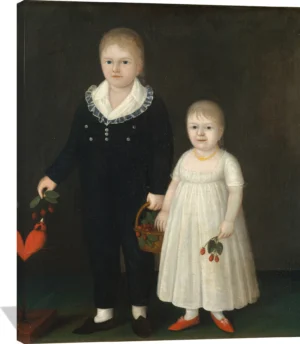
Johnson’s paintings are recognized for their crisp outlines, balanced compositions, and graceful simplicity. His figures often appear poised and frontal, with careful attention to costume detail and subtle nuances of character. The refined restraint of his technique, paired with his intuitive sense of proportion, gives his portraits a composed, quietly dignified presence.
Subjects and Themes
Working for middle-class families, craftsmen, and merchants, Johnson created portraits that documented the rising social identities of early America. He frequently depicted sitters with symbolic objects, elegant furnishings, or decorative textiles, elements that conveyed both status and personal aspiration. Children, families, and individual likenesses form the core of his surviving work, each rendered with the artist’s characteristic directness.
Contributions and Significance
As a self-taught artist and a free man of color, Johnson holds a unique place in American art history. His portraits provide valuable insight into the cultural fabric of the young republic and the diverse communities shaping it. Beyond their historical resonance, these works stand out for their compositional clarity and engaging immediacy, qualities that continue to draw admiration from collectors and scholars alike.
Legacy
Joshua Johnson’s contribution to early American portraiture is increasingly recognized for both its artistic merit and its cultural importance. His paintings, including celebrated works such as Portrait of a Young Girl and Portrait of a Gentleman, reveal the sophistication attainable outside formal academic training. Today, Johnson is appreciated not only as a pioneering artist but also as a vital voice in the broader narrative of American creativity.