Artistic Style
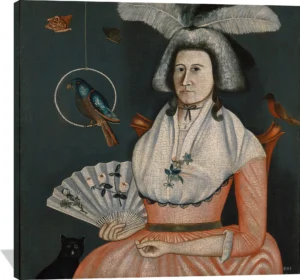
Hathaway’s paintings are distinguished by their crisp outlines, refined simplicity, and a quiet sense of poise. His portraits often reveal a balance between realism and stylization, presenting sitters with calm expressions, carefully rendered attire, and a gentle attention to detail. The result is a distinctive visual language that feels both personal and emblematic of early American aesthetics.
Subjects and Notable Work
Focusing primarily on portraits of families, children, and local figures, Hathaway captured the character of rural New England society with directness and sincerity. His most recognized painting, Mrs. Samuel Cutts, exemplifies his ability to convey warmth, dignity, and subtle narrative through composed forms and delicate color.
Cultural Significance
Though he balanced his artistic pursuits with a career as a physician, Hathaway left a lasting impression on the development of American folk portraiture. His work provides valuable insight into the visual culture of his era, reflecting an emerging national identity shaped by everyday people. Today, he is remembered for his quietly expressive style and for helping define the early American artistic tradition.