
Madonna and Child
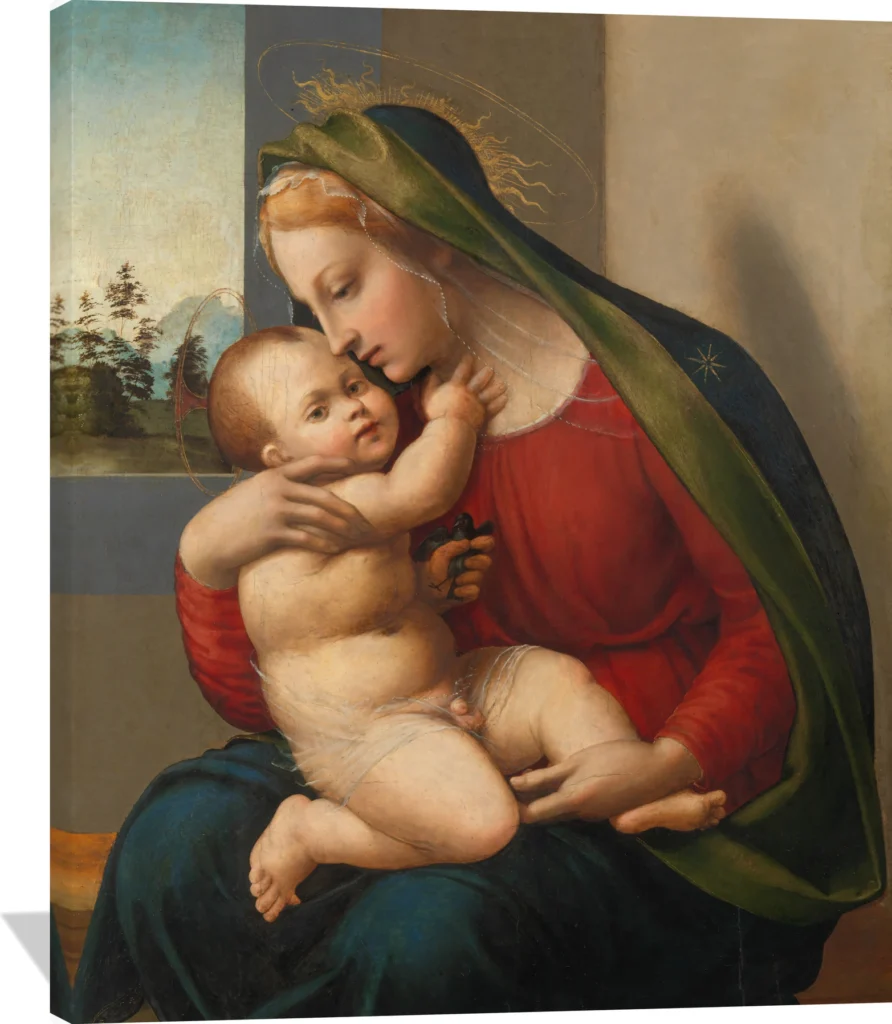
The Francesco Granacci Madonna and Child canvas captures a tender moment of devotion, rendered in warm tones of crimson, gold, and deep green. The soft light and serene expressions evoke the grace of the Italian Renaissance, reflecting Granacci’s mastery of form and emotion. Subtle details—like the delicate halos and gentle embrace—bring a timeless sense of peace and intimacy to any space.
This elegant canvas print makes a refined statement in a living room, study, or entryway. Its balanced composition and luminous palette invite quiet reflection, making it a perfect addition for those who appreciate classical beauty and spiritual harmony in their wall art.
Francesco Granacci (Francesco di Andrea di Marco), an Italian painter born in Villamagna in 1469 and active in Florence until his death in 1543, was a distinguished figure of the Florentine Renaissance. A contemporary and early companion of Michelangelo, Granacci developed a refined visual language rooted in the graceful balance and luminous color typical of late fifteenth‑ and early sixteenth‑century Florence.
Artistic Style
Granacci’s work is characterized by serene compositions, harmonious proportions, and a vibrant yet controlled palette. His paintings often reflect the transition from the linear clarity of the early Renaissance to the richer chromatic expression of the High Renaissance. Known for his confident draftsmanship and gentle modeling of figures, he crafted scenes infused with calm dignity and narrative clarity.
Subjects and Themes
He frequently depicted religious themes, including altarpieces, devotional panels, and narrative cycles. His scenes from the lives of saints and biblical figures display a finely tuned sense of staging, with architectural backdrops and landscapes that heighten the emotional impact. Works such as The Triumph of Camillus reveal his ability to blend historical storytelling with expressive detail and a strong sense of theatricality.
Legacy and Significance
Granacci’s enduring importance lies in his contribution to the flourishing artistic culture of Renaissance Florence. Though often working within collaborative workshop settings, he maintained a distinctive voice shaped by both traditional Florentine principles and the emerging innovations of his era. Today, he is recognized as a skilled painter whose artistry illuminates the vibrant creative environment that produced some of the Renaissance’s most influential masters, offering collectors and admirers a window into the elegance and spiritual depth of the period.
Trust & policies
- 🚚 Free tracked shipping to 45+ countries. Local import duties or taxes may apply in some destinations.
- 🎨 Made-to-order, printed close to your delivery location
- 🛡️ If damaged, defective, or misprinted: free replacement or refund
- 🌍 Printed in US/CA/EU/UK/AU based on delivery location
- 💎 Acid-free, fade-resistant canvas with solid wood stretcher bars
- 🖼️ Optional pine floating frames in white, black, or brown
- 🪝 Ready to hang — hardware pre-installed