
Pope Gregory XVI Visiting the Church of San Benedetto at Subiaco
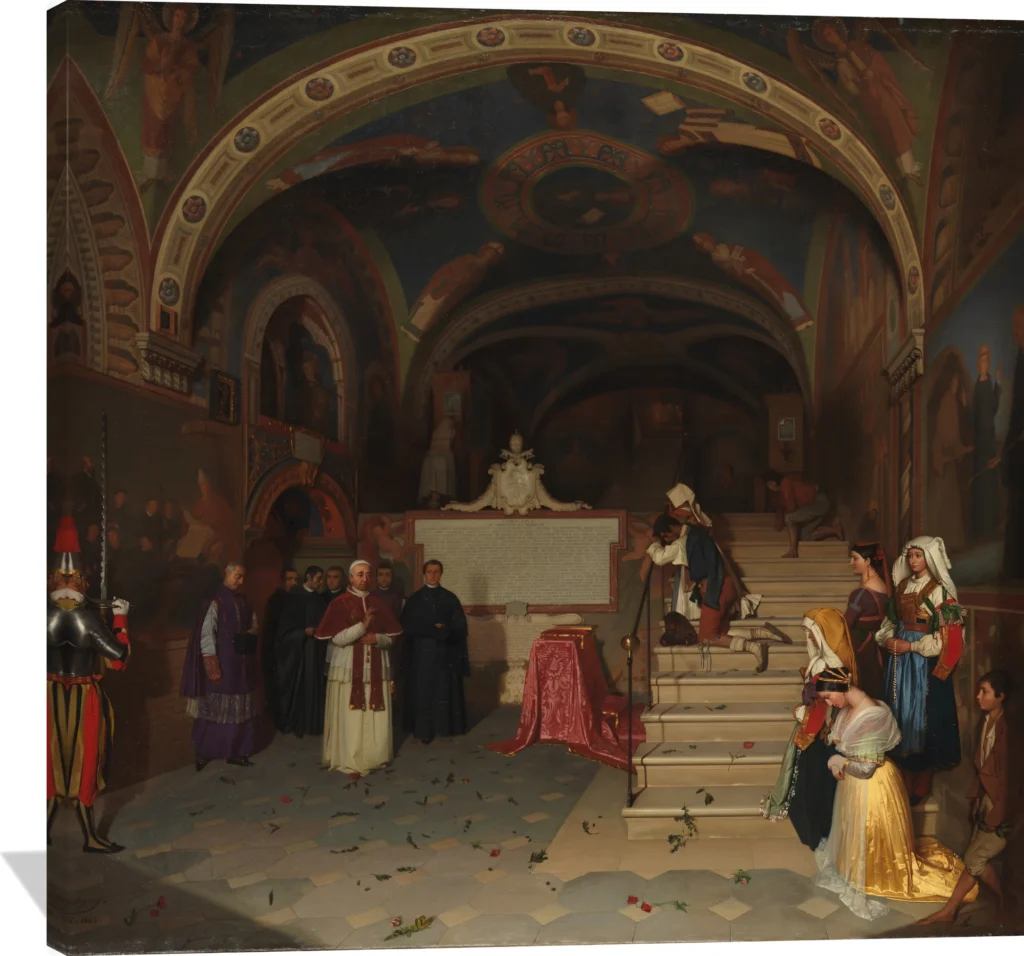
The Jean-François Montessuy Pope Gregory XVI Visiting the Church of San Benedetto at Subiaco canvas captures a moment of reverent grandeur within a richly adorned interior. Warm tones of crimson, gold, and deep green illuminate the sacred setting, where figures gather in quiet devotion beneath intricate frescoed arches. Montessuy’s masterful realism and balanced composition evoke both spiritual solemnity and historical depth.
This museum-quality wall art brings timeless elegance to any living room, study, or entryway. A canvas print that celebrates faith, artistry, and tradition, it transforms your space with the dignity and warmth of 19th-century French painting.
Jean-François Montessuy (1804–1876) was a French painter from Lyons whose work reflects the refined sensibilities of nineteenth‑century regional art. Active during a period of growing artistic exchange between Paris and provincial centers, he developed a practice rooted in close observation and a deep appreciation for the Rhône Valley’s atmosphere and character.
Artistic Style
Montessuy is recognized for a measured, harmonious approach to composition, favoring clarity of form and subtle modulation of light. His painting style aligns with the elegant precision associated with academic French traditions of the era, yet it often carries a quiet naturalism that reveals his attentiveness to the landscapes and urban vistas around Lyons. His palette, typically restrained, helps heighten a sense of calm and balance that defines much of his work.
Subjects and Themes
Although documentation of his oeuvre is limited, Montessuy frequently turned to views of his native region, depicting its rivers, hillsides, and architectural landmarks with an eye for everyday beauty. Portraiture and genre scenes also appear within the body of work attributed to him, each rendered with sensitivity to character and environment. These subjects demonstrate his commitment to capturing the rhythm of local life and the enduring charm of Lyonnais settings.
Legacy and Significance
Montessuy’s contribution lies in his ability to distill the essence of nineteenth‑century Lyons through a blend of academic rigor and poetic restraint. His paintings offer an intimate record of a city and landscape in transition during a century of cultural expansion. Today, collectors value his work for its quiet elegance, historical resonance, and the artist’s evident mastery of atmospheric realism.
Trust & policies
- 🚚 Free tracked shipping to 45+ countries. Local import duties or taxes may apply in some destinations.
- 🎨 Made-to-order, printed close to your delivery location
- 🛡️ If damaged, defective, or misprinted: free replacement or refund
- 🌍 Printed in US/CA/EU/UK/AU based on delivery location
- 💎 Acid-free, fade-resistant canvas with solid wood stretcher bars
- 🖼️ Optional pine floating frames in white, black, or brown
- 🪝 Ready to hang — hardware pre-installed