
Landscape with a Cottage
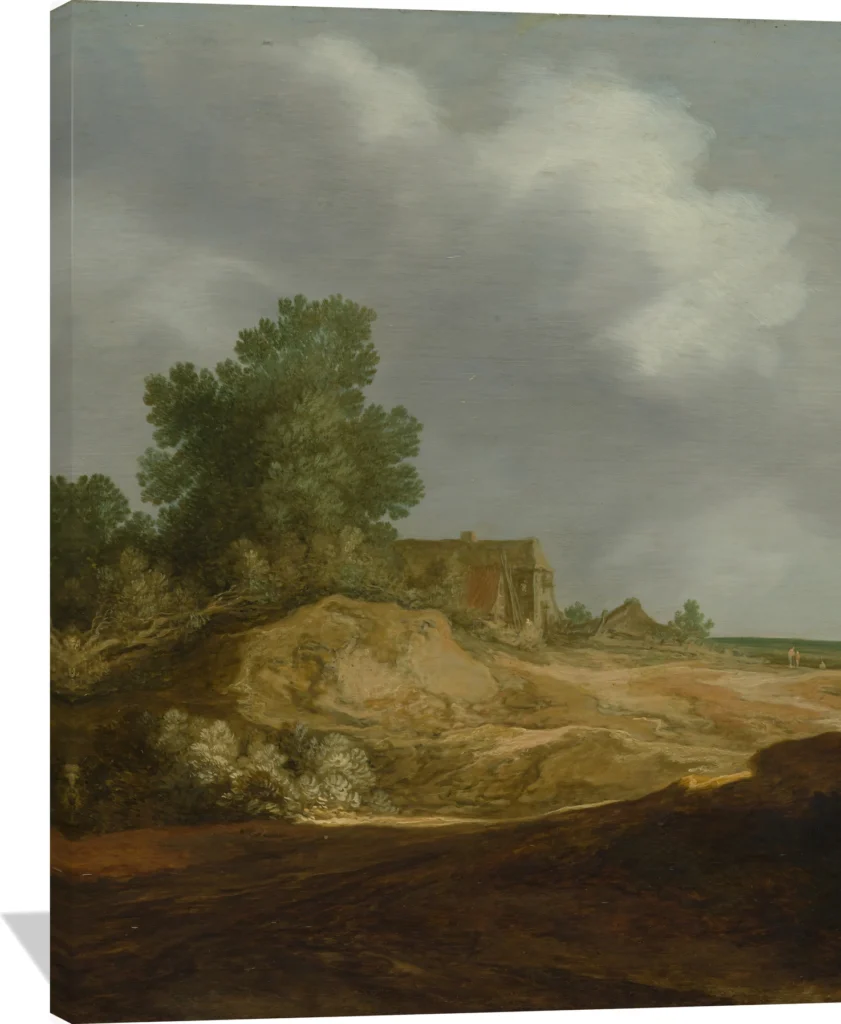
The Pieter de Molijn Landscape with a Cottage canvas captures the serene beauty of the Dutch countryside under a vast, luminous sky. Earthy browns, muted greens, and soft grays blend seamlessly to evoke a tranquil sense of space and solitude. De Molijn’s masterful brushwork and subtle light transitions lend the scene an enduring calm, perfect for those who appreciate timeless natural elegance.
This refined wall art brings quiet sophistication to any living room, study, or entryway. A high-quality canvas print of Landscape with a Cottage offers a window into 17th-century harmony—an ideal choice for collectors and design enthusiasts seeking understated beauty.
Pieter de Molijn (1595–1661) was a Dutch Golden Age painter born in London and active primarily in Haarlem. Celebrated for his refined landscapes and understated elegance, he played a formative role in shaping the tonal style that came to define early seventeenth‑century Dutch painting.
Artistic Style
De Molijn is widely associated with the Haarlem school’s move toward naturalistic, atmospheric landscape painting. His works are characterized by balanced compositions, restrained palettes, and subtle gradations of light that impart a harmonious, contemplative mood. Through his mastery of earthy tones and controlled brushwork, he helped advance the shift away from dramatic mannerist conventions toward a more grounded and observational approach.
Subjects and Techniques
He is best known for serene Dutch countryside scenes, including dunes, farmlands, and wooded paths rendered with a keen understanding of spatial depth. De Molijn also produced drawings and prints, demonstrating a versatile command of line and tone. His ability to convey weather, terrain, and gentle atmospheric effects made his landscapes particularly sought after. Many compositions feature understated narrative traces such as travelers on roads or humble rural structures, inviting quiet reflection rather than overt storytelling.
Contributions and Significance
As a prominent figure in Haarlem’s thriving artistic community, de Molijn influenced a generation of landscape painters, including students and contemporaries who adopted elements of his tonal approach. His work represents an important bridge between early Dutch landscape traditions and the mature naturalism that later dominated the Golden Age. De Molijn’s refined sensitivity to environment and mood continues to resonate, offering viewers a window into the rhythms of everyday life in the seventeenth‑century Netherlands.
Trust & policies
- 🚚 Free tracked shipping to 45+ countries. Local import duties or taxes may apply in some destinations.
- 🎨 Made-to-order, printed close to your delivery location
- 🛡️ If damaged, defective, or misprinted: free replacement or refund
- 🌍 Printed in US/CA/EU/UK/AU based on delivery location
- 💎 Acid-free, fade-resistant canvas with solid wood stretcher bars
- 🖼️ Optional pine floating frames in white, black, or brown
- 🪝 Ready to hang — hardware pre-installed