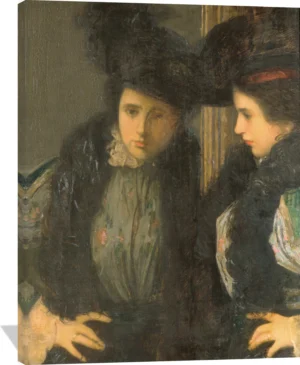
Lucia
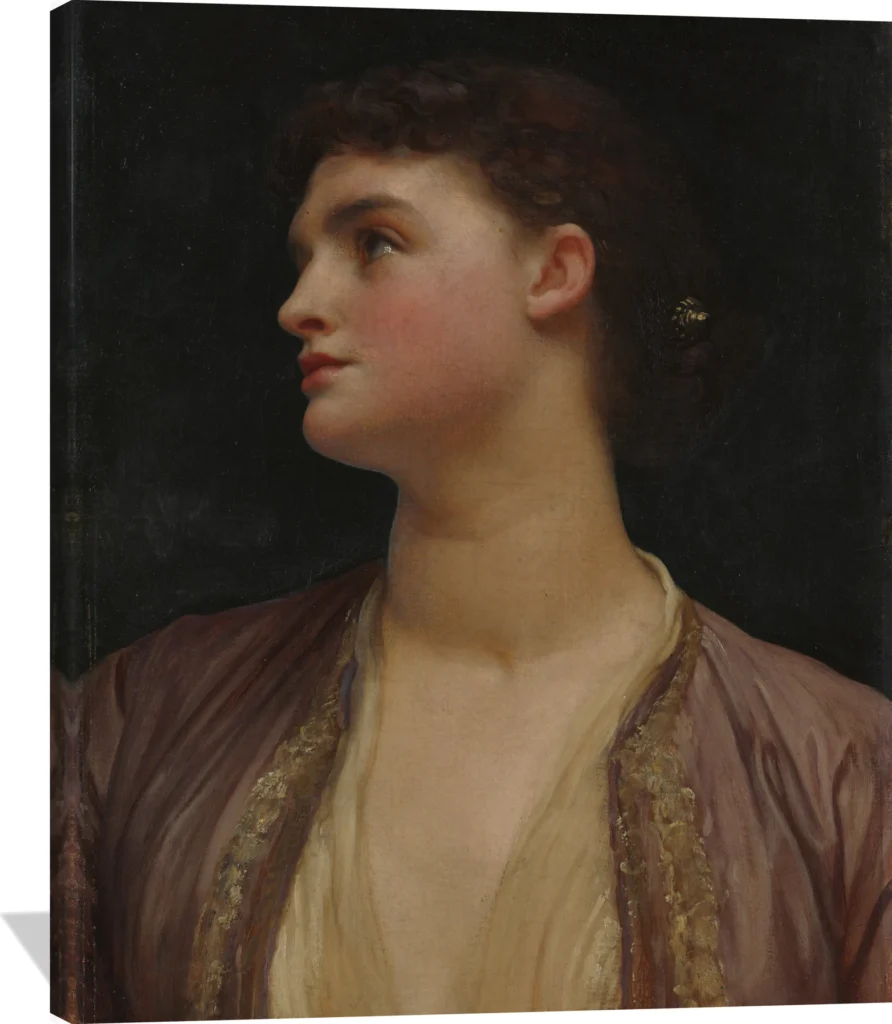
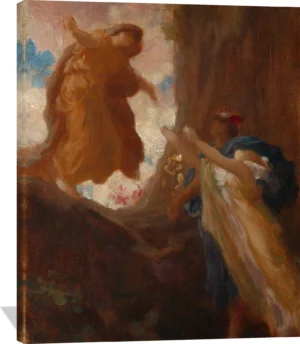
Frederic, Lord Leighton (British, Scarborough 1830–1896 London) stands as one of the most refined figures of Victorian art, celebrated for his mastery of classical form and his dedication to beauty, harmony, and idealized human expression. Trained across Europe and deeply influenced by the Italian Renaissance, he became a leading force in the Aesthetic movement, shaping the visual culture of late nineteenth‑century Britain.
Artistic Style
Leighton is renowned for his polished academic technique, graceful compositions, and meticulous draftsmanship. His work often blends classical restraint with sensuous color, resulting in paintings that feel both scholarly and poetic. He excelled at rendering the human figure with sculptural clarity, emphasizing elegance, balance, and emotional subtlety.
Subjects and Themes
Mythology, ancient history, and poetic allegories form the core of Leighton’s subjects. He frequently portrayed idealized figures in serene, timeless settings, creating images that celebrate beauty as an end in itself. His treatment of drapery, light, and the human form became emblematic of Victorian classicism. Works such as Flaming June exemplify his ability to merge radiant color with contemplative stillness, establishing a benchmark for aesthetic refinement.
Legacy and Significance
As President of the Royal Academy and a central figure of the London art world, Leighton played a critical role in shaping British artistic taste during the late nineteenth century. His home and studio, a testament to his devotion to art and craftsmanship, remain an enduring symbol of the era’s creative ambition. His paintings continue to captivate viewers for their timeless elegance and for their embodiment of beauty as a universal ideal.
Leighton’s work endures not only for its technical excellence but also for its ability to evoke a world of grace, serenity, and classical imagination, making him one of the most influential and admired artists of Victorian Britain.
Trust & policies
- 🚚 Free worldwide shipping
- 🔁 30-day returns (change of mind)
- 🛡️ If damaged/defective/misprinted: free replacement or full refund
- 🌍 Printed in US/CA/EU/UK/AU (based on delivery location)
- 💎 Made to order using acid-free, fade-resistant canvas
- 💎 Solid wood stretcher bars • Pine floating frames
- 🪝 Ready to hang

A Waterfall, Moonlight
Ralph Albert BlakelockCanvas from
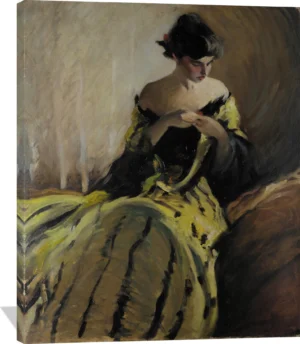
222,00 leiSelect options This product has multiple variants. The options may be chosen on the product pageStudy in Green and Black
John White AlexanderCanvas from
142,00 leiSelect options This product has multiple variants. The options may be chosen on the product pageJohn F. Kensett
George Augustus Baker Jr.Canvas from
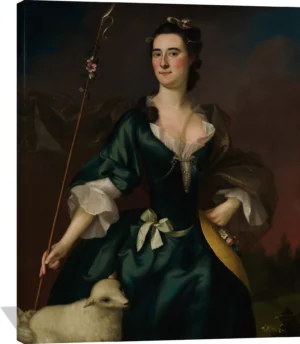
142,00 leiSelect options This product has multiple variants. The options may be chosen on the product pageMary Sylvester
Joseph BlackburnCanvas from
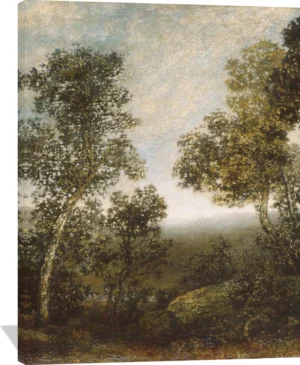
142,00 leiSelect options This product has multiple variants. The options may be chosen on the product pageLandscape
Ralph Albert BlakelockCanvas from
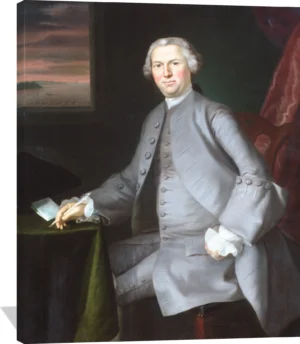
147,00 leiSelect options This product has multiple variants. The options may be chosen on the product pageSamuel Cutts
Joseph BlackburnCanvas from
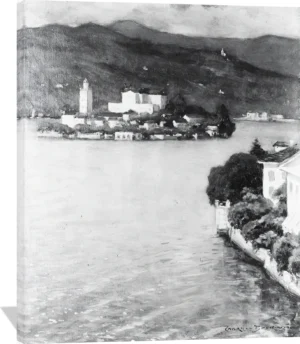
142,00 leiSelect options This product has multiple variants. The options may be chosen on the product pageLake of Orta
J. Carroll BeckwithCanvas from
142,00 leiSelect options This product has multiple variants. The options may be chosen on the product pagePhilip Van Cortlandt
Ezra AmesCanvas from
142,00 leiSelect options This product has multiple variants. The options may be chosen on the product pageThe Way They Live
Thomas AnshutzCanvas from
147,00 leiSelect options This product has multiple variants. The options may be chosen on the product pageEmma Homan
John BradleyCanvas from
142,00 leiSelect options This product has multiple variants. The options may be chosen on the product pageBaked Pears in Duane Park
William P. ChappelCanvas from
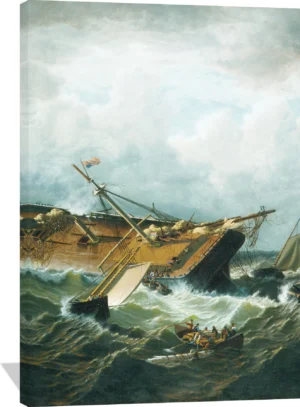
222,00 leiSelect options This product has multiple variants. The options may be chosen on the product pageShipwreck off Nantucket (Wreck off Nantucket after a Storm)
William BradfordCanvas from
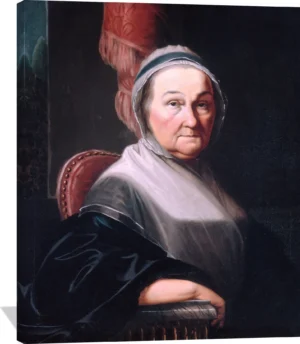
222,00 leiSelect options This product has multiple variants. The options may be chosen on the product pageMrs. Benjamin Simons
Henry BenbridgeCanvas from
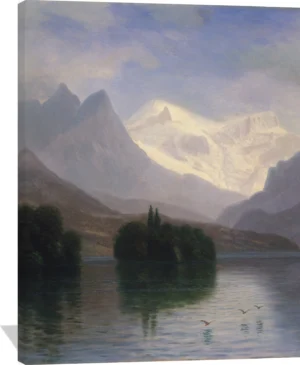
142,00 leiSelect options This product has multiple variants. The options may be chosen on the product pageMountain Scene
Albert BierstadtCanvas from
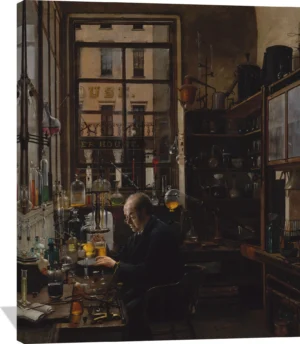
147,00 leiSelect options This product has multiple variants. The options may be chosen on the product pageIn the Laboratory
Henry AlexanderCanvas from
142,00 leiSelect options This product has multiple variants. The options may be chosen on the product pageAn Arctic Summer: Boring Through the Pack in Melville Bay
William BradfordCanvas from
222,00 leiSelect options This product has multiple variants. The options may be chosen on the product pageThe Music Lesson
John George BrownCanvas from
142,00 leiSelect options This product has multiple variants. The options may be chosen on the product pageMrs. Samuel Cutts
Joseph BlackburnCanvas from
142,00 leiSelect options This product has multiple variants. The options may be chosen on the product pageView at Amalfi, Bay of Salerno
George Loring BrownCanvas from
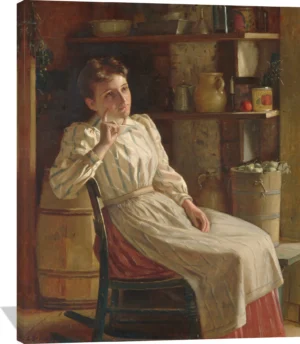
222,00 leiSelect options This product has multiple variants. The options may be chosen on the product pageMeditation
John George BrownCanvas from
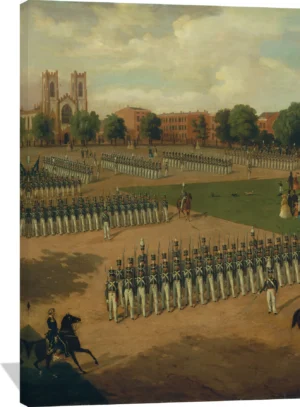
142,00 leiSelect options This product has multiple variants. The options may be chosen on the product pageSeventh Regiment on Review, Washington Square, New York
Otto BoetticherCanvas from
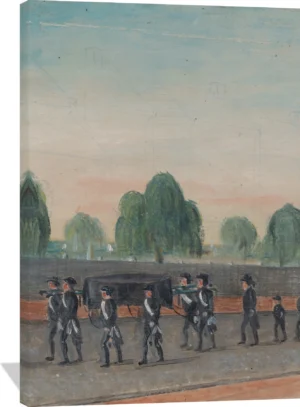
222,00 leiSelect options This product has multiple variants. The options may be chosen on the product pageAdult Funeral Procession
William P. ChappelCanvas from
222,00 leiSelect options This product has multiple variants. The options may be chosen on the product page
Explore Portraits
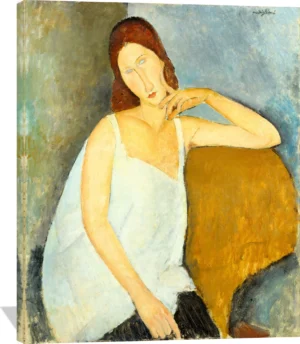
Jeanne Hébuterne
Amedeo ModiglianiCanvas from
142,00 leiSelect options This product has multiple variants. The options may be chosen on the product pageGirl in a Sailor’s Blouse
Amedeo ModiglianiCanvas from
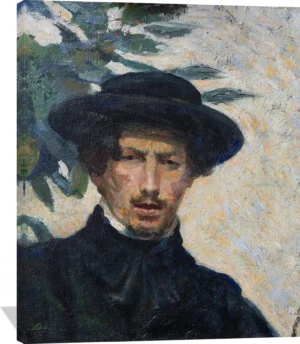
147,00 leiSelect options This product has multiple variants. The options may be chosen on the product pageSelf-Portrait
Umberto BoccioniCanvas from
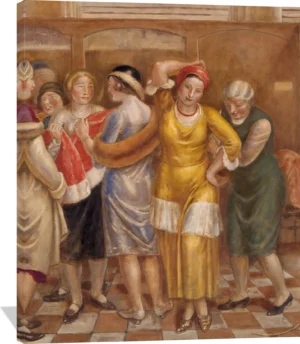
142,00 leiSelect options This product has multiple variants. The options may be chosen on the product pageThe Fitting Room
Kenneth Hayes MillerCanvas from
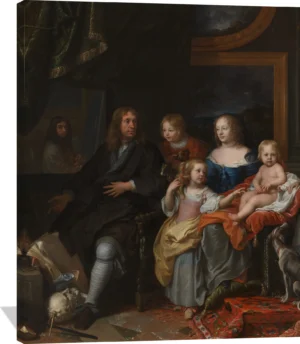
142,00 leiSelect options This product has multiple variants. The options may be chosen on the product pageThe Jabach Family
Charles Le BrunCanvas from
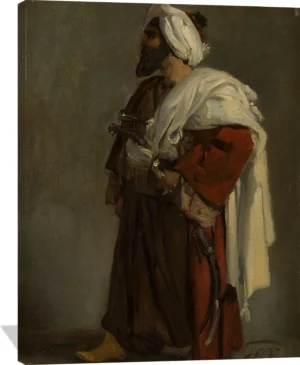
142,00 leiSelect options This product has multiple variants. The options may be chosen on the product pageArab Warrior
Horace VernetCanvas from
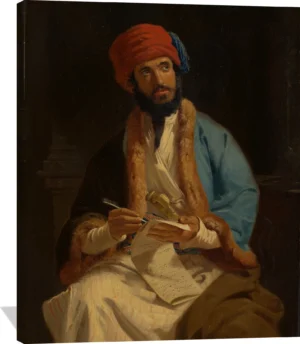
147,00 leiSelect options This product has multiple variants. The options may be chosen on the product pageThe Arab Sage
German PainterCanvas from
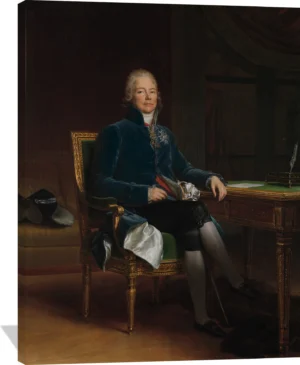
142,00 leiSelect options This product has multiple variants. The options may be chosen on the product pageCharles Maurice de Talleyrand Périgord (1754–1838), Prince de Bénévent
baron François GérardCanvas from
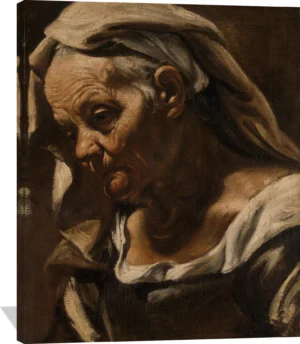
147,00 leiSelect options This product has multiple variants. The options may be chosen on the product pageHead of an Old Woman
Orazio BorgianniCanvas from
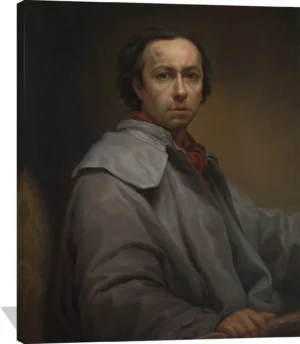
142,00 leiSelect options This product has multiple variants. The options may be chosen on the product pageSelf-Portrait
Anton Raphael MengsCanvas from
142,00 leiSelect options This product has multiple variants. The options may be chosen on the product pageSeated Arab Man with Horse
Alfred DedreuxCanvas from
142,00 leiSelect options This product has multiple variants. The options may be chosen on the product pageA Cardinal’s Procession
Ottavio Leoni (Il Padovano)Canvas from
195,00 leiSelect options This product has multiple variants. The options may be chosen on the product pageAn Egyptian in a Doorway
Sir Lawrence Alma-TademaCanvas from
147,00 leiSelect options This product has multiple variants. The options may be chosen on the product pageWestern Gentleman in Oriental Costume
British PainterCanvas from
142,00 leiSelect options This product has multiple variants. The options may be chosen on the product pageA Female Martyr Saint
Carlo Francesco NuvoloneCanvas from
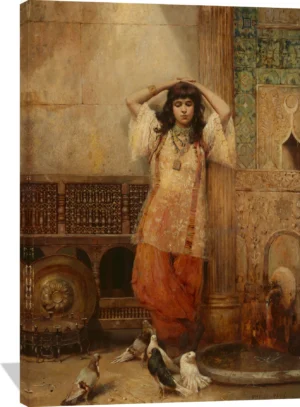
142,00 leiSelect options This product has multiple variants. The options may be chosen on the product pageGirl in a Courtyard, Algiers (formerly Courtyard in Tangier)
Philippe PavyCanvas from
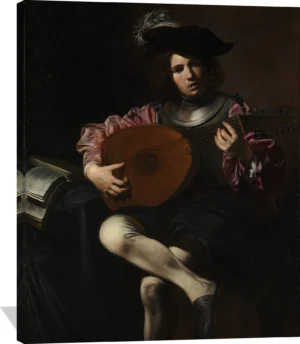
222,00 leiSelect options This product has multiple variants. The options may be chosen on the product pageLute Player
Valentin de BoulogneCanvas from
142,00 leiSelect options This product has multiple variants. The options may be chosen on the product pageThe Opium Smokers
Georges ClairinCanvas from
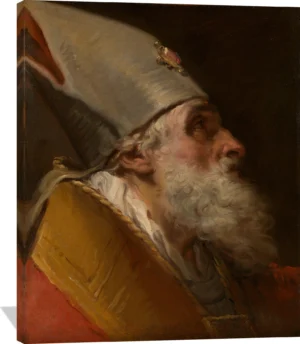
195,00 leiSelect options This product has multiple variants. The options may be chosen on the product pageHead of a Bishop
Gaetano GandolfiCanvas from
142,00 leiSelect options This product has multiple variants. The options may be chosen on the product pageThe Two Central Figures in “Derby Day”
William Powell FrithCanvas from
147,00 leiSelect options This product has multiple variants. The options may be chosen on the product pageThe Saithwaite Family
Francis WheatleyCanvas from
142,00 leiSelect options This product has multiple variants. The options may be chosen on the product page


Explore Aesthetic
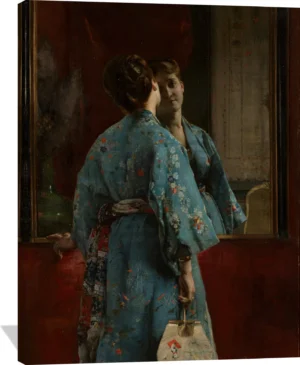
The Japanese Robe
Alfred StevensCanvas from
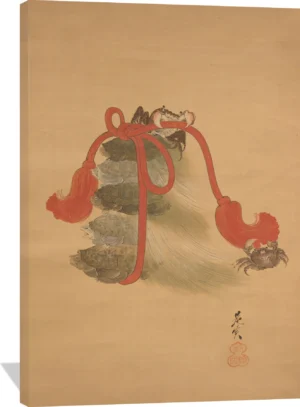
147,00 leiSelect options This product has multiple variants. The options may be chosen on the product pageTortoises and Crabs
Shibata ZeshinCanvas from
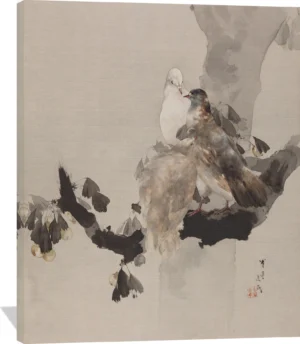
222,00 leiSelect options This product has multiple variants. The options may be chosen on the product pagePigeons in a Tree
Watanabe SeiteiCanvas from
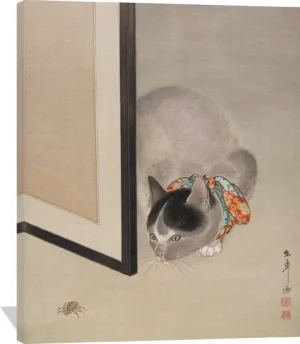
142,00 leiSelect options This product has multiple variants. The options may be chosen on the product pageCat Watching a Spider
Oide TōkōCanvas from
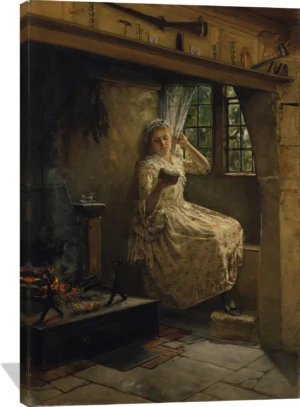
142,00 leiSelect options This product has multiple variants. The options may be chosen on the product pageA Cosey Corner
Frank MilletCanvas from
222,00 leiSelect options This product has multiple variants. The options may be chosen on the product pageThe Return of Persephone
Frederic, Lord LeightonCanvas from
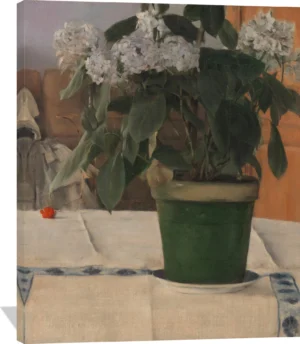
142,00 leiSelect options This product has multiple variants. The options may be chosen on the product pageHortensia
Fernand KhnopffCanvas from
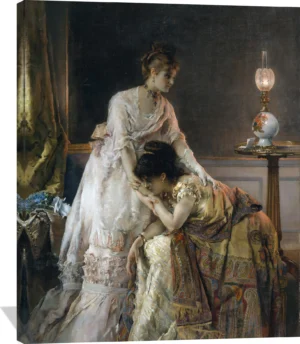
142,00 leiSelect options This product has multiple variants. The options may be chosen on the product pageAfter the Ball
Alfred StevensCanvas from
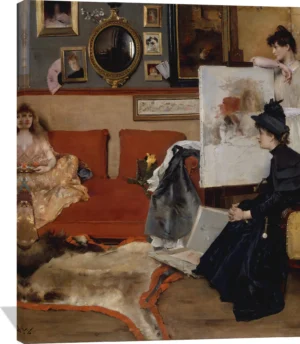
142,00 leiSelect options This product has multiple variants. The options may be chosen on the product pageIn the Studio
Alfred StevensCanvas from
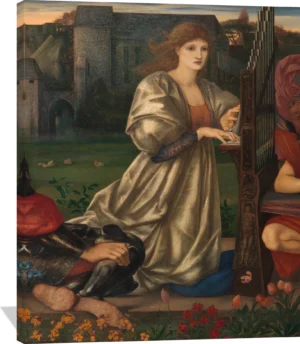
142,00 leiSelect options This product has multiple variants. The options may be chosen on the product pageThe Love Song
Sir Edward Burne-JonesCanvas from
142,00 leiSelect options This product has multiple variants. The options may be chosen on the product pageSchool of Fishes
Seki ShūkōCanvas from
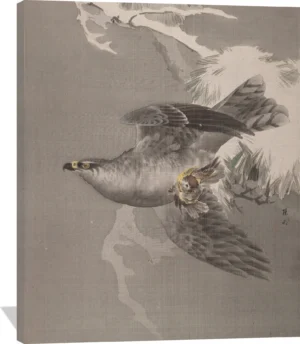
142,00 leiSelect options This product has multiple variants. The options may be chosen on the product pageHawk Holding a Small Bird
Okada BaisonCanvas from
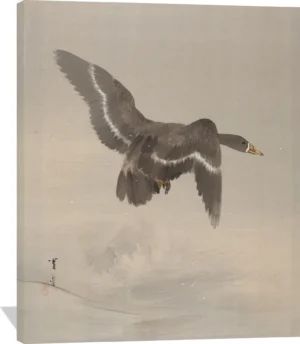
142,00 leiSelect options This product has multiple variants. The options may be chosen on the product pageFlying Goose
Watanabe SeiteiCanvas from
142,00 leiSelect options This product has multiple variants. The options may be chosen on the product pageBirds on a Branch
Watanabe SeiteiCanvas from
142,00 leiSelect options This product has multiple variants. The options may be chosen on the product pageParody of Murasaki, from “Lavender” (Wakamurasaki), chapter 5 of the Tale of Genji
Kawamata TsuneyukiCanvas from
142,00 leiSelect options This product has multiple variants. The options may be chosen on the product pageArrangement in Black: Girl Reading
James McNeill WhistlerCanvas from
142,00 leiSelect options This product has multiple variants. The options may be chosen on the product pageThe Green Bodice
Julian Alden WeirCanvas from
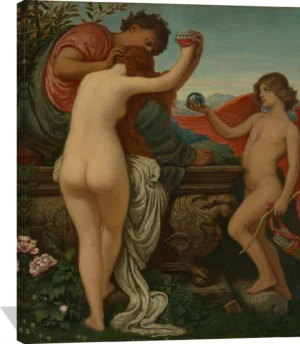
147,00 leiSelect options This product has multiple variants. The options may be chosen on the product pageThe Cup of Love
Elihu VedderCanvas from
142,00 leiSelect options This product has multiple variants. The options may be chosen on the product pageStudy in Black and Green (Oil Sketch)
John White AlexanderCanvas from
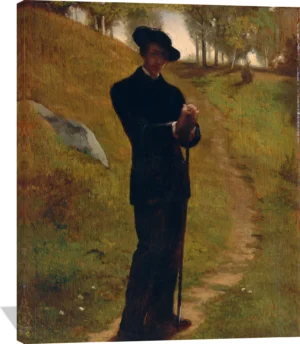
142,00 leiSelect options This product has multiple variants. The options may be chosen on the product pagePortrait of the Painter
John La FargeCanvas from
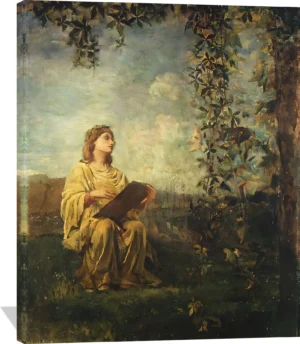
142,00 leiSelect options This product has multiple variants. The options may be chosen on the product pageThe Muse of Painting
John La FargeCanvas from
142,00 leiSelect options This product has multiple variants. The options may be chosen on the product page