
Auction Sale in Clinton Hall, New York, 1876
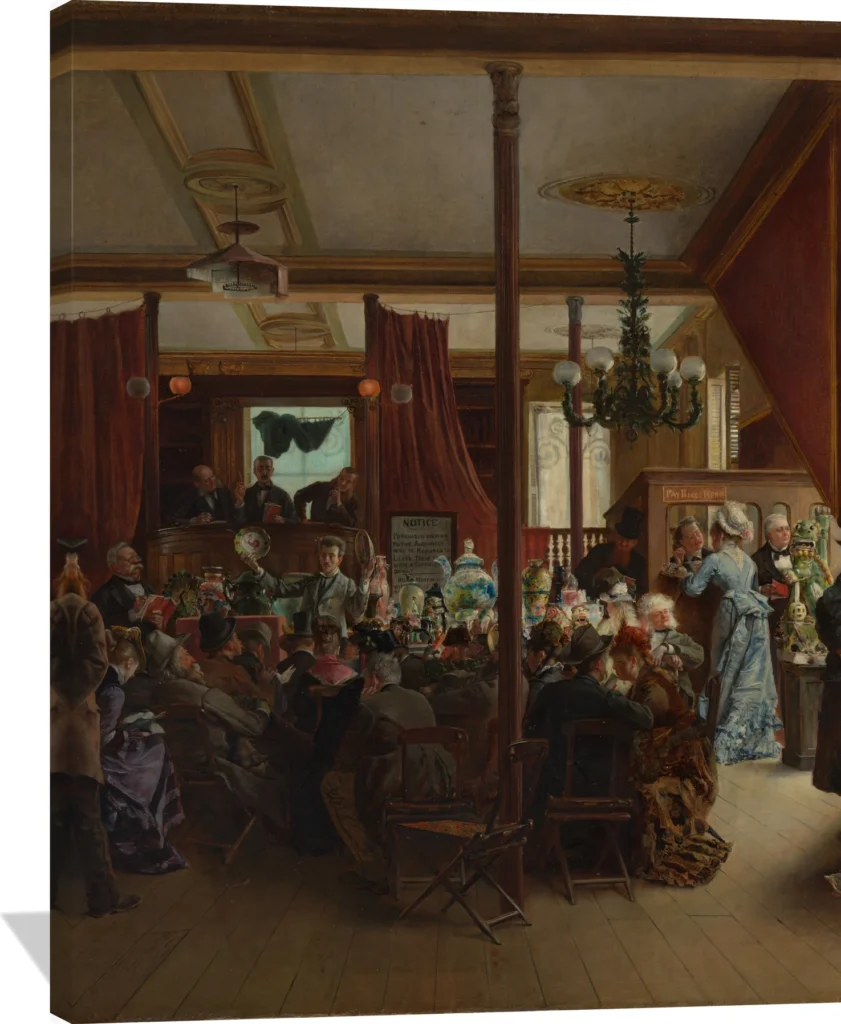
The Ignacio de León y Escosura Auction Sale in Clinton Hall, New York, 1876 canvas captures the lively elegance of a 19th-century auction scene bathed in warm amber, mahogany, and muted gold tones. Figures in refined attire gather beneath chandeliers and red drapery, their gestures and expressions revealing the social drama of the moment. The artist’s meticulous realism and rich palette evoke both sophistication and nostalgia.
This premium canvas print brings timeless character to any space—ideal for a living room, study, or entryway. The Auction Sale in Clinton Hall, New York, 1876 wall art infuses your decor with historic charm and the cultured atmosphere of Gilded Age New York.
Ignacio de León y Escosura (Oviedo 1834–1901 Toledo) was a Spanish painter celebrated for his meticulous historical scenes and refined narrative compositions. Active during a period of renewed interest in national heritage, he crafted works that combine academic precision with a richly atmospheric sense of drama.
Artistic Style
Escosura’s style is characterized by polished technique, carefully structured interiors, and a deep sensitivity to period detail. His mastery of light and texture brings authenticity to his subjects, often imbuing them with a quiet theatricality. This approach places him within the broader European tradition of nineteenth-century historicist painting while maintaining a distinctly Spanish sensibility.
Notable Themes and Subjects
He is best known for compositions that evoke bygone eras, frequently portraying courtly life, scholars, musicians, and domestic interiors rendered with exceptional clarity. Escosura’s interest in objects, furnishings, and dress allowed him to build richly immersive settings that reveal both character and context. His scenes often feel intimate, inviting viewers to linger over finely observed details.
Cultural Significance
As a painter working during a transformative moment in Spain’s cultural identity, Escosura contributed to the visual preservation of national history. His works resonate for their blend of narrative charm and scholarly attention to the past. Today, he is recognized for his role in shaping a sophisticated, historically oriented genre that continues to appeal to collectors and admirers of nineteenth-century European painting.
Trust & policies
- 🚚 Free tracked shipping to 45+ countries. Local import duties or taxes may apply in some destinations.
- 🎨 Made-to-order, printed close to your delivery location
- 🛡️ If damaged, defective, or misprinted: free replacement or refund
- 🌍 Printed in US/CA/EU/UK/AU based on delivery location
- 💎 Acid-free, fade-resistant canvas with solid wood stretcher bars
- 🖼️ Optional pine floating frames in white, black, or brown
- 🪝 Ready to hang — hardware pre-installed