
Madonna and Child Enthroned with Saints Mary Magdalen and John the Baptist
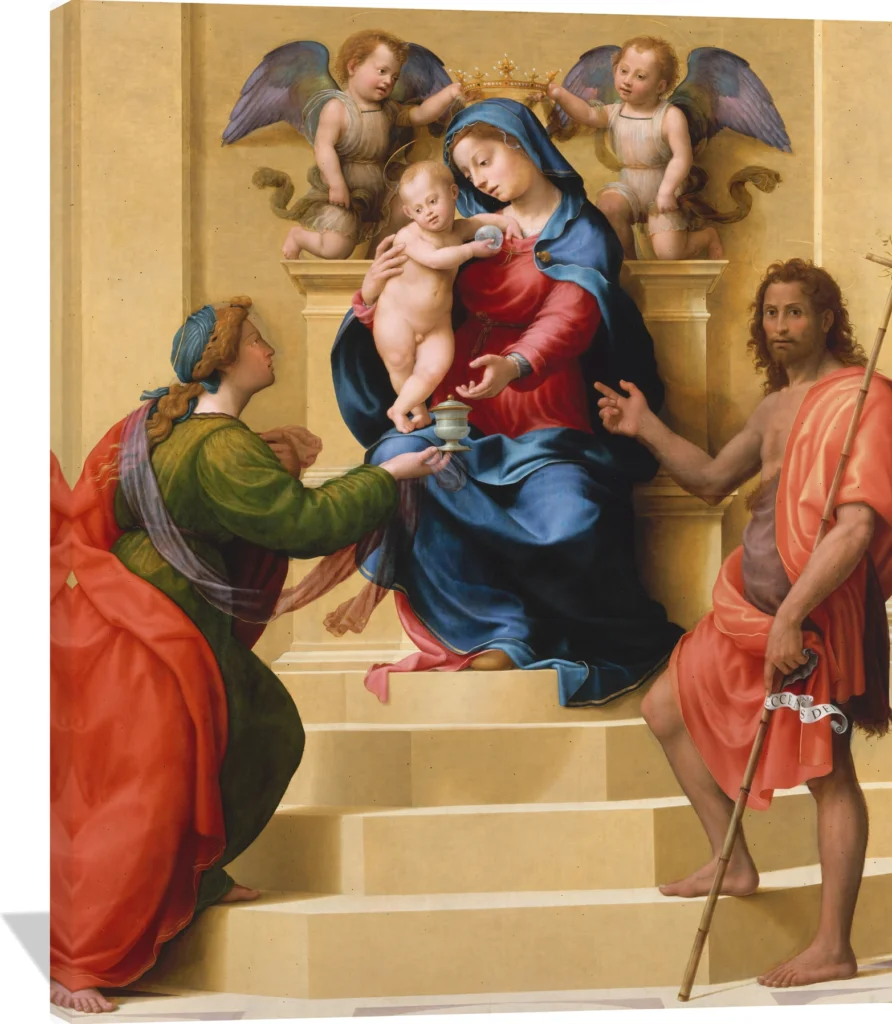
The Giuliano di Piero di Simone Bugiardini Madonna and Child Enthroned with Saints Mary Magdalen and John the Baptist canvas captures the serene harmony of Renaissance devotion. Bathed in warm golds, deep blues, and soft reds, this vertical composition radiates balance and grace, with the Madonna and Child at its luminous center surrounded by tender figures and angelic presence.
This museum-quality canvas print brings timeless elegance to any setting—perfect for a living room, study, or entryway. Bugiardini’s refined use of color and light invites quiet reflection, making this exquisite wall art a statement of faith, artistry, and enduring beauty.
Giuliano di Piero di Simone Bugiardini (1475–1554) was a Florentine painter whose career unfolded alongside the great masters of the High Renaissance. Trained within the vibrant artistic circles of Florence, he developed a distinct visual voice that balanced clarity, elegance, and gentle emotional resonance.
Artistic Style
Bugiardini’s work reflects the refined harmony typical of the Florentine school. His paintings are known for their balanced compositions, serene facial expressions, and luminous color palettes. While influenced by contemporaries such as Michelangelo and Fra Bartolommeo, he cultivated a more intimate and contemplative approach, marked by soft modeling and a strong sense of human presence.
Subjects and Themes
He specialized in religious imagery, creating devotional scenes and altarpieces that emphasized spiritual warmth over dramatic intensity. Madonnas, saints, and narrative biblical moments were frequent subjects, rendered with an inviting simplicity that made his works appealing to both private patrons and ecclesiastical settings.
Historical Significance
As a dedicated member of Florence’s artistic community, Bugiardini contributed to the diffusion of Renaissance ideals during a pivotal cultural era. Though less celebrated than some of his peers, he produced artworks that embody the values of clarity, balance, and humanistic expression. His legacy rests in his ability to translate the grandeur of the Renaissance into a more personal and approachable visual language.
Trust & policies
- 🚚 Free tracked shipping to 45+ countries. Local import duties or taxes may apply in some destinations.
- 🎨 Made-to-order, printed close to your delivery location
- 🛡️ If damaged, defective, or misprinted: free replacement or refund
- 🌍 Printed in US/CA/EU/UK/AU based on delivery location
- 💎 Acid-free, fade-resistant canvas with solid wood stretcher bars
- 🖼️ Optional pine floating frames in white, black, or brown
- 🪝 Ready to hang — hardware pre-installed