
Landscape
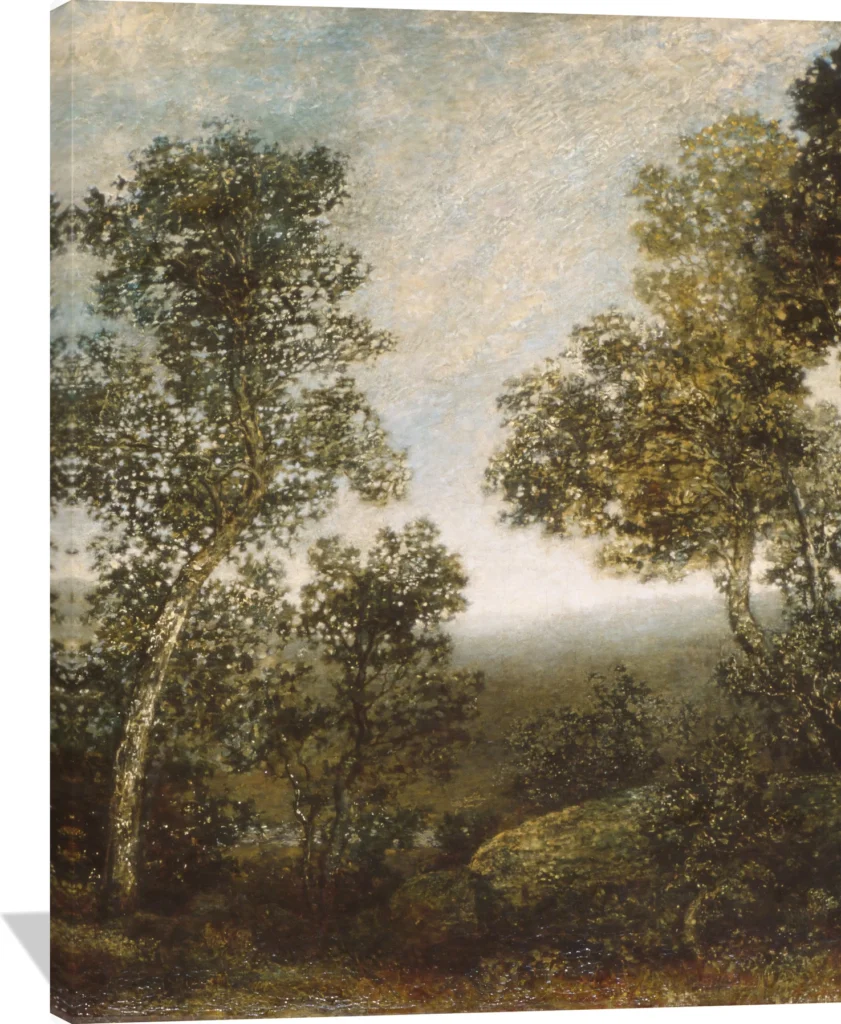
The Ralph Albert Blakelock Landscape canvas captures the timeless stillness of nature through soft golden light, misty greens, and earthy browns. Delicate trees rise against a tranquil sky, evoking a serene, dreamlike mood that reflects Blakelock’s signature romantic realism. Each brushstroke invites quiet contemplation and a sense of escape into the natural world.
This fine art canvas print brings a warm, reflective atmosphere to any space—perfect for a living room, study, or entryway. The Landscape wall art offers a harmonious blend of depth and texture, making it a refined statement piece for those who appreciate classic beauty and enduring craftsmanship.
Ralph Albert Blakelock (1847–1919) was an American painter celebrated for his poetic landscapes and deeply atmospheric nocturnes. Largely self-taught, he developed a singular vision that set him apart from his contemporaries, blending romanticism with an introspective, almost mystical sensibility.
Artistic Style and Technique
Blakelock is best known for his luminous, dreamlike scenes, particularly moonlit forests and twilight vistas. His layered, improvisational brushwork creates rich tonal depth, while his use of dark palettes contrasted with glowing highlights gives his paintings an otherworldly resonance. This distinctive treatment of light and shadow helped establish him as a pioneer of the American tonal movement.
Notable Themes
His works often depict solitary trees, reflective waters, and expansive night skies, evoking a sense of quiet contemplation. Blakelock also portrayed Native American life, crafting imaginative interpretations rather than documentary records. These subjects allowed him to merge reality with a mood-driven, visionary approach.
Cultural Significance
Though he struggled for recognition during his lifetime, Blakelock’s paintings later gained admiration for their innovative emotional depth and painterly experimentation. Today, he is regarded as a highly influential figure in nineteenth‑century American art, known for creating some of the era’s most evocative nocturnal landscapes. His work remains sought after for its intimate atmosphere and singular artistic voice.
Trust & policies
- 🚚 Free tracked shipping to 45+ countries. Local import duties or taxes may apply in some destinations.
- 🎨 Made-to-order, printed close to your delivery location
- 🛡️ If damaged, defective, or misprinted: free replacement or refund
- 🌍 Printed in US/CA/EU/UK/AU based on delivery location
- 💎 Acid-free, fade-resistant canvas with solid wood stretcher bars
- 🖼️ Optional pine floating frames in white, black, or brown
- 🪝 Ready to hang — hardware pre-installed