Artistic Style
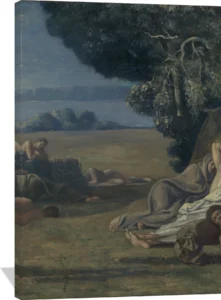
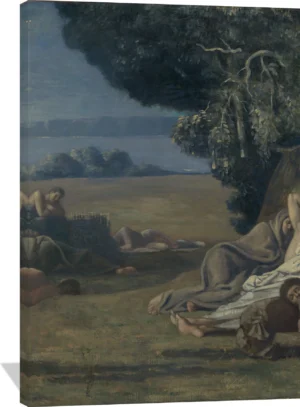
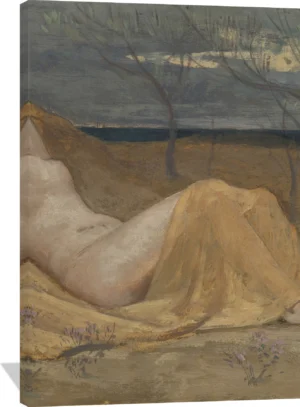
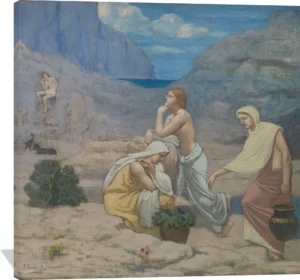
Puvis de Chavannes developed a refined, pared‑down aesthetic that emphasized balanced compositions, soft tonalities, and a contemplative atmosphere. His work often blends classical ideals with modern sensibilities, creating scenes that feel timeless rather than rooted in a specific historical narrative. This approach, marked by simplified forms and a meditative stillness, made him a foundational inspiration for later Symbolist and modern painters.
Subjects and Themes
His paintings and large‑scale murals frequently explore allegorical and mythological subjects, presenting figures in calm, idealized landscapes. Themes of humanity’s connection to nature, moral virtue, and spiritual reflection recur throughout his oeuvre. Whether depicting pastoral harmony or heroic civic ideals, Puvis de Chavannes conveyed emotion through subtle gestures and atmospheric unity instead of dramatic action.
Legacy and Significance
Widely recognized for his monumental public commissions in France, Puvis de Chavannes helped redefine mural painting for a new era. His vision of art as a poetic, integrated experience profoundly shaped the work of artists such as Gauguin, Seurat, and the early modernists. Today he is esteemed as a key precursor to Symbolism, valued for his ability to merge classical composure with a modern, introspective sensibility, and for the enduring quiet power of his lyrical allegories.