
Young Husband: First Marketing
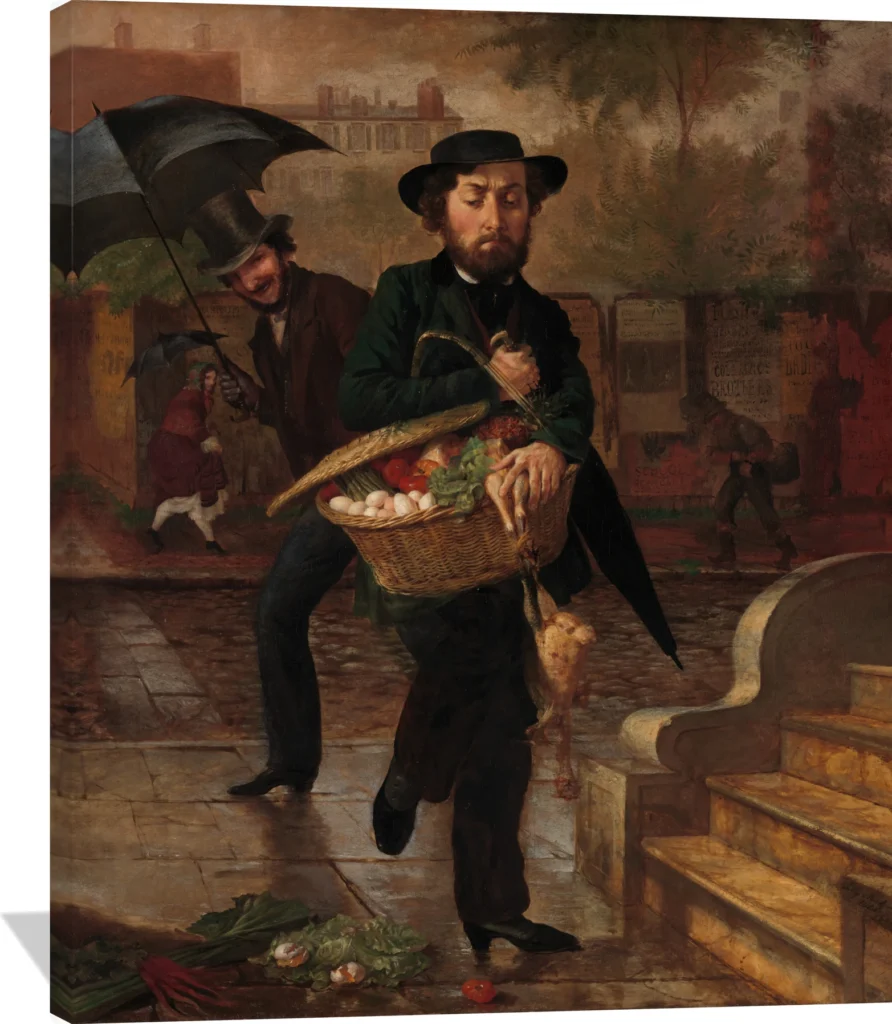
The Lilly Martin Spencer Young Husband: First Marketing canvas captures a humorous yet tender domestic moment with remarkable realism. Set against a rain-soaked street, a young man clutches a basket of fresh produce, his expression of mild frustration rendered with Spencer’s signature warmth and wit. Deep browns, muted greens, and golden tones create a rich palette that feels both nostalgic and inviting.
This finely detailed wall art brings 19th-century charm and storytelling into any modern space. Ideal for a living room, study, or entryway, this canvas print celebrates everyday life with grace and humor—an enduring testament to Spencer’s keen eye for human nature.
Lilly Martin Spencer (1822–1902) was one of the most celebrated American genre painters of the nineteenth century, admired for her warm, insightful depictions of domestic life. Born in France and raised in Ohio, she built a successful professional career at a time when few women artists achieved widespread recognition. Her work remains valued for its vivid character studies, polished technique, and engaging narratives.
Artistic Style
Spencer worked primarily in genre painting, blending realism with a lively, approachable charm. Her compositions showcase meticulous attention to detail, expressive facial gestures, and finely rendered textures. She often infused her scenes with gentle humor and an inviting sense of immediacy, creating imagery that feels both intimate and universally relatable.
Subjects and Themes
Her paintings frequently center on domestic settings, everyday rituals, and the nuanced dynamics of family life. Women and children appear prominently, portrayed with dignity, individuality, and emotional depth. Works such as Kiss Me and You’ll Kiss the ‘Lasses exemplify her ability to elevate ordinary moments into memorable visual storytelling.
Legacy and Significance
As one of the leading female artists of her era, Spencer played a significant role in shaping American genre painting. Her portrayals of home and community offered a refreshing perspective that resonated with nineteenth‑century audiences and continues to appeal today. Celebrated for her distinctive narrative warmth and polished realism, she remains an essential figure in the history of American art.
Trust & policies
- 🚚 Free tracked shipping to 45+ countries. Local import duties or taxes may apply in some destinations.
- 🎨 Made-to-order, printed close to your delivery location
- 🛡️ If damaged, defective, or misprinted: free replacement or refund
- 🌍 Printed in US/CA/EU/UK/AU based on delivery location
- 💎 Acid-free, fade-resistant canvas with solid wood stretcher bars
- 🖼️ Optional pine floating frames in white, black, or brown
- 🪝 Ready to hang — hardware pre-installed