Artistic Style and Technique
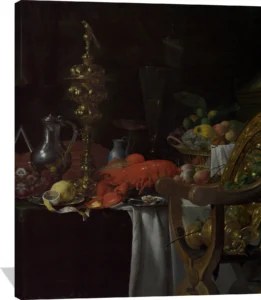
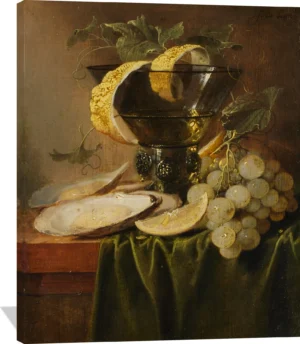
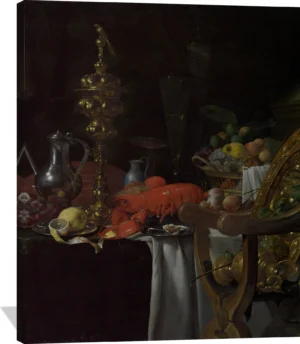
De Heem mastered the intricate language of still life, blending Dutch precision with the lush color and grandeur characteristic of Flemish painting. His work is distinguished by virtuosic detail, harmonious arrangements, and a refined sense of light that elevates everyday objects into scenes of remarkable visual abundance. He excelled in both modest tabletop studies and opulent pronkstilleven, achieving a balance of realism and poetic intensity.
Subjects and Themes
Fruit, flowers, musical instruments, glassware, metalwork, and rare delicacies frequently populate his compositions. De Heem portrayed these elements with exceptional sensitivity, capturing textures and surfaces with unmatched clarity. Many of his works, such as lavish banquet pieces or floral arrangements, incorporate symbolic references to transience and beauty, offering viewers both sensory delight and quiet contemplation.
Cultural and Historical Significance
Celebrated in both the Dutch Republic and Antwerp, de Heem influenced generations of still-life painters across Northern Europe. His innovative blending of regional artistic traditions helped shape the evolution of Baroque still life, and his meticulous yet sumptuous approach remains a touchstone for the genre. Today, his paintings are admired for their technical brilliance and their ability to reveal the extraordinary within the everyday.