Artistic Style
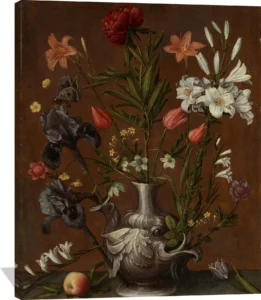
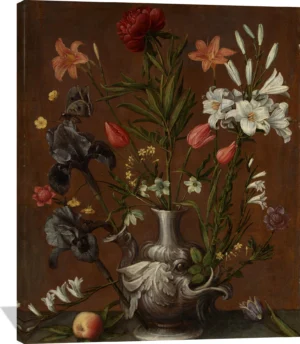
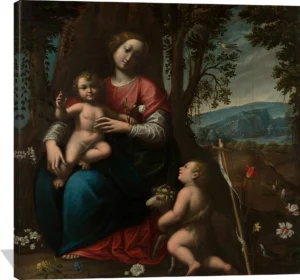
Caccia’s work is characterized by serene compositions, luminous color harmonies, and an exceptionally detailed rendering of flora, fauna, and everyday objects. Her paintings often unite religious imagery with still-life arrangements, creating a contemplative atmosphere that bridges spiritual symbolism with the tangible world. This fusion positioned her as a pioneering figure in the evolution of Northern Italian still life.
Notable Subjects
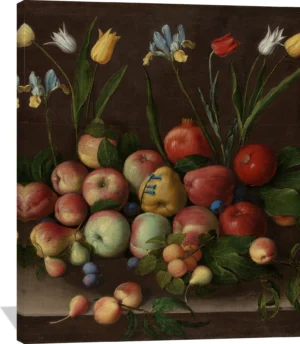
While best known for her devotional scenes featuring saints, the Virgin, and monastic life, Caccia also produced richly observed still lifes that reflect an almost scientific attentiveness. Works such as Still Life with Flowers and Fruit highlight her ability to elevate humble subjects through careful composition and controlled light. Her paintings frequently feature botanical elements rendered with striking precision, a hallmark of her practice within the convent studios.
Cultural and Historical Significance
As one of the few documented women artists of the Italian Baroque, Caccia occupies a meaningful place in art history. Her dual role as a nun and a professional painter allowed her to create a sustained body of work within the supportive structure of the Ursuline convent in Moncalvo, where she also trained other sisters in artistic production. Her legacy resonates today for the clarity of her vision and her contributions to the refinement of still-life painting.
What Makes Her Work Distinctive
Caccia’s paintings stand out for their harmony of spirituality and observation, combining devotional themes with vivid natural detail. Her ability to balance contemplative serenity with painterly precision has made her a notable and enduring presence within the Baroque era. Marked by quiet intensity and exquisite detail, her works remain admired for their beauty and their rare insight into the artistic life of women in early modern Italy.