Artistic Style
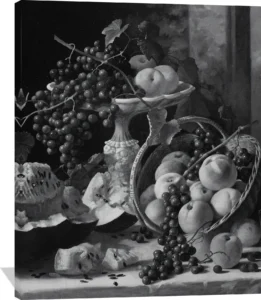
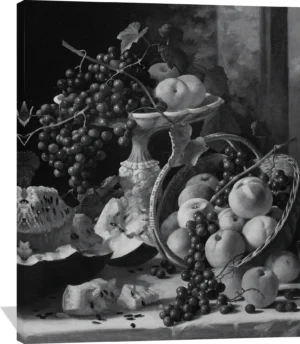
Francis is best known for his luminous still-life compositions, characterized by balanced arrangements, precise draftsmanship, and an almost tactile clarity. His palette often featured warm tonalities that highlighted the gleam of glassware, the softness of fruit, and the textural richness of baked goods. This commitment to visual harmony and detail placed him among the notable American practitioners of still-life realism.
Typical Subjects
He frequently portrayed desserts, fruit platters, and elaborate table spreads with an inviting sense of immediacy. Pie, melons, grapes, and wine glasses recur throughout his work, unified by a quiet elegance that made his paintings both decorative and evocative. Works such as Dessert Still Life capture the sensuous appeal and domestic ritual of shared meals, a theme that resonated strongly with nineteenth-century audiences.
Legacy and Significance
Francis’s dedication to still-life painting helped elevate the genre in the United States, bringing attention to its expressive potential at a time when history painting and portraiture dominated the art scene. His ability to transform everyday objects into subjects of contemplation reflects a broader cultural moment in which American artists embraced both refinement and realism. Today, his paintings remain appreciated for their quiet beauty, technical mastery, and their contribution to the development of the American still-life tradition.