Artistic Style and Approach
Heade’s work is characterized by luminous light, subtle tonal transitions, and a contemplative sense of space. While connected culturally to the Hudson River School, his style diverged through a more understated, mood-driven approach. His paintings often feature meticulous detail combined with a gentle, immersive softness, creating scenes that feel both naturalistic and quietly transcendent.
Notable Subjects
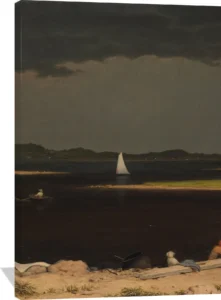
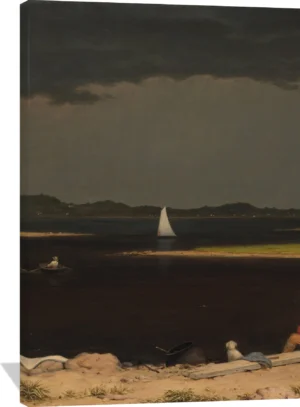
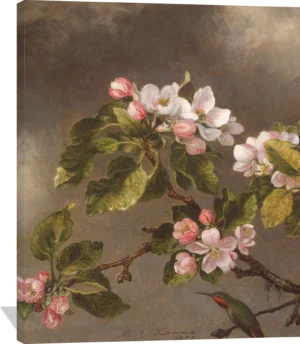
Heade gained particular recognition for his salt marsh landscapes, where expansive horizons and shifting weather conditions evoke a serene yet dramatic atmosphere. His tropical compositions especially those depicting hummingbirds paired with exotic flowers showcase his fascination with natural science and his ability to render delicate textures with precision. Still lifes, including arrangements of flowers such as magnolias, further demonstrate his sensitivity to form, color, and light.
Legacy and Significance
Although underappreciated during his lifetime, Heade is now regarded as a significant figure in nineteenth-century American art. His unique blend of realism and atmospheric nuance, along with his keen observational eye, secures his place as a painter of extraordinary subtlety and emotional depth. Today, his works are admired for their quiet power and their ability to illuminate the natural world with remarkable clarity and grace.