
View of Yosemite Valley
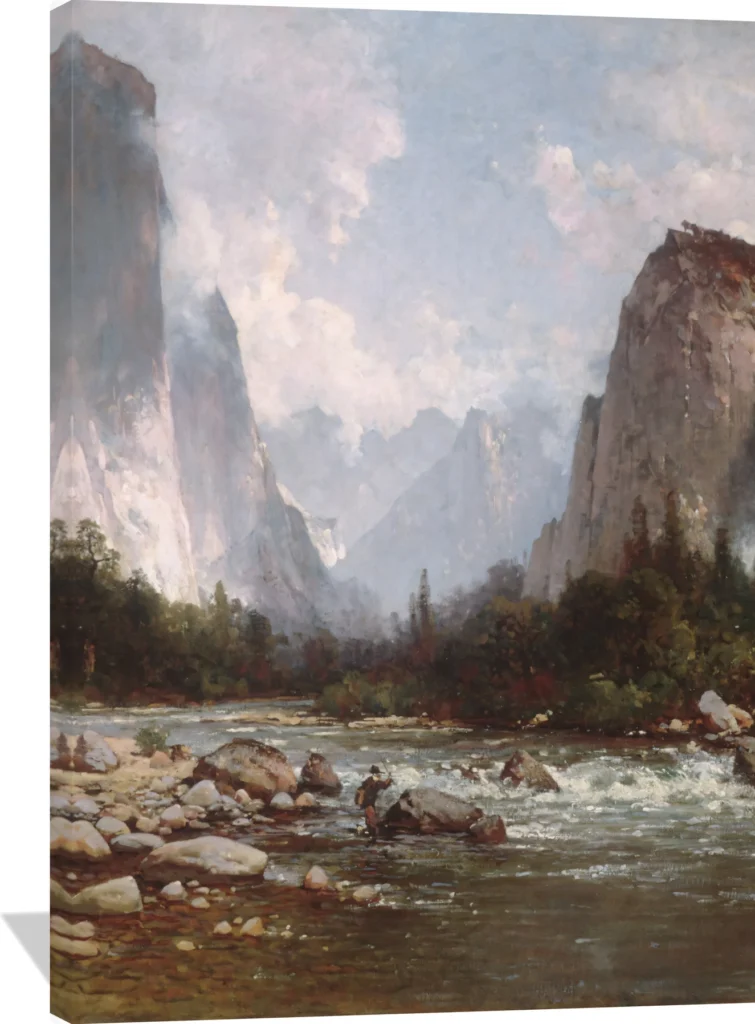
The Thomas Hill View of Yosemite Valley canvas captures the awe-inspiring grandeur of California’s most iconic landscape. Bathed in soft light, this panoramic scene reveals towering granite cliffs, a shimmering waterfall, and a tranquil river framed by lush forest. Earthy greens, misty blues, and warm stone tones evoke the serenity and majesty of nature untouched.
This museum-quality wall art brings timeless beauty and depth to any living room, study, or entryway. A masterwork of American landscape painting, this canvas print invites reflection and wonder—an enduring tribute to the natural splendor that inspired generations of artists and adventurers alike.
Thomas Hill was an American landscape painter whose luminous portrayals of the American West helped define the visual identity of the nineteenth‑century frontier. Born in Birmingham, England in 1829 and later settling in the United States, Hill became renowned for capturing the grandeur and atmospheric drama of the Sierra Nevada, particularly Yosemite Valley.
Artistic Style
Hill’s work reflects the emotive, light-infused sensibilities of the Hudson River School and the larger tradition of American landscape painting. His compositions often blend meticulous natural detail with sweeping, romantic vistas, creating scenes that feel both observational and transcendent. He favored radiant color, crisp clarity, and expansive depth, giving his paintings a sense of awe and immediacy that made them highly sought after in his time.
Subjects and Themes
Hill is best known for his majestic depictions of Yosemite landmarks, including Half Dome, Bridalveil Fall, and the towering granite walls that define the valley. He also painted the White Mountains, the New England countryside, and various sites across California. Whether portraying serene meadows or dramatic mountain peaks, Hill emphasized the spiritual and emotional resonance of the natural world. His large-scale canvases, including works such as The Driving of the Last Spike, reveal his interest in documenting pivotal historical moments as well as pristine wilderness.
Legacy and Significance
As a central figure in the artistic documentation of the American West, Hill contributed substantially to the nation’s cultural understanding of its own landscapes. His paintings played a role in popularizing Yosemite and other Western regions, helping inspire public appreciation that would eventually support conservation efforts. Today, Hill is remembered for his ability to portray nature with both scientific fidelity and poetic grandeur, a duality that gives his work enduring appeal. His masterful renderings of light and scale reaffirm his place as a leading interpreter of America’s wilderness and a vital voice in nineteenth‑century landscape art.
Trust & policies
- 🚚 Free tracked shipping to 45+ countries. Local import duties or taxes may apply in some destinations.
- 🎨 Made-to-order, printed close to your delivery location
- 🛡️ If damaged, defective, or misprinted: free replacement or refund
- 🌍 Printed in US/CA/EU/UK/AU based on delivery location
- 💎 Acid-free, fade-resistant canvas with solid wood stretcher bars
- 🖼️ Optional pine floating frames in white, black, or brown
- 🪝 Ready to hang — hardware pre-installed