Artistic Style
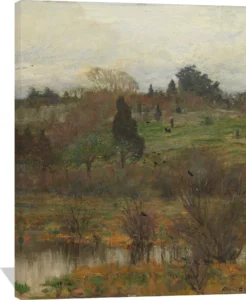
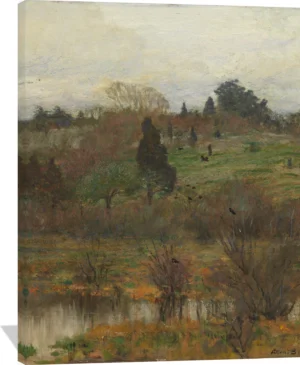
Talcott’s paintings reflect the hallmarks of American Impressionism, emphasizing natural light, gentle tonal shifts, and harmonious color. His brushwork balances clarity and softness, creating contemplative scenes that feel both grounded and poetic. Known for his devotion to painting en plein air, he captured subtle variations in weather, time of day, and seasonal change with exceptional nuance.
Subjects and Themes
Working primarily in Connecticut, Talcott focused on forest interiors, quiet meadows, and the region’s distinctive oaks and elms. His landscapes often center on a single tree or a cluster of rugged trunks, portrayed with a sense of presence that borders on the monumental. Works such as Oak Tree, Old Lyme exemplify his ability to find drama in simplicity, transforming everyday rural vistas into resonant visual meditations.
Legacy and Significance
Talcott was a respected member of the Old Lyme community, contributing to one of the most influential movements in American art at the turn of the twentieth century. Though his life was short, his paintings helped define the colony’s commitment to nature-focused, light‑driven Impressionism. Today, collectors prize his work for its quiet power, its lyrical interpretation of the American landscape, and its role in shaping the identity of early American Impressionism.